Trump mocks Canada, threatens to rename Lake Ontario
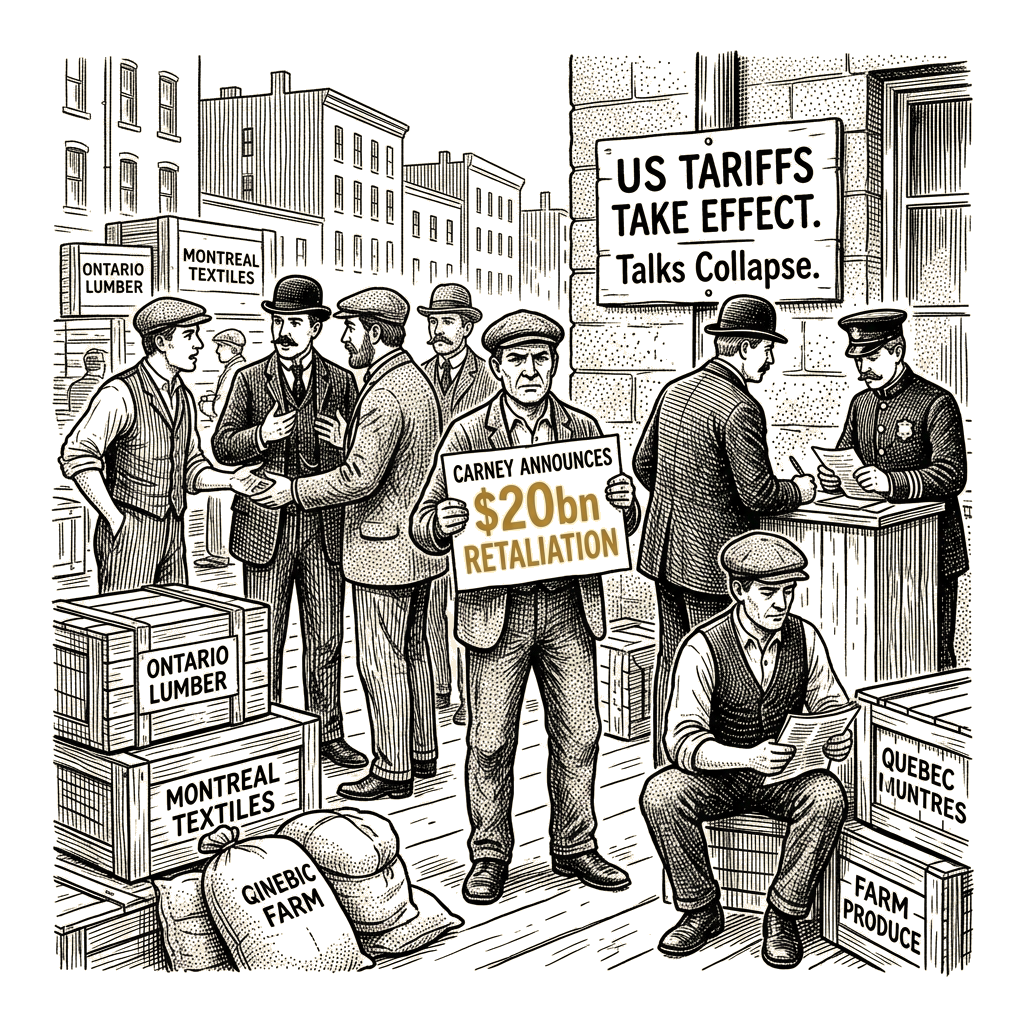
Trade negotiations between the US and Canada collapsed this week, with talks ending just hours before 50% US tariffs on Canadian goods took effect Saturday, according to Adam Gabbatt’s Wednesday column in the Guardian. Canadian Prime Minister Mark Carney responded by announcing retaliatory tariffs on about $20 billion of US exports, including steel, dairy products, appliances and farm equipment.
President Donald Trump, who had claimed a deal with Canada was imminent days earlier, escalated his rhetoric. Trump called Canada “difficult and unreasonable” and labeled Canadian negotiators “clowns.” On Tuesday, Trump said the US was “giving serious consideration to changing the name of Lake Ontario to Lake America in that we don’t expect to be doing much business with Ontario any longer.”
Trump also compared Ontario Premier Doug Ford unfavorably to his deceased brother Rob Ford, the scandal-plagued former mayor of Toronto whose time in office saw him admit to smoking crack cocaine and being “hammered” in public.
Vice President JD Vance escalated the rhetoric further at a Republican rally in Maine. Vance said Canada and China are “the two worst countries when it comes to trade policy anywhere in the world,” and added: “We have to remember, Canada is a state. Sorry. Freudian slip. That was actually an accident.” The Guardian reported Vance appeared unconvinced by his own correction.
Vance then claimed that Canada “quite literally would get invaded by a foreign country were it not for the umbrella of protection provided by the United States of America,” the column reported. The comment came amid Trump’s repeated public threats last year to annex Canada — the only country that has publicly mused about invading its neighbor.
Canadian statements reported in the Guardian attributed the breakdown of negotiations to “uneconomic” last-minute US demands. Carney had said Canada had been “attacked” in the talks and called on the country to use its reserves, resilience, plan and focus to respond, concentrating on what Canada could control.
Canadian Ambassador to the US Mark Wiseman told Bloomberg in subsequent interviews that no single issue had blocked a deal. Disagreements instead spanned tariffs on autos, digital and cultural policy, and US claims of a right to veto Canada’s other trade alliances, Wiseman said.
The trade dispute is already surfacing in US retail prices. American toilet paper and tissue products are often manufactured domestically but rely heavily on lumber-rich Canada for raw materials, according to Guardian reporter Lauren Aratani. The US accounts for more than 20% of global tissue consumption despite having only 4% of the world’s population, she noted.
The escalation comes less than three months before November’s midterm elections, in which Republicans face an uphill battle. Canada scheduled the retaliatory tariffs for September 8, a date that now forms the next flashpoint.
It remains unclear whether the tariffs will be the start of a prolonged trade war or whether negotiations will resume. Carney has said he will not accept terms he characterized as uneconomic, and Trump has continued to demand more favorable terms on steel, aluminum and other goods.
This column follows Carney’s statement on August 25 that Canada had been “attacked” in trade negotiations hours before the US tariffs took effect, and traces the dispute to Trump’s July imposition of the original 50% tariff on Canadian goods under a never-before-used provision of the Smoot-Hawley Tariff Act.