Analysts warn auto tariff cushion against consumer price hikes is wearing thin
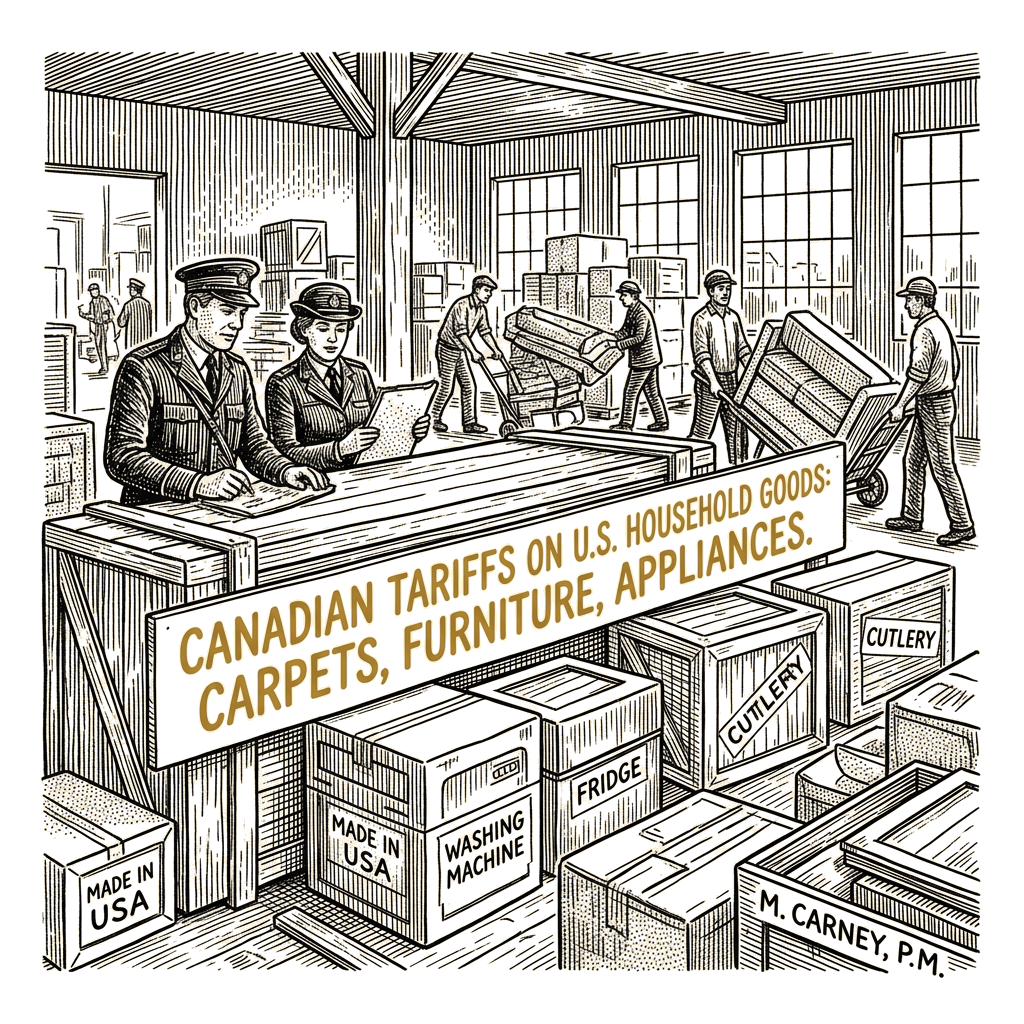
The latest escalation in the US-Canada trade war will land on household budgets on both sides of the border, with Canadian retaliatory tariffs this week targeting US goods as varied as carpets, washing machines, furniture, fridges and cutlery.
The exchange marks the most recent move in a trade dispute that has intensified since US President Donald Trump launched his tariff agenda on returning to the White House. Canadian Prime Minister Mark Carney imposed retaliatory import taxes on a range of US products this week after Trump threatened hikes of his own.
The automotive sector faces the most consequential change. Trump has threatened to raise tariffs on Canadian vehicles from 25% to 50% effective January 1, 2027. Bernard Yaros, lead economist at Oxford Economics, said dealerships have absorbed the “lion’s share” of previous tariff increases but that “that cushion is wearing thin.”
“The recently threatened 50% tariffs on Canadian autos, trucks, and car parts would feed through to consumer prices more readily than before,” Yaros said. He added that higher costs could accelerate a shift by manufacturers toward luxury vehicles, SUVs and pickup trucks, while pushing up prices in the used-car market if supplies of less-expensive new cars tighten.
Carney has so far declined to match Trump’s threatened 50% auto tariff, though a 25% import tax on certain US vehicles has been in place since last year.
Construction materials have also drawn new duties. Canada has matched US rates on steel and aluminum at 50%, and Carney’s package adds import taxes on US wood products including plywood and the screws used to fix timber together. The Forest Products Association of Canada said the tariffs would “raise costs on both sides of the border.”
Bill Owens, chairman of the National Association of Home Builders, urged Trump to exempt building materials from his tariff agenda, citing an “ongoing housing affordability crisis.” “Building material tariffs heighten market uncertainty, strain supply chains and increase construction costs,” Owens said.
A 2024 US Congress report found the US imported $23 billion (roughly C$32 billion, £17 billion) of wood products that year, with almost half coming from Canada. The so-called “lumber wars” between the two countries on softwood used in housebuilding stretch back decades.
Canada’s latest tariff list is notable for its emphasis on consumer goods over raw materials. Bradley Saunders, North America economist at Capital Economics, said Carney has “intentionally targeted goods where Canadians can ‘shift to domestic suppliers instead.’” He cited hair-care products as an example of items that can simply be purchased domestically.
“Like hair care products, you really can just buy that domestically instead,” Saunders said. He characterized Carney’s strategy as aiming to “minimise the impact on Canadian households as much as possible by picking very fungible goods.”
The Budget Lab at Yale, which monitors the impact of US government policy on the economy, anticipates marginal increases in furnishings and other household equipment for Americans, largely driven by tariffs on lumber and other materials.
Alcohol is one category where tariffs have already reshaped consumer behavior. Many Canadian provinces banned US alcohol sales last year in response to earlier tariffs, with the American wine and spirits industry reporting exports to the country dropped more than 70%.
Carney asked the provinces to restore US alcohol to shelves during trade talks, but with those negotiations now collapsed, the bans are likely to return. Saskatchewan and Alberta remain the only provinces still selling American alcohol, and Saskatchewan has announced its own 50% surcharge on US-imported alcohol set to take effect September 8, when the wider Canadian tariffs take hold.
Beyond direct consumer prices, the trade war carries broader economic risks. Import taxes complicate trade for businesses with cross-border supply chains, and the uncertainty created by the dispute could deter investment plans and slow job creation.
Saunders said the largest household impact may not come through prices but through job losses. “If you’re, let’s say, a bespoke furniture producer in BC [British Columbia], you’re now facing a 50% tariff on your exports to the US — that could really shut the business down,” Saunders said. “I think that would be more the direct impact on households as opposed to these retaliatory measures.”
Canada’s forest industry employs almost 200,000 people and has urged the government to boost domestic demand through federal housing programs that make greater use of Canadian wood, while acknowledging that “no support package can replace reliable access to our largest export market.”
Tensions also feed into uncertainty around the US-Mexico-Canada Agreement (USMCA), the free-trade deal between the three North American neighbors. Both Canada and Mexico have requested a 16-year extension, but the US has said it will not renew the agreement in its current form. Although the deal remains operational, tariffs could deter near-term negotiations.
John Iselin, associate director at the Budget Lab at Yale, estimated the cost of the dispute at roughly $3 per American household on average. When Trump’s broader trade war — particularly with China — is included, Iselin said, the added costs rise to about $1,000 for the average US family.
“It’s hard to view this particular instance with Canada in isolation because we’ve had similar interactions with a range of other countries, all of which makes doing business harder,” Iselin said. “It’s just another in a series of tariff shocks.”
The latest exchange follows Carney’s August 26 announcement of roughly $20 billion in retaliatory tariffs after trade talks with Washington collapsed, and Trump’s August 24 Truth Social post setting a January 1, 2027 start date for 50% duties on Canadian vehicles, parts and steel. As MSI previously reported, Carney’s package targeted US steel, dairy, appliances and farm equipment, while Trump’s announcement followed Carney’s earlier signal that Canada would impose counter-tariffs on US goods.