Flood-affected Pagosa Springs residents who have not voted can request replacement ballots statewide
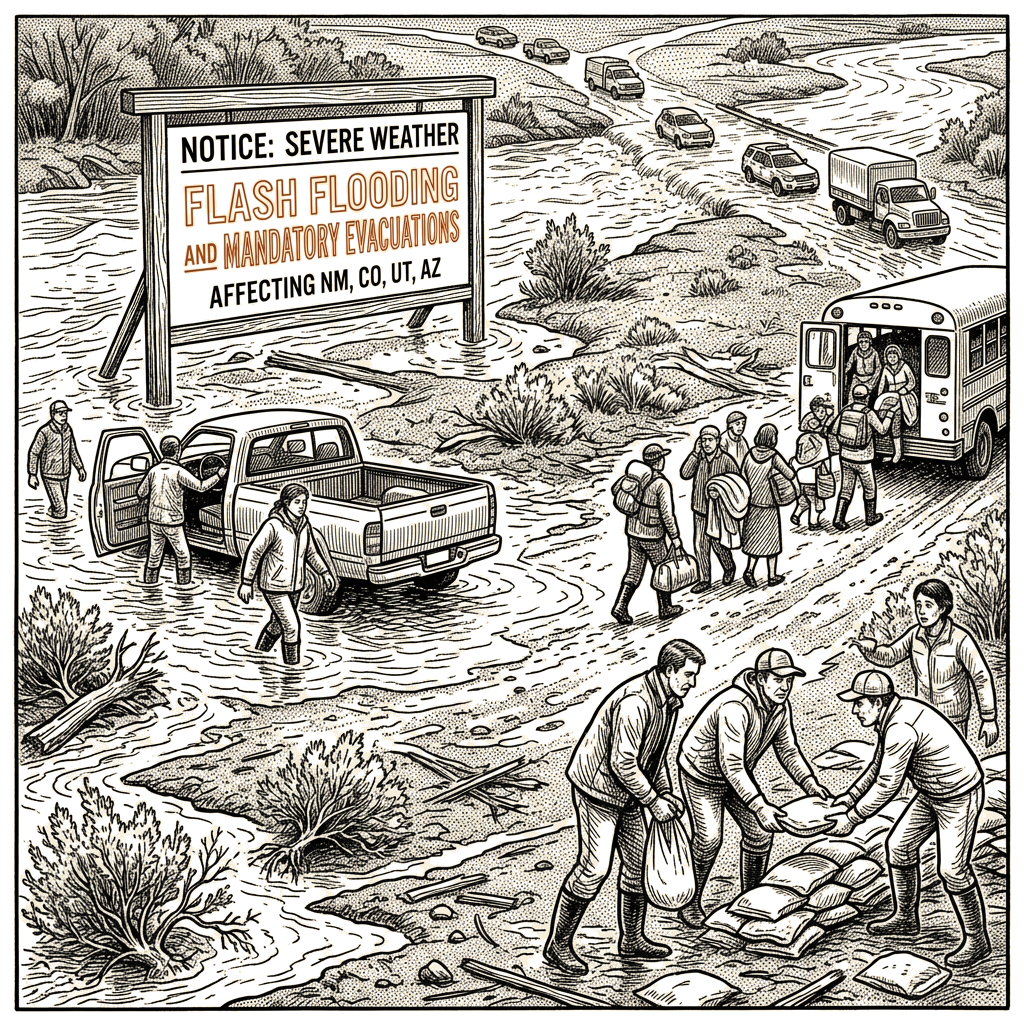
Heavy weekend rainfall produced flash flooding and mandatory evacuations across the Southwest, including parts of New Mexico, Colorado and Utah in the Four Corners region and in northern and central Arizona. By Monday, Nov. 2, some rivers had begun receding while others were still rising as rain moved out of the area. The National Weather Service estimated that as much as 4 inches (10 centimeters) of rain could fall across the region through Monday, with the totals fueled by a series of Pacific storm systems.
David Byers, a meteorologist with the National Weather Service office in Grand Junction, Colorado, said Monday: “Most of the rain is winding down.” He said the next few days look drier.
Arizona authorities issued evacuation orders across several communities as the wet weather continued. Yavapai County and the community of Camp Verde ordered residents living near swollen rivers and creeks to evacuate. Gila County officials ordered the total evacuation of Gisela, a community of several hundred along Tonto Creek. In Sedona, officials ordered residents near Oak Creek to leave Sunday as floodwaters trapped multiple people in their homes.
The Arizona flooding also produced rescues and a search. Wet conditions produced flash floods, river flooding and swiftboat rescues in Tucson. National Weather Service meteorologist Aaron Hardin said “we are getting two or three months of rain in a span of a couple of days.” In Flagstaff, rain fell nearly nonstop Sunday, flooding local roads and overwhelming storm drains. Authorities were searching for a man who had slipped and fallen into fast-moving floodwaters and “was not seen resurfacing,” a police statement said.
In southwestern Colorado, some residents along the rising Animas River were evacuated. All La Plata County roads remained closed Monday because of widespread flooding and damage to bridges.
Officials warned of “potentially catastrophic” flooding in Pagosa Springs in neighboring Archuleta County, a town of more than 2,000 located near ski resorts and known for its hot springs. Readings from late Sunday night showed that the San Juan River had started to recede after reaching 16.81 feet (5.1 meters), and the National Weather Service forecast it would keep dropping Monday. The sheriff’s office had warned that most of the town was wiped out by a 1911 flood that crested at approximately 17.8 feet (5.4 meters). Town officials had lifted an evacuation order from flooding the previous week, only to reimpose it Saturday.
Downstream in New Mexico, the San Juan River was still rising Monday. New evacuation orders covered some residents in San Juan County, including some Navajo communities, while the Utah Navajo Health System posted several active highway closures with detours. Other residents were evacuated from Rio Arriba County, where the Rio Chama remained under a flood warning through Tuesday. Farther south, the rising Jemez River made campgrounds and fishing sites inaccessible.
The flooding prompted the Colorado Secretary of State’s office to set up alternative voting plans for Pagosa Springs residents. The office said in a news release that residents affected by the floods who had not yet voted could “visit any voter center across the state to request and receive a replacement ballot.” Among those residents, anyone casting an in-person ballot outside their home county could vote only for statewide races. A resident in that group with access to a mail ballot could return it to any drop box or voter center in the state by 7 p.m. on Election Day; the office said it would then be sent to their county clerk for signature verification and tabulation.
Voting centers in La Plata County were still scheduled to open, while some county offices, including the clerk’s office, were set to have special hours Tuesday.
Katie German, owner and chef of Bruin Coffee in Pagosa Springs, said Sunday that downtown had been evacuated and street flooding was present. She said she was most worried about the one bridge into town washing out, which would prevent trucks carrying everything from food to fuel from getting in. “I’m worried about my business, worried about my employees, definitely worried for everybody in this town,” German said.
In the Pinetop-Lakeside area of central Arizona, the region’s sanitary district said “manhole covers are popping up all over.” Residents reported that sewage was backing up into their homes because of the flooding.
As the rain tapered, the San Juan River was receding near Pagosa Springs but still rising in New Mexico, the Rio Chama remained under warning through Tuesday, and communities still faced evacuation orders, closed roads, bridge damage and sewage backups. Philip Marcelo reported from New York, Casey from Boston and Weber from Los Angeles. Kathy McCormack in Concord, New Hampshire, contributed to the report.