Dennehotso Chapterhouse employees and volunteer drivers shuttled voters to polls
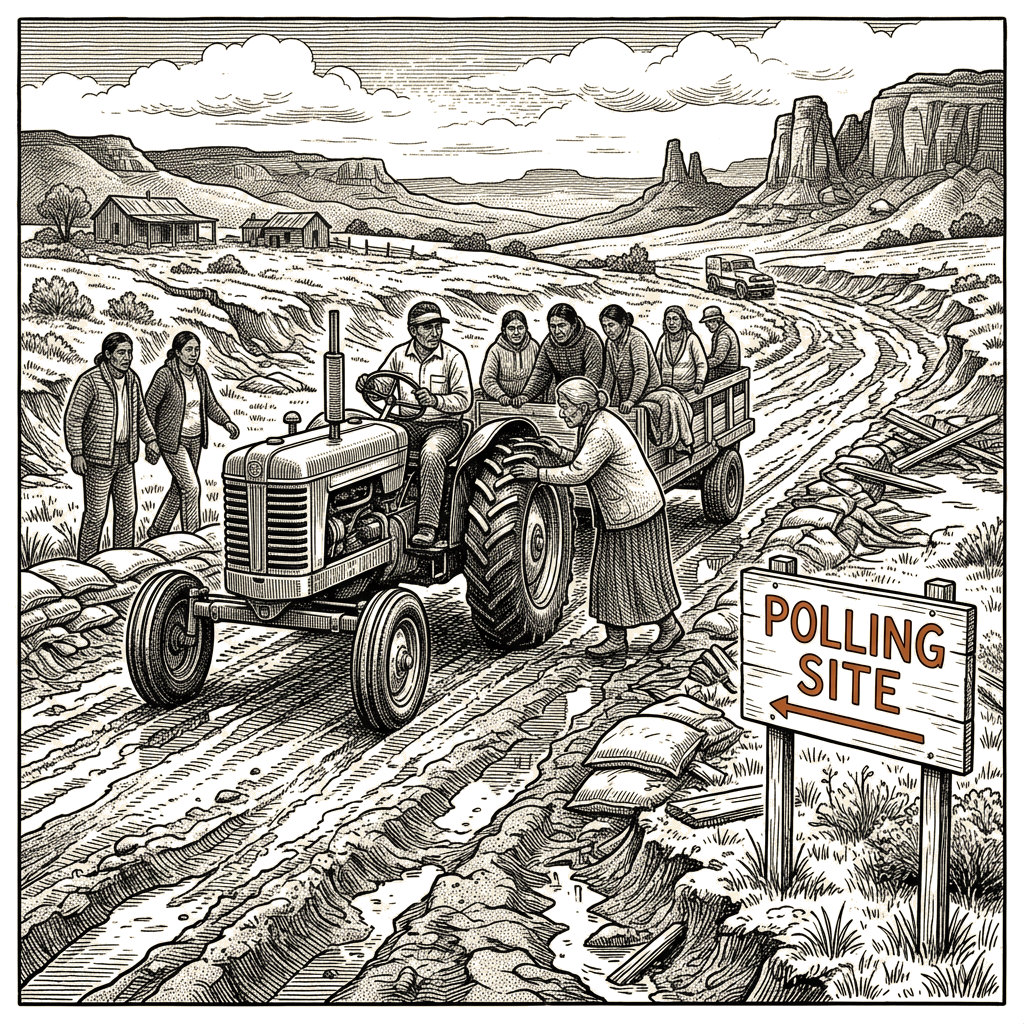
On election day, Navajo voters reached polling sites in parts of Arizona, Utah and New Mexico despite repeated fall flooding that washed out roads and displaced thousands from their homes. Some traveled from one road to another on tractors, while volunteer drivers and Chapter employees shuttled others to the polls.
At the Dennehotso Chapterhouse, voters arrived in trucks with mud-caked tires. People gathered in the parking lot to eat fry bread and mutton stew, foods commonly found at Navajo polling sites. The town was framed by the sandstone curves of Comb Ridge, with the stone spires of Monument Valley peeking over the ridgeline.
Urbina Yazzie, 27, said, “I love to see our people come out and talk amongst each other.” She said this year’s election was unusual because people had to drive tractors from one road to another just to come to the polls.
Dennehotso had endured three floods in the month before election day, including the flood that began on October 22, the one residents will talk about for decades to come. Local contractor Kev Woolboy was helping coordinate response efforts and checking watersheds along the highway as floodwaters from as far as 60 miles away raced toward town.
“We have some man-made earth dams that were supposed to slow (the water) down,” Woolboy said. “But there was so much rain, those earth dams didn’t stand a chance.”
The floodwaters ravaged homes and newly built roads, knocked out power and water and left part of the town under thick, goopy mud. Two weeks later, residents were still digging out.
On election day, a backhoe was building a temporary road so residents cut off from town could reach the Chapterhouse. Volunteer drivers and Chapter employees also shuttled people to the polls, and some residents drove hours to get there.
During the flood, Kev Woolboy worked as a local guide for the Navajo Police Department, which brought in an amphibious vehicle to rescue residents. Woolboy said he jumped into the water, brought children and elders aboard and helped with their personal belongings. As it grew dark and the floodwaters rose, he said, it became impossible to tell the difference between the ground and a swirling mix of rainfall and reddish-brown silt.
“We thought we were safe,” said Phyllis Yazzie, 74. She was at home with her son during a late breakfast when her niece called. “Auntie! You better get out of there!” the niece told her, according to Yazzie. After seeing the water rising toward the wash, Yazzie tried to drive down a dirt road but was forced back to the highest point on their land. A torrent carved ravines on both sides of the house, and Yazzie and her son spent the night in their car while people tried to rescue them.
When the amphibious vehicle came close to Phyllis Yazzie’s house, Woolboy asked the officers to stop the vehicle. “I told the guys something doesn’t look right,” Woolboy recalled. “So they turned on their floodlights to where I could see. There was no road there. We had to turn around, we couldn’t get Phyllis that night.”
Vera Begay came to the polls with her 92-year-old mother, Lilien Begay, who had lost her home and all of her identification documents. Vera said her mother had never missed a vote and had come to the Chapterhouse for voting throughout her life. Speaking in Navajo, Lilien Begay said she was emotionally devastated.
Urbina Yazzie said the effort meant more to Navajo voters because of the flooding and what was happening across the Navajo Nation. She called voting especially important and said conditions remained tough. On election day, people who might disagree about politics laughed and cried together, bringing their community back to life.