Subpoena powers set to expand oversight of private equity, crypto and prediction markets
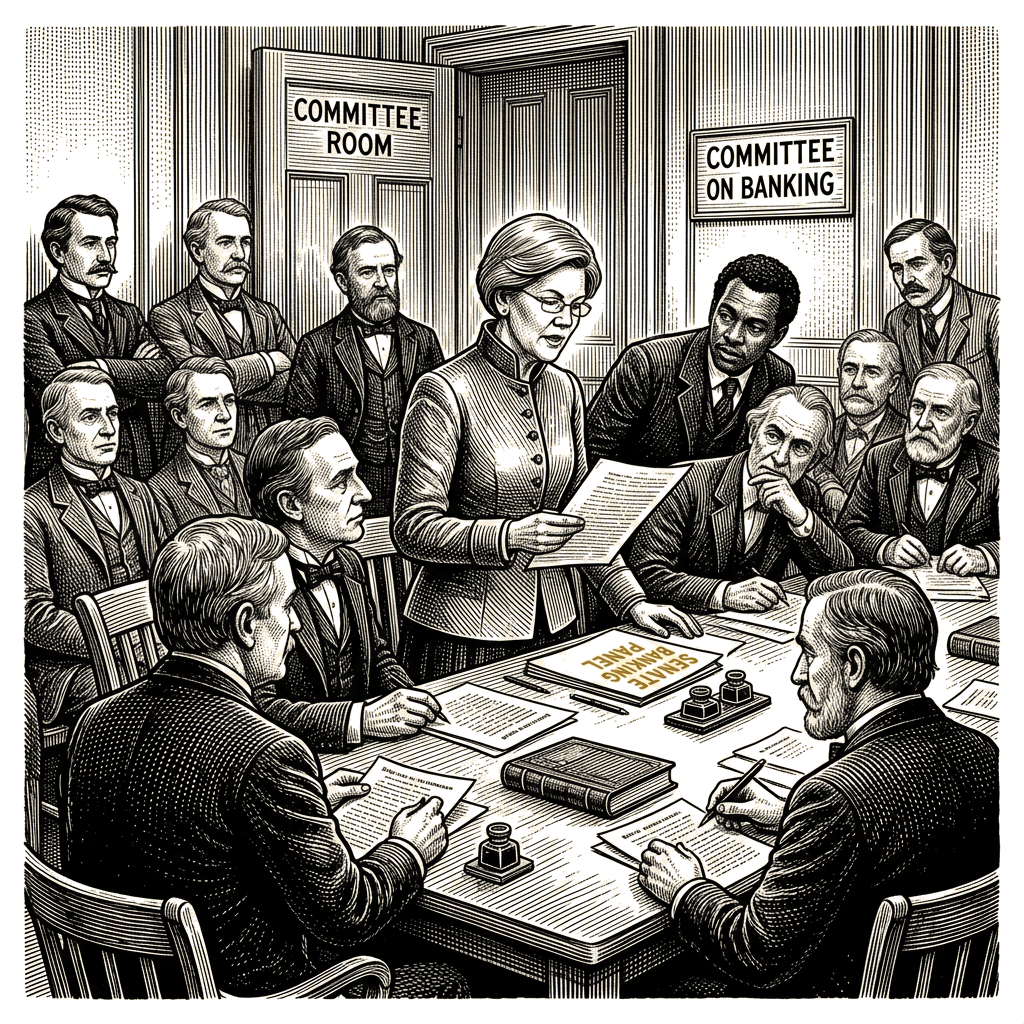
Sen. Elizabeth Warren is expected to take over as chairman of the Senate Banking Committee, giving the Massachusetts Democrat the expansive authority over the financial industry she has sought for nearly two decades, The Wall Street Journal reported. With the gavel comes a new set of subpoena powers that Warren is expected to use to heighten oversight and investigations targeting firms including JPMorgan Chase and Bank of America, other Wall Street figures, and a new generation of trading technologies ranging from crypto to prediction markets.
Markets moved quickly. Stocks tumbled Thursday, with financial firms and crypto assets dropping as investors grew fearful that the Democratic agenda would hamper business broadly and the artificial-intelligence boom. The S&P 500 fell 4.4%, and JPMorgan Chase and Goldman Sachs each fell more than 4%.
Among Warren’s likely early priorities as chairman, according to the Journal, are taking on private equity through her “Stop Wall Street Looting Act,” investigating allegations of insider trading at prediction markets and probing consumer protections at cryptocurrency companies.
Since the election, Warren staffers have told lobbyists and allies such as housing and consumer-protection groups that her early actions as chairman will be consistent with what she has done over the last two years as the committee’s most senior Democrat — “except now she will be driving the train.” People close to Warren have said “anyone who got a letter should be on high alert.” As the panel’s top Democrat, Warren and her staffers have written hundreds of letters to companies demanding answers to thousands of questions.
For Warren and her supporters, the chairmanship offers a chance to implement the consumer-populist agenda she has pushed for years. “Democrats won this election by claiming we are on the side of working people, and working people are counting on us to deliver,” she wrote Thursday in an opinion piece in Time.
Warren has built her career on Wall Street reform, according to the Journal’s account. She has called the private-equity industry’s takeovers legal “looting,” written a bill that could make it easier to jail executives and called for criminal probes into banking executives for failing to catch blowups. She has sought to delay SpaceX, the biggest initial public offering of all time, and raised questions about Anthropic’s existential risks to humanity. She has pledged to examine bankers’ ties to Jeffrey Epstein and their dealings with the Trump administration.
In October, when she introduced the private-equity bill, Warren said: “Private-equity takeovers are legal looting that make a handful of Wall Street executives very rich while costing thousands of people their jobs, putting valuable companies out of business, and in the case of healthcare, is literally a matter of life and death.” Much of her agenda has the power to crimp Wall Street revenues, particularly for private equity, according to the Journal.
A Harvard professor and bankruptcy expert, Warren was tapped by President Barack Obama after the 2008 financial crisis to help create a consumer financial protection agency. Banks that viewed her as a firebrand radical helped block her from running the new agency — an opposition some lobbyists now regret, the Journal reported. Elected to the Senate in 2012, she has regularly grilled bankers and executives in hearings, and lobbyists say she jumps on headlines and views herself as a key voice in Democratic economic leadership.
Starting in January, Warren is expected to flex her powers as chairman with oversight of the Trump administration and its regulators, including a focus on allegations of corruption among the president and his family members, according to people familiar with the matter. Earlier this week, in a 41-page missive published on behalf of committee Democrats, she called out companies from Capital One to Skydance for conflicts of interest with the Trump administration.
The White House pushed back on the prospect of Democratic investigations. “As the President has said, he’s willing to work with anyone to continue delivering victories for hardworking Americans,” White House spokeswoman Lauren Bis said. “If Democrats choose to pursue sham investigations and radical left policies, they are choosing to work against the American people.”
Warren will have allies in the oversight push. Sen. Richard Blumenthal of Connecticut will oversee the Senate’s Permanent Subcommittee on Investigations, and Rep. Maxine Waters of California is the front-runner to chair the House Financial Services Committee; both are expected to aggressively investigate the crypto industry and its ties to those in Trump’s orbit. Senate watchers also expect Warren to try to stand in for government organizations that have been pared down over the past two years, including the Consumer Financial Protection Bureau, the Securities and Exchange Commission and the Office of the Comptroller of the Currency.
The chairmanship is not guaranteed. It rests on Warren’s standing as the committee’s most senior-ranking Democrat, and banking lobbyists have asked whether Sen. Sherrod Brown of Ohio could try to reassume the role. Brown led the committee during the Biden administration before losing his seat and won election again this week; most Senate watchers consider a competing bid unlikely.
Warren has pledged to work with Republicans where they find common ground. This year she passed a housing bill with Sen. Tim Scott of South Carolina, and she took a phone call from Trump about potentially working together to cap credit-card interest rates — a policy that appeals to populists in both parties. She has also joined Treasury Secretary Scott Bessent and some Republican lawmakers in pushing to raise the limit on deposit insurance.
Wall Street figures and former lawmakers described the outlook in pointed terms. “It’s hard to imagine it’s good news for these industries,” said former Sen. Pat Toomey, previously a Republican ranking member of the banking committee. “She’s been very aggressive in attacking banks over the years.” Brian Gardner, chief Washington policy strategist for Stifel, a brokerage and investment bank, said, “She has contentious relationships with the largest firms, and I don’t think that’s going to change.” But, he said, “I think she’s going to pick her battles. I don’t think she wants to be seen as simply anti-bank.”
For some on Wall Street, the biggest concern is the potential for bipartisan agreement on populist policies, according to the Journal. “The big question is: Are there areas of overlap between populist Republicans and Democrats that could result in what I would consider very anti-free market legislation,” Toomey said.