Trump still weighs new strikes as Vance ties war to Republican midterm collapse
Qatar, the lead mediator in the conflict between the United States and Iran, is seeking to persuade Tehran to allow UN nuclear weapons inspectors to visit the country’s bombed nuclear sites, including those housing Iran’s stockpile of highly enriched uranium. Sheikh Tamim bin Hamad al-Thani, the emir of Qatar, spoke to Donald Trump about the proposal, the emir’s office said on Friday, without revealing the contents of the call. Qatar’s state news agency said the emir “emphasised the importance of continuing dialogue and embracing diplomacy as a means of resolving disputes, preventing further escalation in the region”.
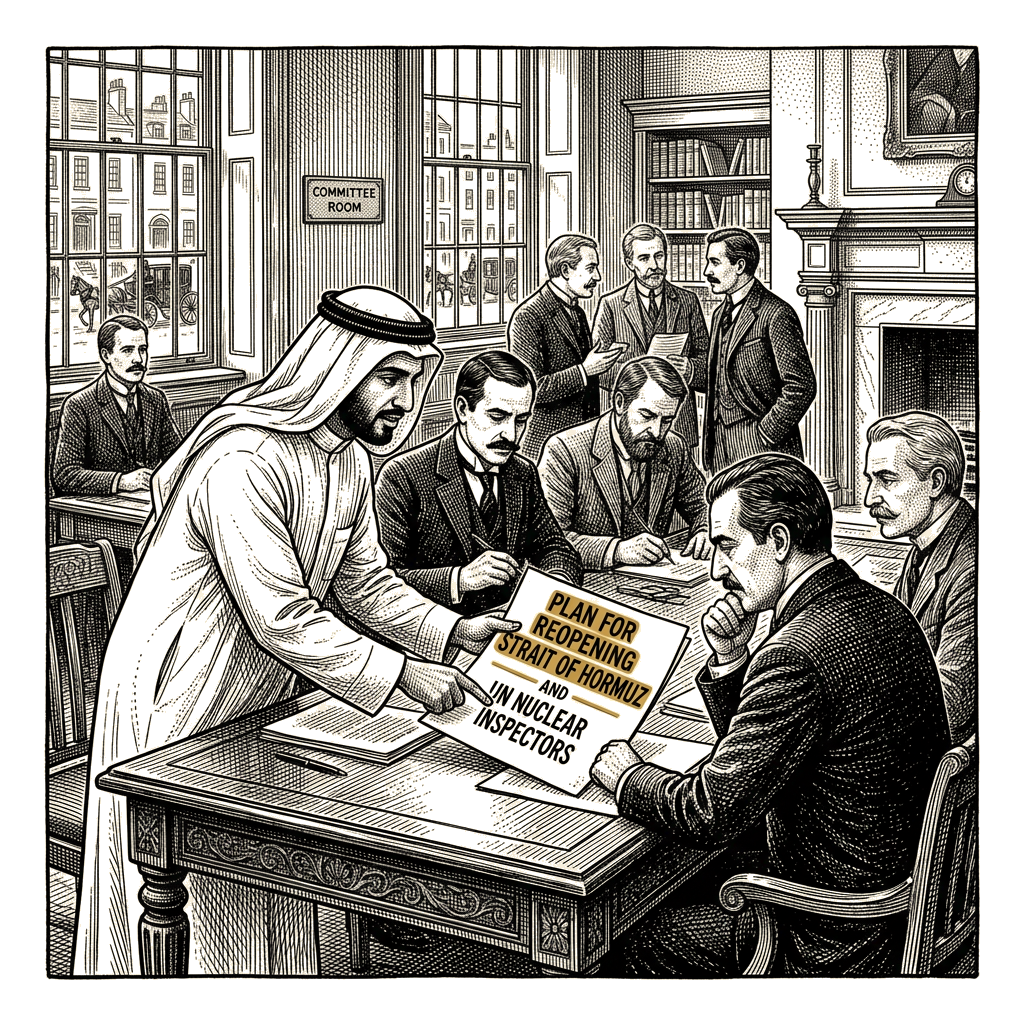
Under the proposal, the United States would immediately lift the naval blockade on Iran in the Strait of Hormuz and release a portion of the $8bn of Iran’s frozen assets. In return, Iran would agree to visits by International Atomic Energy Agency inspectors to its bombed nuclear facilities, based on a previously abandoned agreement that had been reached in Cairo in September 2025. Iran would not be required to make any commitment that the stockpile would be removed from the country; other options on the table include reducing the uranium content by down-blending it.
Iran would open the strait on the second day of the deal being implemented, via a route it has already negotiated with Oman that the two countries would jointly lodge with the International Maritime Organisation.
The sequencing of commitments has been at the heart of the mediation. Iran has attached multiple further preconditions to opening the waterway: an end to the war in Lebanon, a withdrawal of US forces from the Iranian coastline, a commitment to lift some economic sanctions, and agreement to pay war reparations.
The memorandum of understanding also set out a $300bn reconstruction and development fund to help Iran recover economically, but it was never clear exactly how the proposal would be funded.
Trump is still considering whether to mount a further assault on Iranian nuclear sites. The credibility of such threats inside Iran, however, has weakened since Vice-President JD Vance said the war itself — and not just its cost to American consumers — was critical to the collapse of the Republican vote in the US midterms.
Iran, described as being in a triumphalist mood after Trump’s election wipeout, has been wary of allowing UN nuclear inspectors back into the country, saying it had lost faith in Rafael Grossi, the head of the inspectorate. Tehran claims Grossi betrayed his duty to uphold the nuclear non-proliferation treaty by failing to criticise the US for bombing Iran’s nuclear sites, and it fears that material gathered by the inspectors would be handed over as targeting data to the Americans and Israelis. A billboard in Tehran bears the message “we will kill Trump”.
In parallel talks on the strait, Oman’s foreign minister, Badr Albusaidi, has spoken again with Iran about the future of the waterway’s administration, including the agreed route, the extent to which any agreement would be temporary, and the need to register the proposal with the IMO, either as a bilateral agreement or a joint regional one. Oman has also advanced a long-term proposal for administering the strait, compliant with the law of the sea, under which shipping companies would be charged only for services rather than tolls.
Amir Hayat Moqaddam, deputy chair of the national security and foreign policy committee in Iran’s parliament, told the Iranian Students’ News Agency on Tuesday that ships from four countries — China, India, Qatar and Iraq — were allowed to pass through the strategic waterway. The exemptions served mutual interests, he said: Iran charged Indian and Chinese vessels transit fees while allowing Qatari ships to pass free of charge, medicine was received from India, and China provided political support.
Of the 10.23m barrels a day of Gulf crude that passed through the strait in October, about 42% went to China and 13% to India, according to Muyu Xu, a senior crude oil analyst at the analytics firm Kpler.
The navy of the Islamic Revolutionary Guard Corps said two “violating” oil tankers attempting to pass through an unauthorised route in the eastern sector of the strait had collided with mines and caught fire. The IRGC said the two tankers had turned off their navigation and identification systems, and said the attempted crossing was undertaken with the support of US military forces.