House impeachment vote against Hegseth fails with 11 Democrats absent
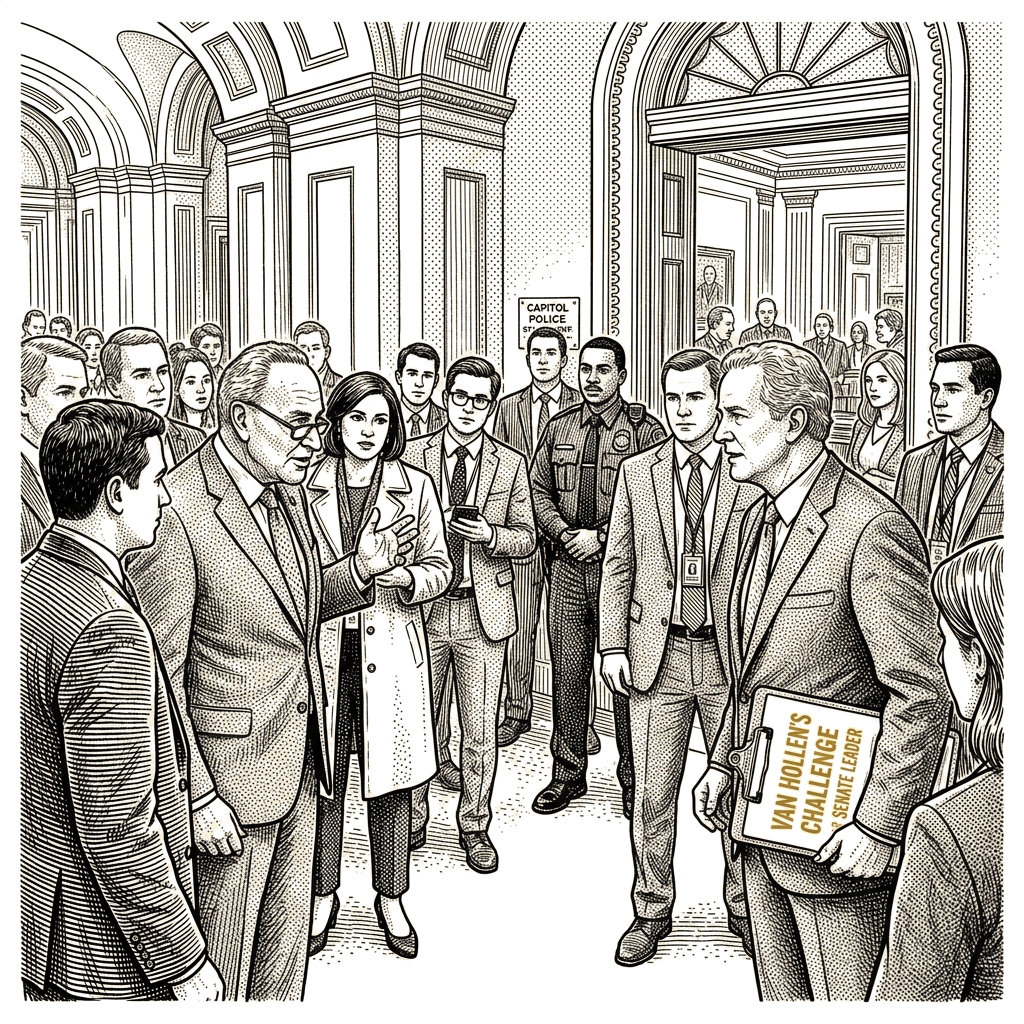
Sen. Chris Van Hollen of Maryland is pressing a bid to replace Sen. Chuck Schumer of New York as the Democratic leader in the U.S. Senate, arguing that the voters who powered the party’s midterm surge want the chamber run differently. Van Hollen made his case as Democratic senators gathered in Colorado this week, shortly after elections that handed Democrats majorities in both chambers of Congress.
“This is about answering the call of the American people, because what I’m very afraid of is that their calls to end political corruption, their calls to end a rigged economic system will require that we organize the Senate in a different way,” Van Hollen said.
NPR senior contributor Ron Elving, assessing the race with host Scott Simon on the network’s weekly politics segment, said the argument “has a lot of appeal” to younger voters, first-time voters and independents — “the people who fueled this extraordinary Democratic surge, especially in the Senate races that Democrats won when nobody thought they were even close.”
Elving also raised questions about what a Van Hollen victory would change in practice, asking whether the Maryland senator means only “a new leader, someone other than the longtime leader Chuck Schumer” — and, if more than that, “how do we know it will be better?”
Schumer says he already has vote commitments from most Senate Democrats, Elving reported. The incumbent needs 29 votes to keep the post, and some of his allies say he will have 40 or more. But the election is decided by secret ballot, and Elving said he has “seen leadership elections in the past where someone claimed to have the votes before they were cast but did not have a majority when the votes were counted.” Van Hollen, he added, “still has time to make his case.”
In the House, a motion to impeach Hegseth failed a week after Democrats won their majority because 11 Democrats did not make it to the chamber to vote. Elving said there is “a lot of anger about this,” especially among people who wanted the party to act on Day 1 — but noted that Democrats “won’t actually have the majority in the House until January 3, when the new Congress convenes.” By his account, “Day 1 for the new majority is still seven weeks away.”
The Hegseth vote was forced by what Elving called “a rogue Republican” but was scheduled and managed by the current Republican leadership. Every other Republican who voted opposed impeachment; Republicans remain the majority party, which Elving said made the difference. There were no-shows in both parties, and the final tally suggested that had every Democrat been present, they could have prevailed — though Elving noted that assumes the GOP leadership would have allowed the vote to end that way rather than unlocking more Republican votes of its own.
Hegseth “will still face investigations and impeachment when the Democrats actually do take over,” Elving said. The Senate would need two-thirds to convict and remove him, an outcome Elving called more likely in January with the chamber’s new Democratic majority than under its current one.
Asked which names leap out for impeachment in the new Congress, Elving pointed first to Hegseth — “for Iran, to be sure, but also for his wholesale demotion of generals and admirals and his efforts to instill his notion of warrior culture throughout the armed forces.”
A second target could be Health Secretary Robert F. Kennedy Jr. Elving pointed to recent issues that have come up about Kennedy’s travels, but said the weightier factor is the measles outbreak, which “has brought us fatalities and thousands of new cases, sometimes more than 200 in a week.” By comparison, Elving said: “In the first four years of this decade, we did not see 200 new cases of measles in a whole year.”
President Trump has stood by both Hegseth and Kennedy, Elving said, in a way he did not when pressure mounted on other members of his Cabinet, such as Kristi Noem at Homeland Security and Lori Chavez-DeRemer at Labor. “So we’ll see if he stands by these men in January, as well,” Elving said.
The week also exposed friction inside the administration over Nvidia, China and chip sales. Elving said the list of Cabinet members under pressure “should really start with Howard Lutnick at Commerce,” who has been portrayed by others in Trump’s inner circle as slow to block the sale of advanced Nvidia computer chips to a company called Megaspeed — a company identified by U.S. intelligence as “a pass-through, a kind of dummy corporation for the Chinese government.”
One Megaspeed executive, Alice Huang, is alleged to be a Chinese spy and to have been having an affair with Jensen Huang, who resigned this week as CEO of Nvidia. Treasury Secretary Scott Bessent has said “Megaspeed should never have had this access,” and that Lutnick and the Commerce Department “dragged their feet and let it happen.”
And at the end of the trail, Elving said, sits “the extraordinarily close relationship Jensen Huang had with President Trump.” “There’s lots to probe here when the new Congress gets going in January,” he said.