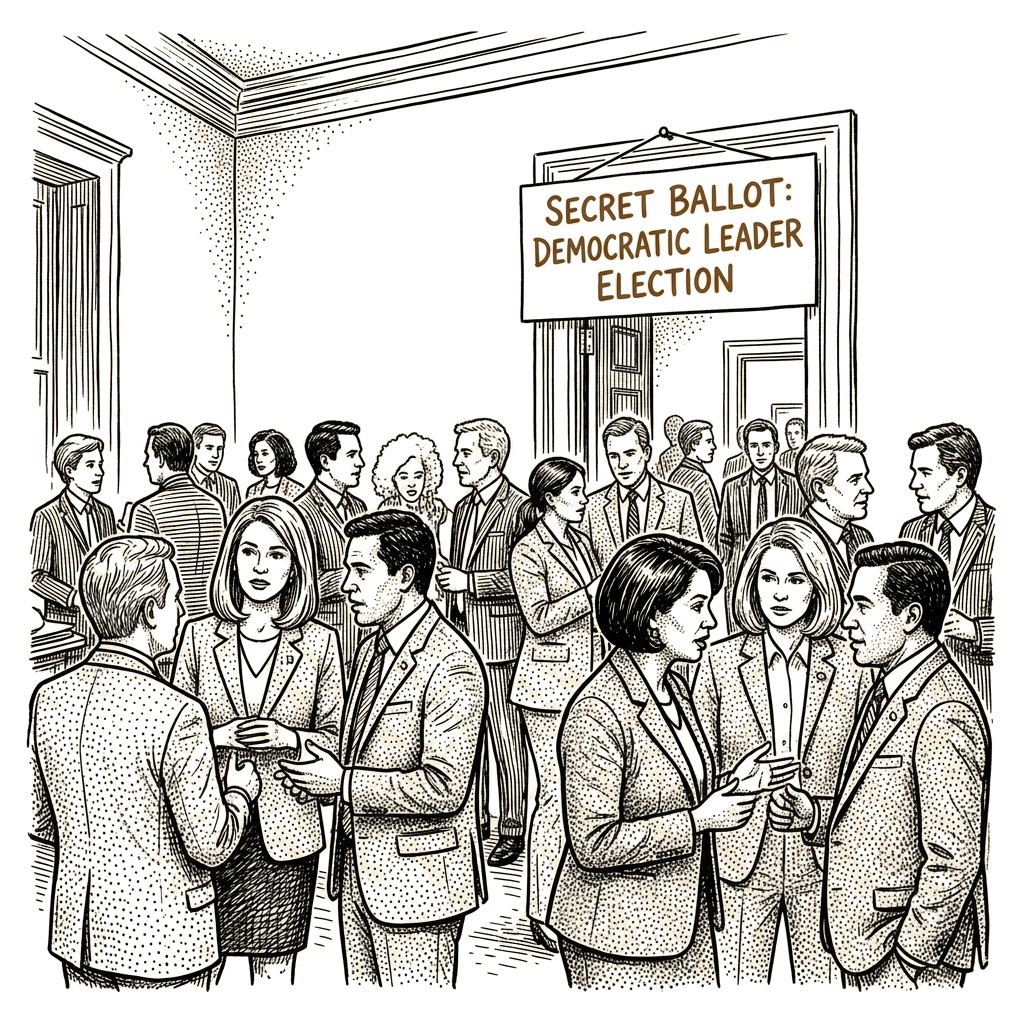
Caucus divided over re-electing Schumer ahead of December secret ballot
The Senate Democratic caucus will elect its leader by secret ballot behind closed doors in early December, in the first contested election for Democratic leader in decades. The question of whether to re-elect Chuck Schumer has already divided the caucus, and many senators will not say publicly how they will vote. Senators have privately deliberated about what message to take from the midterm elections, which returned Democrats to the Senate majority.
The contest took shape on Thursday, when Chris Van Hollen, the Democratic senator from Maryland, announced that he is challenging Schumer for the role of Senate majority leader when Democrats regain the chamber’s majority in January.
Van Hollen made the announcement in a statement posted on social media. “In this election, the American people called for change,” he said. “They called for a change from Donald Trump’s disastrous policies – but even bigger than that, a change from the status quo that isn’t working for working people.”
“It’s now on us to meet this moment, and to do that we need new leadership,” Van Hollen said in the same statement. “This is not about any one person – it’s about answering the call of the American people. That is why I’m running for Senate Majority Leader.”
Schumer, the leader of the Democratic minority in the current Senate, responded less than a minute later in a social media post of his own. “I welcome any discussion about the future of our caucus and the important work ahead,” Schumer wrote. “I’m proud of what we’ve accomplished together – 55 seats and counting is an amazing result – and I have the votes to continue serving as Democratic Leader. I look forward to leading our new Democratic majority and delivering for the American people.”
Van Hollen’s challenge comes after he said he was considering a bid and after Schumer said he had the necessary support to win. “I’m going to win it,” Schumer told the Associated Press in an interview last week.
Schumer recruited many of the party’s winning candidates and raised money for them during the campaign. But some of those winning candidates, most notably Michigan’s senator-elect, Abdul El-Sayed, did not initially have Schumer’s support.