Jim Lankford says Thune has widespread Republican support
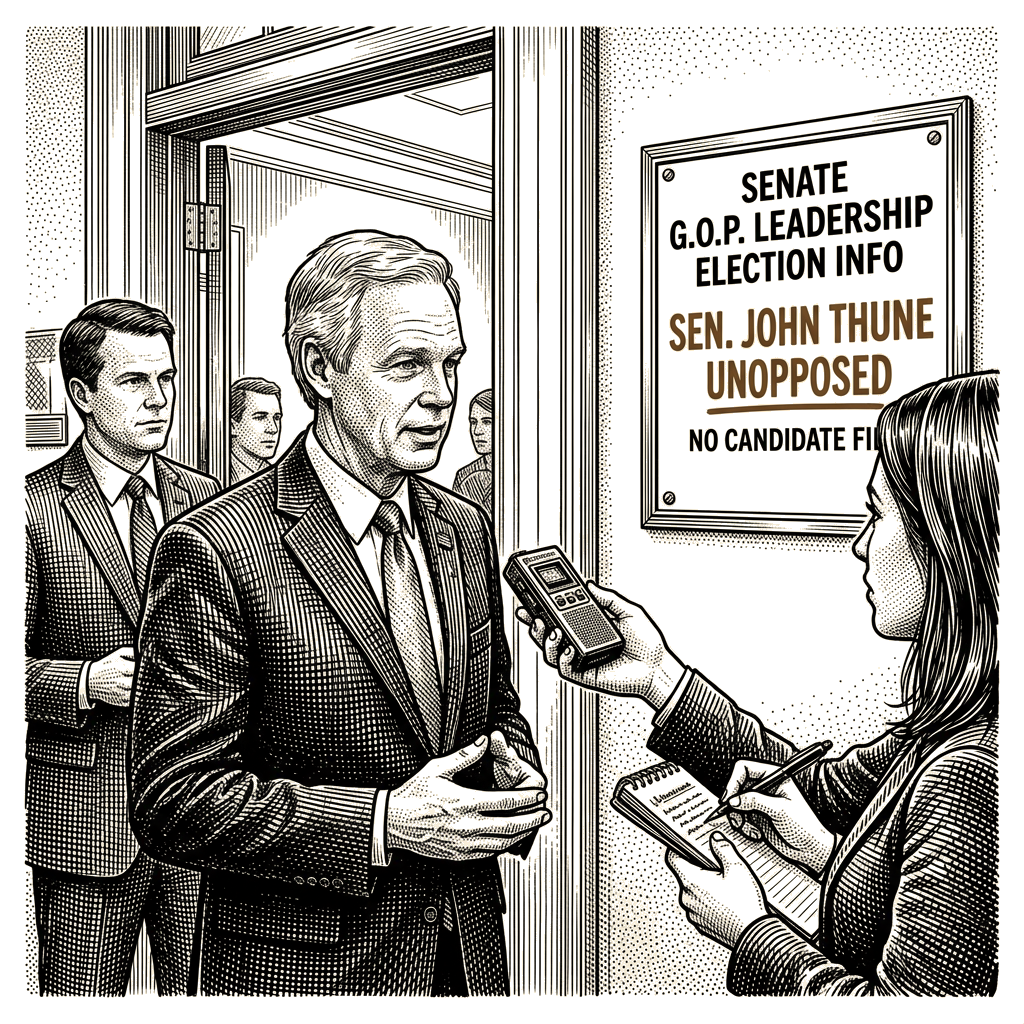
Wisconsin Sen. Ron Johnson conceded that no one else was on the ballot against John Thune, saying, “That’s part of our problem, who would want the job?” As he turned to a reporter, Johnson asked, “Do you want it?” He also asked Senate Republicans to delay their closed-door, secret-ballot leadership elections after the GOP’s midterm losses. “We need to have some real soul-searching,” he said. “We can’t just continue on business as usual — that kind of defeat demands change.”
Oklahoma Sen. Jim Lankford supports holding the elections Tuesday, when many of the new Republican senators will already be in town for freshman orientation. Thune “has widespread support” among Republican senators, Lankford said. “It is a pretty complicated role to be able to manage,” he said. “No one wants that job.”
The disagreement comes as some Republicans who returned to Washington on Monday for the first time since the election say it is too soon to endorse the status quo. The midterm losses cost the party at least seven seats and its Senate majority. Thune said Monday that the leadership was moving ahead with Senate elections, including contests for other party leaders, but senators could still seek a vote to delay when they gather Tuesday morning.
The conference will have a “very fulsome, robust conversation about where we go from here and then we’ll see what the consensus of the conference is,” Thune said. “Ultimately that’s a decision made by Republican senators,” he said. Thune is expected to be reelected because he remains popular with fellow Senate Republicans and is running unopposed.
Johnson is not alone in wanting more time. Pennsylvania Sen. Dave McCormick said in a statement over the weekend that Republicans should not choose a leader until the lessons of the election have been “digested and debated.” Indiana Sen. Jim Banks said Republicans need to “sit down and have a frank conversation about where we fell short.”
Utah Sen. Mike Lee, one of a few senators who signed Johnson’s letter, said any leadership contest should come after the two outstanding Senate races in Alaska and Mississippi are decided. Neither race had been called, leaving it unclear whether Republican Sens. Dan Sullivan of Alaska and Cindy Hyde-Smith of Mississippi would return next year. Republican losses in those races could further reduce the party’s ranks.
Thune, who replaced Sen. Mitch McConnell of Kentucky as leader in early 2025, has spent much of the last two years navigating President Donald Trump, who has often been at odds with the Senate. Thune has made it a point to hear out different viewpoints before making major decisions and has maintained close relationships with Republican rank-and-file members, an approach that differed from his predecessor, McConnell.
While backing Trump on most policy, Thune has refused to change Senate rules and scrap the filibuster to pass voting legislation that would require proof of citizenship for all voters. The Associated Press described the position as one that “frustrated Trump and enraged some in the president’s political base.”
President Donald Trump hosted Thune and his family at the White House in October. On Monday, Trump called the GOP leader “a very fine man” and said the election was “up to the Senate.”
In his first remarks on the Senate floor since the election, which he called a “tough night,” Thune previewed his pitch to colleagues looking for answers on how they will navigate the minority. Republicans will be willing to work with Democrats, Thune said, but “the American people are not looking for socialist government and leftist fantasies.”
As lawmakers worked to wrap up the year’s business, they were funding the government and considering whether there were issues where the parties could work together. An energy permitting bill advanced on a bipartisan vote Monday evening. Republicans will try to confirm as many of Trump’s nominees as they can before the new Congress begins Jan. 3, and Democrats will strategize on how best to keep up their momentum into next year.
Across the aisle, Democrats who could hold as many as 56 seats next year are having private discussions about whether New York Sen. Chuck Schumer is still the right person to lead them. Schumer has faced criticism from the left and the right of his caucus, and candidates from both sides declined during the campaign to say whether they would support him as leader.
Maryland Sen. Chris Van Hollen and Michigan Sen. Elissa Slotkin have both considered challenging Schumer, but neither has announced a run. Many in the party have said it is time for generational change after Schumer’s 12 years as leader.
Schumer appears to have widespread support from his members after carrying his party to wins in Tuesday’s elections. Sen. Kirsten Gillibrand, Schumer’s New York colleague and the head of the Democratic Senate campaign arm, predicted that he would win enough support. Gillibrand said Schumer not only won the Senate back but “cares deeply, and he understands politics well.”