Carney says Canada ahead of schedule on plan to lift exports to China 50% by end of decade
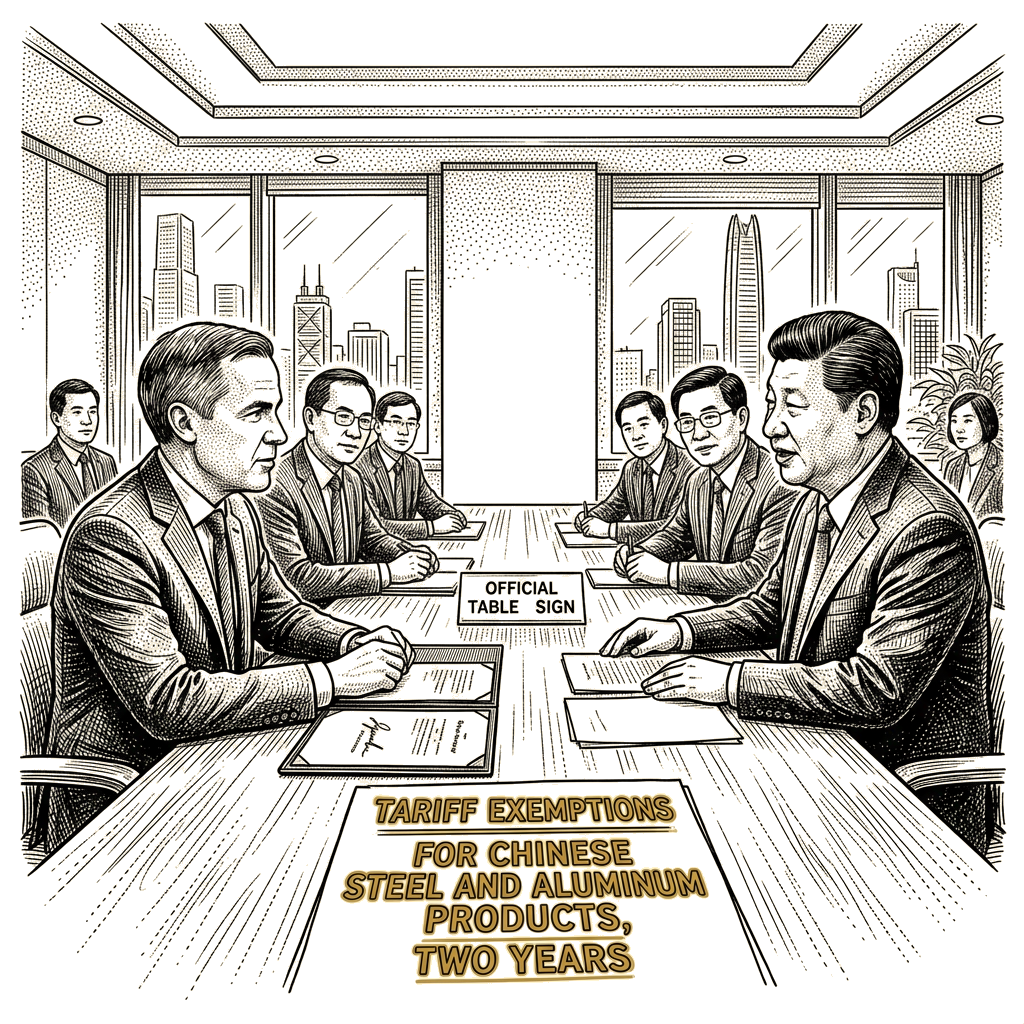
Canada will extend tariff exemptions for certain Chinese steel and aluminum products by two years under an agreement reached Tuesday in Shenzhen by Prime Minister Mark Carney and Chinese President Xi Jinping. China will provide additional tariff relief on Canadian exports worth around 400 million Canadian dollars ($280 million), including frozen pork cuts, fish and seafood, in return for the extension. Carney also said Canada is ahead of schedule in its plan to increase exports to China by 50% by the end of the decade.
A statement from Carney’s office said the new measures extend and expand an earlier agreement between the two countries. The meeting came ahead of the Asia-Pacific Economic Cooperation summit, and both leaders praised the strategic partnership they agreed to pursue this year and pointed to improving economic ties. The agreement came as Ottawa navigated strained relations with the United States.
The meeting came a day after Carney said Canada could turn to Chinese automakers if trade negotiations with U.S. President Donald Trump fail to maintain an integrated North American auto industry.
“Improving and developing China-Canada relations serves the interests of the people of both countries and is also conducive to safeguarding world peace, stability, development and prosperity,” Xi said. “This is the right choice.”
Carney said exchanges between Canada and China had increased in the past months and praised the “greater predictability and stability” now present in the relationship.
“The stabilization of our bilateral trade arrangement is indicative of how we can work together more broadly, pragmatically, to solve problems,” Carney said.
Xi and Carney reached an agreement in January that allowed tens of thousands of Chinese electric vehicles into Canada at reduced tariffs. Under that agreement, Canada reduced its 100% tariff on Chinese electric vehicles to 6.1%, initially allowing up to 49,000 vehicles annually, with the cap increasing over time.
In exchange, China agreed to lower tariffs on Canadian agricultural products, including canola.