Hokkaido growers cite pest risks from fresh imports
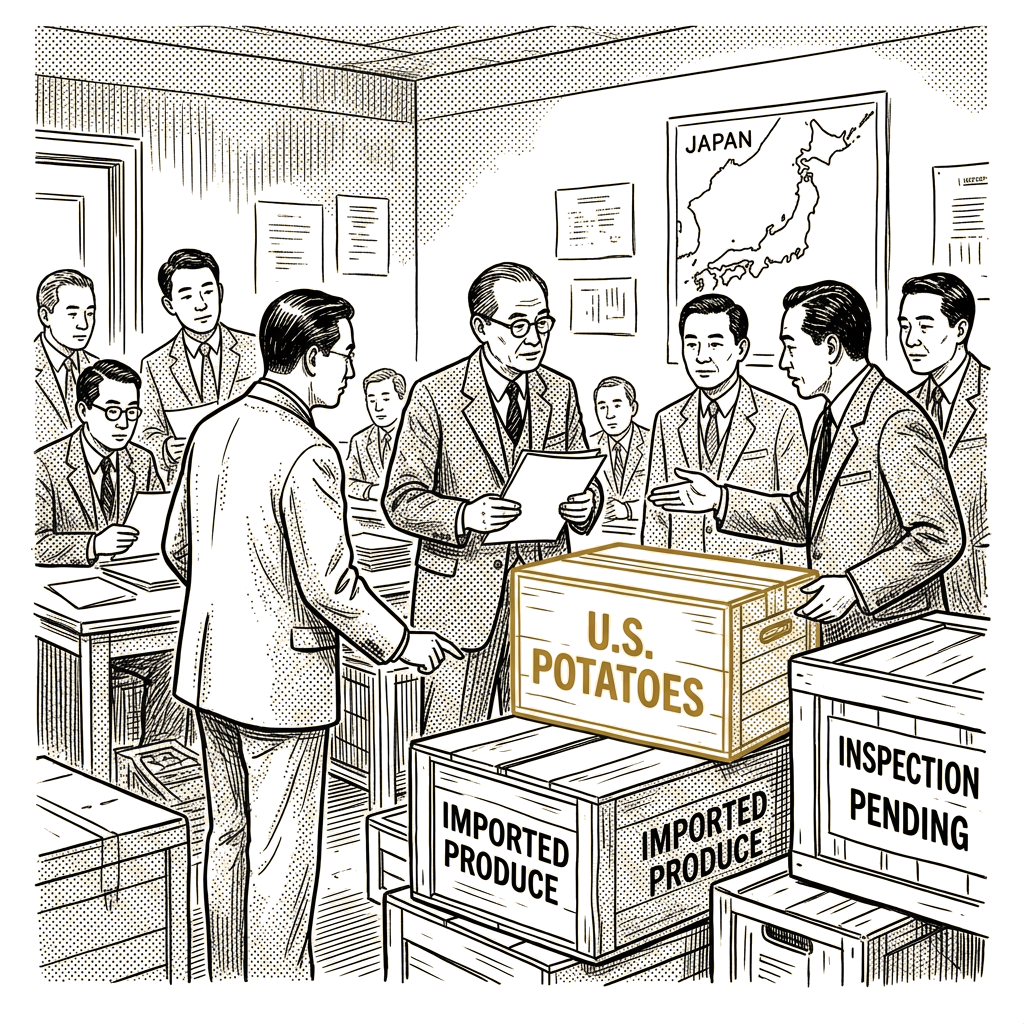
Japan’s government is moving toward lifting a 76-year-old ban on imported American potatoes after Donald Trump pressed the issue during U.S.-Japan trade negotiations. Hokkaido farmers, who grow about 80% of Japan’s potatoes, oppose fresh imports, warning that the change could threaten livelihoods and introduce harmful insects and diseases into production areas. Agriculture Minister Arata Takebe said any change should proceed only after “thorough scientific and technical discussion.”
A complete lifting would put fresh American potatoes on restaurant menus and supermarket shelves in Japan for the first time since 1950. Tokyo partially lifted the ban in 2006 to permit U.S. potatoes exclusively for crisps. Those imports had to travel in sealed containers and be cooked at a high temperature to prevent pests and diseases from spreading.
Along with rice, potatoes are among Japan’s few homegrown staples in a country that imports more than 60% of its food. Dutch traders introduced the crop to Japan in 1598, when potatoes were initially collector’s items for plant enthusiasts. By the mid-1800s, they had become a nutritious alternative to rice, which was unsuited to Hokkaido’s cooler climate.
The potato now anchors dishes including jaga bata, a baked version served with butter, and poteto sarada, which has practically achieved national-dish status. Hokkaido’s best-known variety is the Danshaku, also called the Irish Cobbler. Its high starch and fluffy, absorbent flesh make it suitable for butter and other toppings or for soaking up meat juices in a stew. Japan grows more than 90 varieties.
Toshihide Numasawa, an employee of the Japan Agriculture group in Hokkaido, said, “We have repeatedly and unequivocally stated our opposition to imports.” He cited the “risk of pests and diseases entering the country and damage to Hokkaido’s production areas.” Farmers also argue that a full lifting would expose consumers to an inferior product. Numasawa said, “We believe consumers have come to recognise which are best suited to particular dishes,” adding that Hokkaido farmers were also buffeted by homegrown pest outbreaks, global heating and rural depopulation.
Japan’s agriculture ministry said consumers ate 3.5m tons of potatoes in 2024, including 1.2m tons of fresh imports used to make crisps. The import dispute has created an early issue for new Agriculture Minister Arata Takebe, whose constituency is in prime potato-growing Hokkaido.
Takebe recently told Jiji Press that the plan to lift the ban “should progress after thorough scientific and technical discussion” and added that a decision could take “considerable time.” He said, “I know the [US] side has strong expectations, but the ban on imports will not be lifted without sufficient discussions or an agreement acceptable to both sides.”
Potatoes imported for crisps are subject to strict quarantine measures. Farmers fear that fresh imports could bring harmful insects and microbes into Japanese fields. Japan’s government has identified 21 pests and diseases that could pose a risk of invasion, with the potato cyst nematode and pale potato cyst nematode causing the greatest concern.
The nematodes do not threaten human health, but they can damage roots and stunt growth. They can remain present in soil for more than 15 years, making the prospect of a sustained infestation a central issue for farmers.
Earlier this year, congressional lawmakers urged Donald Trump to continue pressing Japan on the issue with Prime Minister Sanae Takaichi. In a letter, they wrote, “US potato growers produce the best potatoes in the world.” They added, “Japan represents a massive market with significant export opportunities for American potato growers.”
The Guardian reported that Trump, who raised the issue during his first term in office, persuaded Japan’s government to begin talks as he faces accusations that his policies have been “disastrous” for rural America.
Supporters of lifting the ban say it would lower prices for Japanese consumers and give American farmers an additional $150m a year in export earnings. Farmers in Hokkaido counter that the government has not done enough to eliminate the threat posed by pests and disease.
The Hokkaido Agricultural Corporations Association said, “Protecting Hokkaido’s agriculture is not just about protecting Hokkaido,” and added, “It also means protecting the production base that will support Japan’s food supply for the future.”
Naohiro Makino, a potato farmer in Hokkaido, told the Asahi Shimbun newspaper that the ban on fresh potatoes should stay. “Once pests get in, you can’t grow potatoes for more than a decade,” he said. He added, “For the sake of the farmland our ancestors protected, I am firmly opposed [to lifting the ban].”
The proposal remained short of a decision. Takebe said scientific and technical discussions could take “considerable time” and that the ban would not be lifted without sufficient discussion and an agreement acceptable to both sides. The unresolved questions are whether the existing restriction can be changed and what safeguards would apply to fresh American potatoes sold in Japan.