Fired official warns return to political patronage system
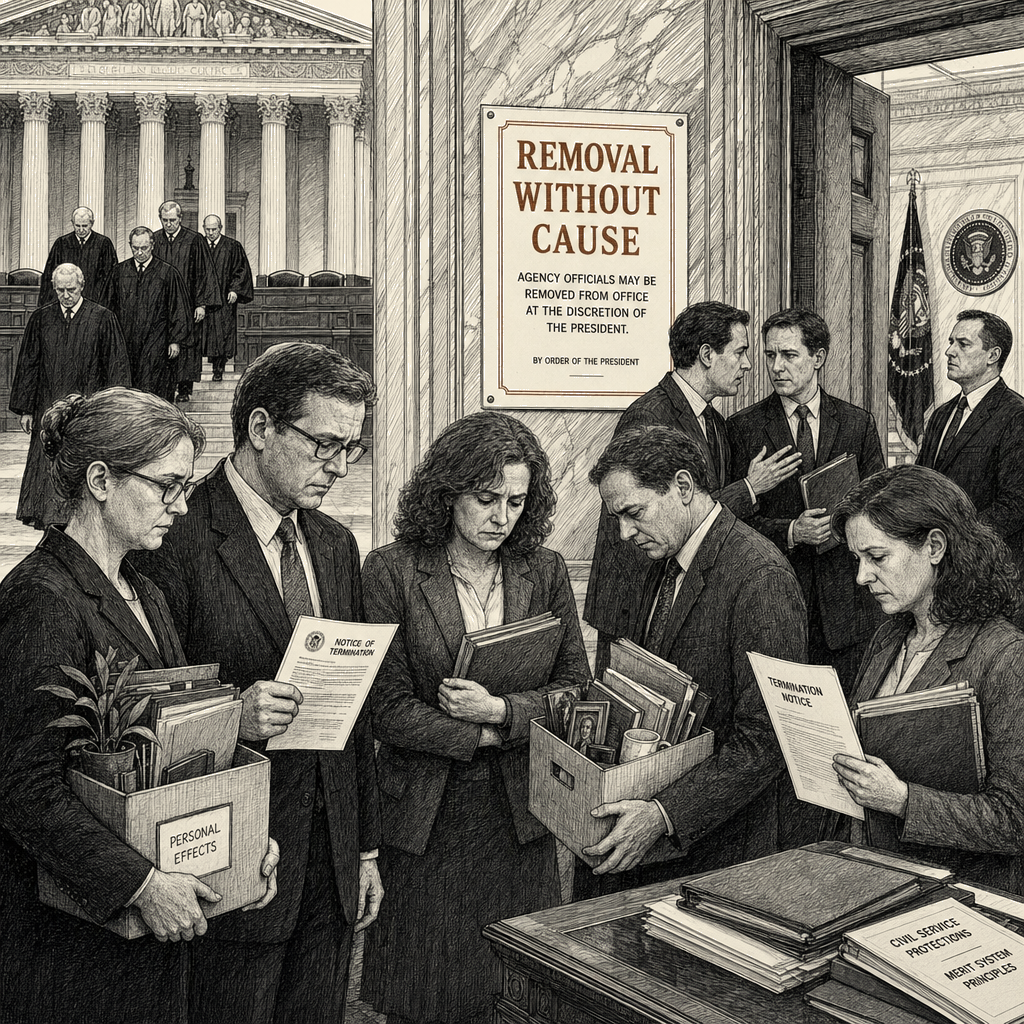
The Supreme Court’s June 29 ruling in Trump v Slaughter eliminated the 1935 precedent known as Humphrey’s Executor, which had protected leaders of independent federal agencies from removal without cause. The 6-3 decision, which gave President Donald Trump the authority to fire such officials at will, prompted a warning from fired agency members that the U.S. civil service is now vulnerable to political manipulation.
Rebecca Slaughter, a Democratic member of the Federal Trade Commission, was fired by Trump in March 2025. She said she was helping with a rehearsal for her child’s school play when she received the termination email. “My stomach just dropped,” Slaughter said. She and fellow Democratic commissioner Alvaro Bedoya filed a lawsuit challenging their terminations. Bedoya later resigned because he was not being compensated, but Slaughter continued the litigation with her husband’s income supporting the effort.
A federal judge reinstated Slaughter in July 2025, but the Trump administration appealed. In September 2025, the Supreme Court allowed Trump to remove Slaughter while the case continued and agreed to hear the case. “If they did not want to overturn a 91-year-old precedent, they would have not taken the case,” Slaughter said.
The court’s decision overturned a 1935 precedent known as Humphrey’s Executor, which had established that Congress could limit the president’s removal power over independent agencies. Slaughter said she is concerned that the ruling will lead to a “wildly swinging, entirely politicized government workforce.” She warned that companies with political connections could receive favorable treatment. “Are companies going to be excused from lying and cheating because they’ve donated to the ballroom or to the president’s inauguration?” she asked.
Cathy Harris, who was fired from her position at the Merit Systems Protection Board, a federal agency that protects merit-based hiring from partisan influence, said the decision “points a dagger at the heart of the civil service.” Harris said the ruling returns government to a patronage system where workers can be fired for partisan reasons. She cited a New York Times report from June 2026 that the Trump administration had secretly swayed the board at the agency she was fired from to rule in its favor on a constitutional argument over presidential power. “It means that the White House will, without fear or without hesitancy, interfere with what used to be independent operations of these agencies,” Harris said.
Deirdre Hamilton, a member of the National Mediation Board, was fired by Trump in October 2025. Her term had expired, but board members continue to serve until a replacement qualifies; Hamilton said the president had not nominated anyone to replace her. The board is responsible for administering the Railway Labor Act, which aims to prevent economic disruptions in the rail and airline industries. “Leaving the board empty is not serving the American people,” Hamilton said. She and her attorney are awaiting an opportunity to file a response in their case.
Since taking office in January 2025, the Trump administration has fired more than 50 officials from federal agencies, according to the report. The White House did not respond to requests for comment. Trump called the Supreme Court decision a “big win.”