Pentagon watchdog separately reported $33.4bn total war spending
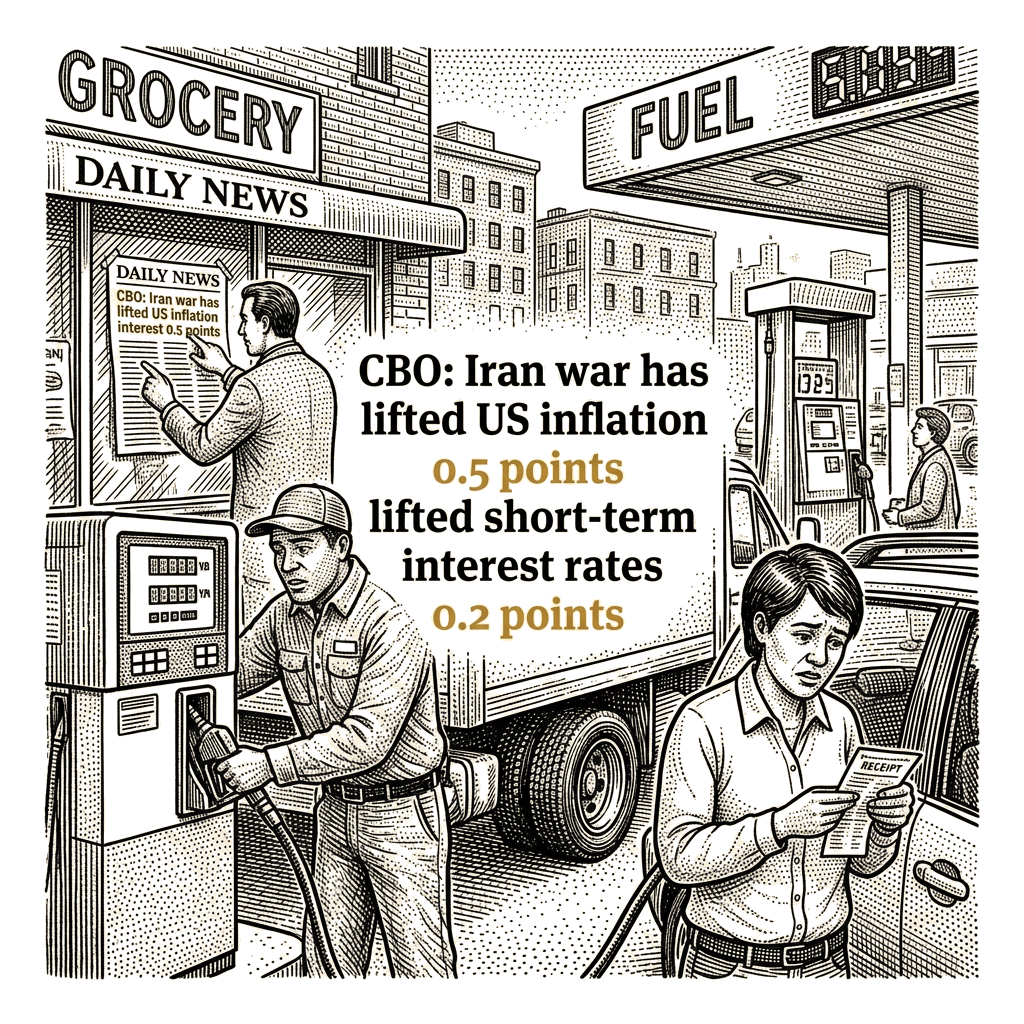
Increased energy costs, driven largely by the disruption of oil shipments through the Strait of Hormuz, have raised US inflation by half a percentage point compared with previous estimates, according to the CBO. Brent crude jumped from $64 a barrel before the fighting to $103 at its peak, and CBO projects the war will leave inflation running 0.5 percentage points higher than expected by early 2027, with short-term interest rates already about 0.2 points higher than they otherwise would have been.
In its cost accounting, CBO put the war’s total at $38 billion, with munitions the single largest driver of Pentagon costs: $21.7 billion to replace weapons expended so far, of which $13.1 billion went toward missile defense interceptors alone. The office also documented damage to American aircraft and equipment, including a destroyed Thaad radar system. CBO said it had been forced to build its estimates largely from public reporting because the Pentagon did not respond to its requests for information.
The Iran war consumed such a large share of US stockpiles of Patriot, Thaad and Navy interceptors that rebuilding them “would probably take at least five years, even if production was increased,” CBO found. The war also led to the “large expenditure of missile defense interceptors, which will leave the United States with a reduced inventory of interceptors for several years.” The shortage would be “especially problematic” in a hypothetical clash over Taiwan, the report said, because of the need for interceptors to engage “large numbers of ballistic and cruise missiles.” China maintains such an arsenal and is expanding it, the report noted, and any US-China conflict over Taiwan would likely require far more interceptors, deployed far more quickly, than the campaign against Iran has.
CBO projected the war’s cost would grow $3 billion for every additional month the conflict continues, depending on its intensity, and said it could not estimate the cost of repairing bomb-damaged US bases, nor future diplomatic and foreign aid costs tied to the war. CBO’s analysis also found that Iranian strikes damaged or destroyed hundreds of buildings and structures at US installations in Kuwait, Bahrain, Qatar, UAE, Saudi Arabia, Iraq, Oman and Jordan.
The CBO report was requested by Democratic congressman Brendan Boyle, the ranking member of the House Budget Committee, and provides one of the first public accountings of the war’s financial toll.
A day before the CBO report, the Pentagon’s inspector general released its first review of the war. The watchdog put munitions spending alone at $22.3 billion through June 30 and total spending at $33.4 billion, and concluded the fighting had “resulted in strategic inventory shortfalls and revealed industrial base bottlenecks for munitions resupply.” The watchdog’s review did not address an internal Pentagon investigation into the Minab school strike on the first day of the war, which killed 156 people, including 120 children. Critics have accused the Pentagon of burying the results of the investigation, which they say would show Pentagon negligence in how targeting data was compiled for the initial strikes.
The Trump administration has disputed the picture of dwindling stocks. In a White House statement responding to reports of the shortage, Donald Trump said the US had “far more munitions than anyone in the world” and “far more than we need.” Defense Secretary Pete Hegseth separately dismissed a CNN report on depleted stockpiles as “not true” in August.
In June the White House requested $87.6 billion in supplemental funding, of which $67.1 billion was earmarked for the Pentagon. Once funding CBO judged unrelated to combat operations is stripped out — including money for cybersecurity, drones and classified programs — $42.3 billion of the Pentagon’s request appears tied to the Iran conflict, about 10 percent above CBO’s estimate. The request included $12.1 billion for classified programs CBO could not examine, a far larger share of secret funding than in past war supplementals.