Kremlev built fortune through Putin loyalty, state gambling, seized car dealership
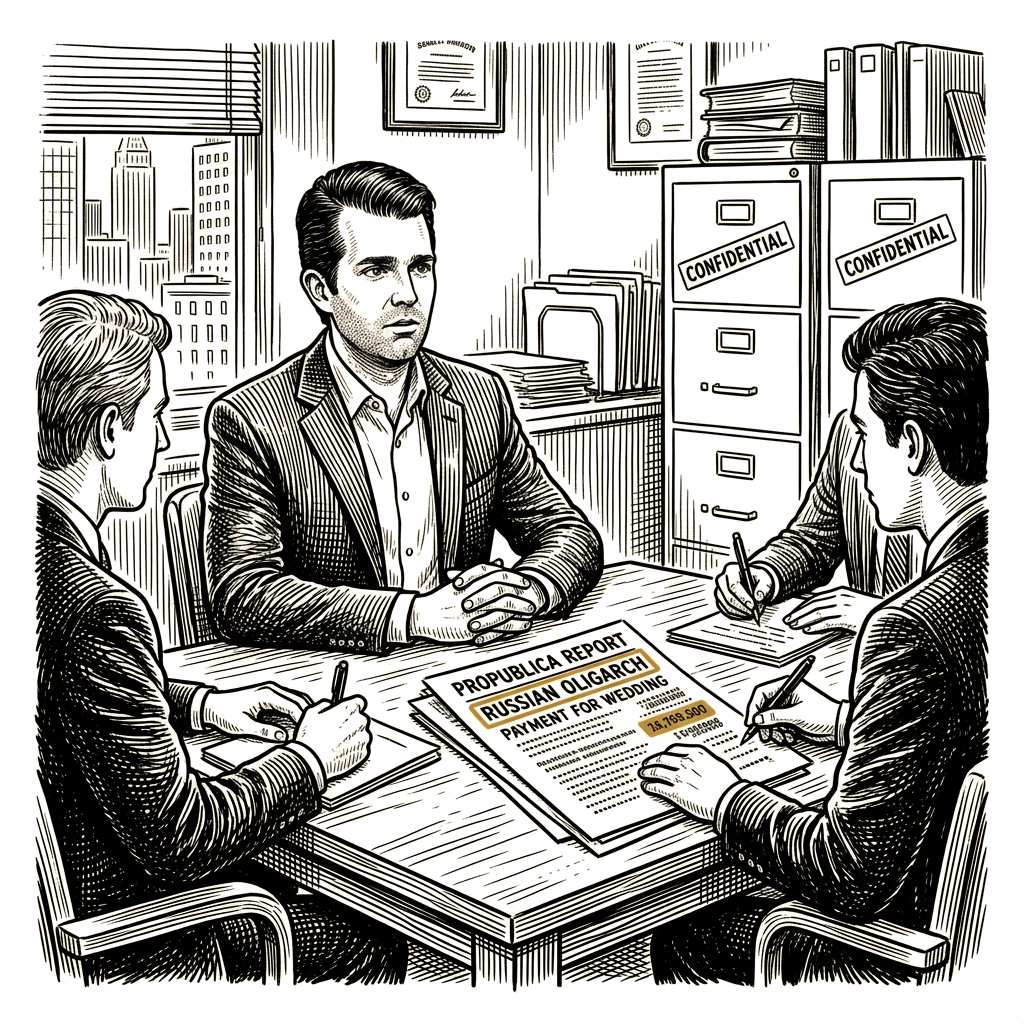
Donald Trump Jr. and his wife, Bettina Anderson, confirmed that Umar Kremlev, a Russian oligarch close to Vladimir Putin, partially paid for the couple’s wedding celebrations in May, following a ProPublica report revealing Kremlev spent hundreds of thousands of dollars on the events. Citing records and interviews with three anonymous sources familiar with the event, ProPublica reported that Kremlev, a member of the Russian president’s circle, footed the bill to rent one of the islands where a reception was held and where guests slept, along with other large expenses, including a huge firework show.
Kremlev transitioned from a convicted criminal into a powerful boxing promoter, according to the Guardian. His unwavering loyalty to Vladimir Putin enabled him to amass immense wealth through control of state-backed gambling companies and the acquisition of Russia’s largest car dealership network following its seizure from a critic of the Russian government, the Guardian reported.
The wedding confirmation arrived in the Guardian’s First Thing newsletter, which also covered several other developments.
The US Supreme Court has rejected the Trump administration’s last-minute bid to restrict mail-in voting, allowing states to continue mailing absentee ballots under the same processes they have used for years. The decision caps a flurry of last-minute legal action over voting procedures with voting in the midterm elections already underway. Civil rights groups praised the ruling. “The supreme court has done the right thing,” said Robert Garcia, a Democratic representative from Long Beach, California, adding: “Donald Trump tried to illegally interfere with our elections and undermine vote-by-mail for millions of Americans and failed. We will keep fighting to protect the right to vote of every single citizen in this country.”
Separately, an anonymous Department of Homeland Security whistleblower alleged that DHS lawyers told officers investigating “voter fraud” they would not be held responsible for violating state laws around accessing voter registration information. The whistleblower also expressed concern about the reliability of the data DHS was giving officers to review, as well as the lack of transparency into where the data came from.
Microsoft has published a provisional “code of conduct” to apply to the training of new artificial intelligence models, taking a step toward limiting the capabilities of the company’s AI as anxiety rises over the prospect that technology companies could lose control of AI products. Under the code, Microsoft’s AI models must not consider requests related to weapons development, produce violent or sexually explicit content, or help with the procurement of dangerous substances. AI models also should not be built to imitate consciousness and shouldn’t be entitled to rights. Mustafa Suleyman is the chief executive officer of Microsoft AI.
Democrats and some Republicans have been pushing in US Congress for guardrails on the world’s most powerful AI companies. Trump dismissed the anxieties, describing them as a “HOAX” and “conspiracy,” but looked increasingly isolated as members of both major parties acknowledged the risks and expressed a desire to act before it was too late. China has dismissed what it said were “fearmongering” calls to block Beijing’s AI industry, though the top Chinese spy chief warned that the evolving technology could threaten Communist party rule. The president of the European Central Bank has warned Europe must develop its own AI technology and build more datacenters to avoid being cut off by the US or China.
In drought-prone Texas, which has fast become the heart of the US datacenter boom, Republican Governor Greg Abbott has directed state regulators to penalize datacenters that fail to comply with state laws requiring them to disclose their water use.
On a separate immigration matter, a Department of Homeland Security Office of Inspector General report published this week found that detainees at Florida’s “Alligator Alcatraz” federal immigration jail were frequently locked in outside metal cages no bigger than a phone booth, a practice the watchdog said “does not align with standards for humane treatment.”
Other items from the Guardian’s First Thing newsletter: NATO fighter jets shot down a drone over Lithuania after an alert was issued in Vilnius. The rapper Macklemore has been dropped from the remainder of the US leg of Ed Sheeran’s tour after saying “free Palestine” on stage. California Governor Gavin Newsom will not run for president if Kamala Harris does, he said in an interview. The Trump administration has changed the way it counts measles deaths amid a Pennsylvania outbreak, which a former CDC chief medical officer described as “puzzling.” Firefighters have made progress against northern California’s Lucas fire, with 30% contained in what was described as a “big turning point.” Senator Mitch McConnell has returned to the Senate after a months-long absence. Key indicators of democracy in the US have fallen to their lowest levels in 50 years, according to data from a leading think tank, while the Trump administration has been “undermining the rule of law domestically and internationally.” Matthew Rhys became the first actor to win multiple lead actor awards for performances in different shows in the same year at last night’s Emmy awards. Chirag Bahri told his story of being held captive on the Marida Marguerite oil tanker for almost eight months. The Trump administration’s drive to “save” thousands of Afrikaners from false claims of “white genocide” appears to show signs of slowing, according to reporting from Johannesburg. A new UCLA study using satellite data and public records has ranked oil and gas facilities across the US for their methane output, shedding light on previously unmonitored sources. A study suggests traffic noise could be altering gibbons’ notoriously loud wake-up calls as human development and roads increasingly fragment the animals’ habitats.