Senate defeats Clarity Act as NASA Goddard lab moves draw scrutiny
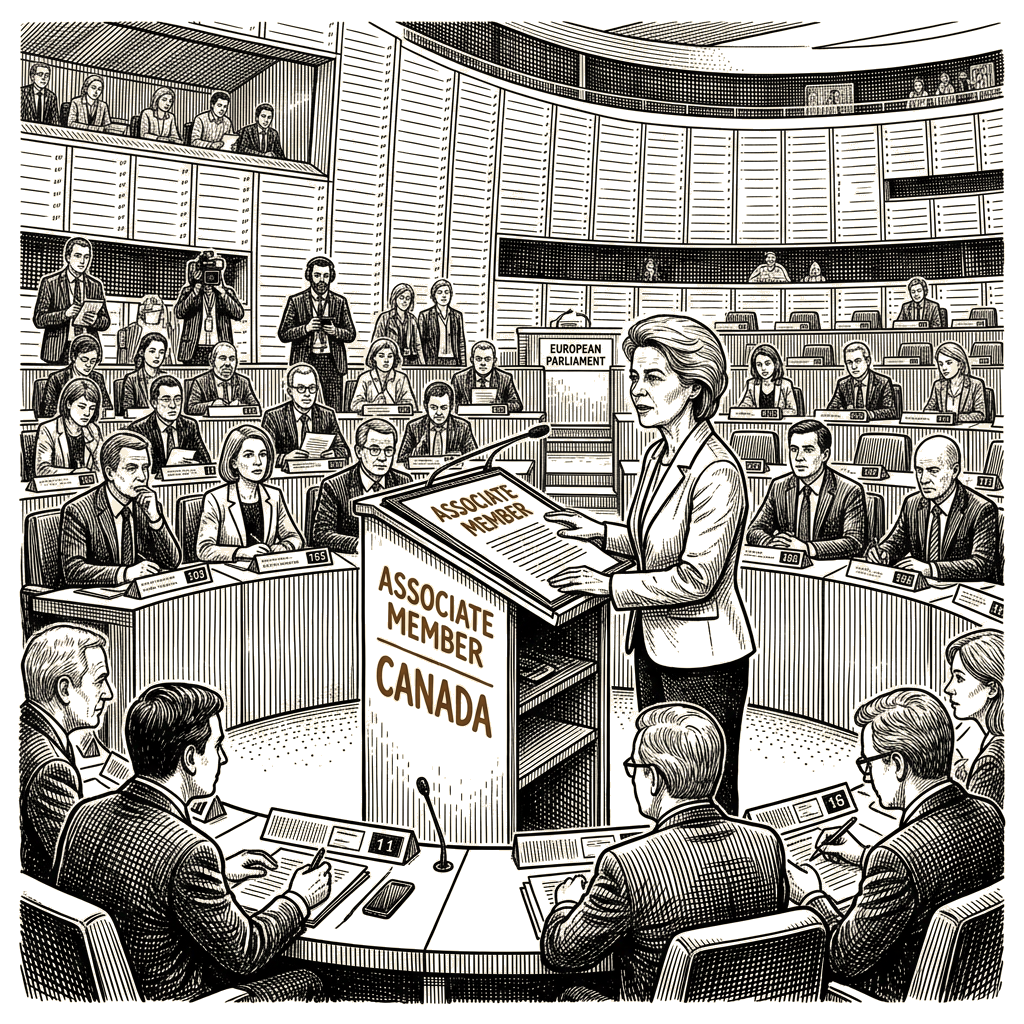
The European Commission proposed Canada as the European Union’s first-ever “associate member” — a new model of membership — during European Commission President Ursula von der Leyen’s annual speech to the EU Parliament in Strasbourg, France. Canadian Prime Minister Mark Carney, addressing the same parliament Thursday morning, said “Europe and Canada are stronger together.”
French Foreign Minister Jean-Noël Barrot said Thursday morning that he welcomes working more closely with Canada but would need to see what being an associate member means. When asked about the proposal Wednesday, Trump called the concept “laughable” and said it could be seen as a hostile move, NPR reported. NPR’s Eleanor Beardsley told Up First that many probably view Canada’s potential EU membership as mostly symbolic.
Canada and the EU have felt bullied by the Trump administration over tariffs, threats to abandon NATO, and proposals to take over Greenland or make Canada the 51st state, NPR’s Eleanor Beardsley told Up First.
In a separate development, the Senate this week defeated the Clarity Act, a bill championed by cryptocurrency executives and President Trump that would have established the first federal regulations for the digital-asset sector in U.S. history. A version of the bill passed the House last year. Now the bill’s future is uncertain as the cryptocurrency industry and its backers weigh their options for another attempt.
The act aimed to formally divide cryptocurrency oversight between the Securities and Exchange Commission and the Commodity Futures Trading Commission, with more control going to the smaller CFTC. Critics argued that granting the bulk of control to the CFTC would allow the cryptocurrency sector to evade heavy regulatory scrutiny; industry executives deny the accusation. A key sticking point for some Democratic opponents was the bill’s ethics clause, intended to prevent presidents and elected officials from profiting from the cryptocurrency industry while in office, and whether the clause adequately prevents conflicts of interest.
With midterm elections approaching, the bill faces a tough path to passage this year. The path could grow harder still if Democrats control either chamber after the elections.
NASA’s Goddard Space Flight Center in Maryland, the engineering facility behind some of NASA’s most ambitious telescopes and satellites, has been forcing engineers out of specialized laboratories since last year, NPR investigative correspondent Chiara Eisner reported. In some cases, NASA leaders gave engineers less than a week to pack up their devices and designate what equipment they would have to lose in order to fit into the smaller spaces they were told to move to. Other times, sources told NPR, the teams’ equipment was moved — and in some cases donated to other institutions — without the scientists’ knowledge.
After lawmakers asked the government’s independent watchdog office overseeing NASA to investigate the impact of those moves, the agency concluded in June that the relocations had not hurt ongoing projects and would “not impact NASA’s anticipated missions.” But NPR spoke with seven current and former NASA scientists and engineers at Goddard who said the assessment was wrong. Some of NASA’s most ambitious projects, including the Nancy Grace Roman Space Telescope, launched in August, were affected, NPR found.
Jack Kiraly, chief of advocacy at The Planetary Society, a nonprofit that champions space science and exploration, said the relocations added risk. “That only adds a whole lot of risk to an already risky endeavor,” Kiraly said. “These are potentially billions of dollars worth of taxpayer investment. We don’t do ourselves any favors by putting the people that make this happen in precarious situations.”
Separately, NPR’s “3 things to know” brief items reported three developments. Researchers have developed a new way to implant lab-grown human brain cells into mice, helping them better research complex neurological diseases — though, as the technology grows more complex, so do the questions surrounding the ethics of the process. Author Annie Dillard, who wrote several books including the 1974 Pulitzer Prize-winning “Pilgrim at Tinker Creek,” has died at age 81. And when Tracy Zito’s young son got caught in a current in Lake Michigan, she feared the worst as she struggled to pull him back to shore; an unsung hero suddenly appeared beside her and brought her son to safety. More than 15 years later, Zito still feels tears in her eyes when she recalls this courageous act.
As broader economic context, the Federal Reserve voted unanimously on September 16 to raise its benchmark interest rate by a quarter percentage point to a range of 3.75%-4% — the central bank’s first rate increase in more than three years. The hike makes it more expensive to borrow money, grow a business or carry a credit card balance. Inflation has risen amid the war in Iran, driving up the price of gasoline and diesel fuel. While higher interest rates won’t immediately lower prices, they demonstrate the Fed’s commitment to restoring price stability, despite repeated pressure from President Trump to lower interest rates.
NPR’s Alina Selyukh, reporting on Fed Chair Kevin Warsh’s post-meeting press conference, said Trump’s demands for lower rates came up frequently. Like his predecessor Jerome Powell, Warsh didn’t engage and reiterated the Fed’s independence. Selyukh said the Fed faces the challenge of slowing the economy without tipping the country into a recession. The Fed does not control key drivers of inflation, such as tariff policies, nor does it control wages, which have been stagnant for months. Workers’ paychecks have been losing buying power, Selyukh said, and Warsh hopes stable prices will help families cope with inflation.
NPR’s Aya Batrawy reported that Saudi Arabia — the world’s largest oil exporter — saw its oil output fall last month to around 6.2 million barrels a day, down from 11 million before the war in Iran began, as renewed fighting in Yemen against the Iranian-backed Houthis has displaced more than 100,000 people, according to the United Nations. Rising gas prices have sparked protests around the world, including in Syria, the Philippines, and Indonesia. A Saudi official, speaking anonymously to discuss security matters, confirmed to NPR a recent meeting between U.S. officials and the Houthis in Oman. Trump remains focused on the U.S. conflict with Iran and so far shows no intention of striking the Houthis, as the U.S. did last year.