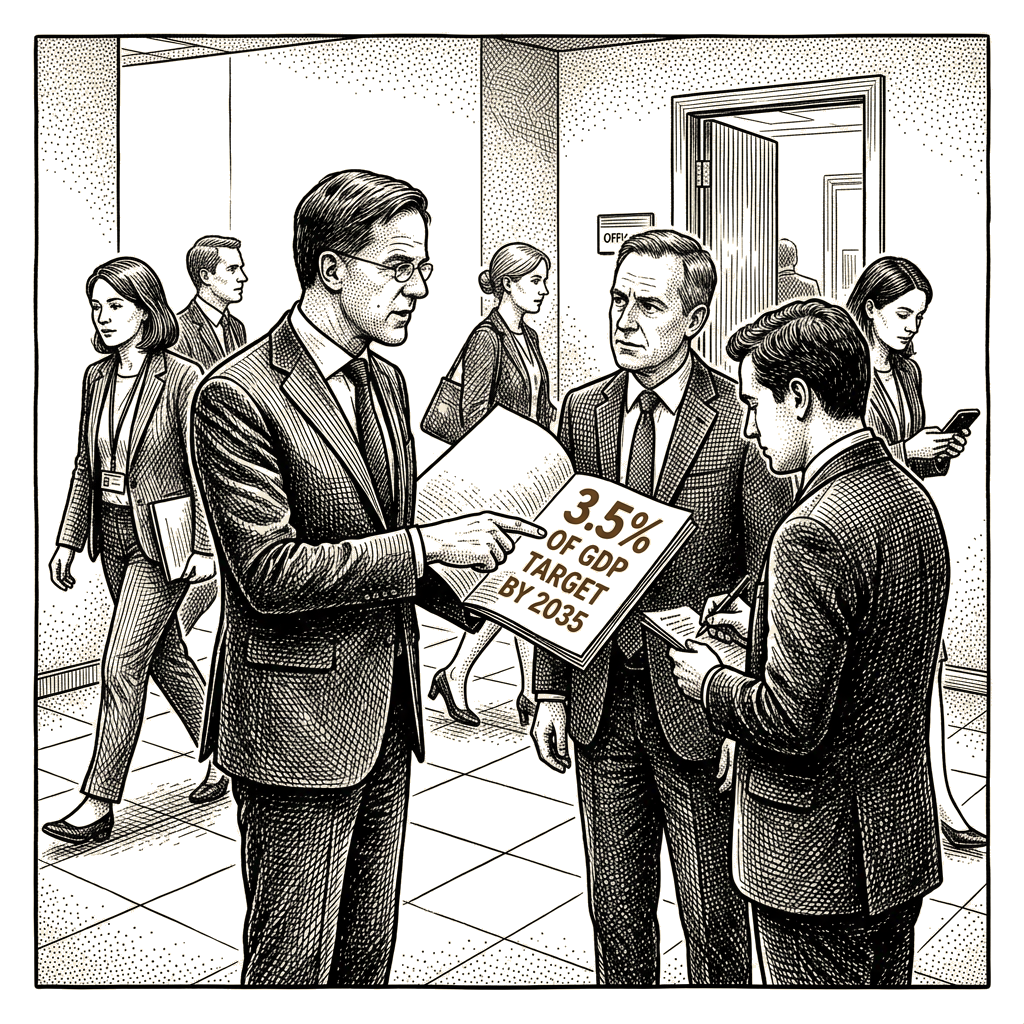
Current UK plans sit nearly £30bn below NATO’s 3.5% target
NATO Secretary General Mark Rutte, a former Dutch prime minister, used two days of meetings in Britain to press the UK government on its path toward NATO’s 3.5%-of-GDP target by 2035. In an interview with the Press Association, Rutte said: “And that is why you need a credible path towards that 3.5%, and yearly increments.” He made similar remarks to the BBC, where he said the UK understood the target could not be met “in one go in 2034” and would have to be achieved gradually. The Guardian described the Thursday intervention as unusually pointed, coming a day after Rutte met Prime Minister Andy Burnham on Wednesday at a business park in Didcot.
Earlier on Thursday, Rutte met Defence Secretary Wes Streeting and Foreign Secretary Ed Miliband. He also met representatives from the defence industry during the visit. A day earlier, Rutte gave a speech at Ditchley Park in Oxfordshire, in which he warned that the 32-country military alliance faced “the most dangerous and complex security environment in a generation,” with wars in Ukraine and the Middle East coinciding with rising state competition. NATO needed “more UK and more Europe,” he said, to take up the slack as the United States reduces its military commitment to the alliance.
The intervention highlights a gap of nearly £30 billion between current UK defence spending and NATO’s 3.5% target. Current plans, covering through fiscal year 2028/9, level off at 2.7% of GDP, raising the question of how the commitment would be achieved after the next general election — and whether it would require higher taxes, additional borrowing, or cuts to other government programmes. It is unclear which path the government will choose.
The Guardian report linked Rutte’s “credible path” language to a parallel demand by Healey. Healey resigned as defence secretary in June after Starmer refused to commit to lifting defence spending to 3% of GDP by 2030. At the time, Healey said Labour needed to set “a clear path” to meet the NATO commitment, similar language to that used by Rutte in his interviews. Healey now serves as Chancellor in the Burnham government.
Both Healey and Burnham have since endorsed the 3.5% target but avoided committing to the 3% interim step by 2030. Decisions on future spending are likely to be deferred to the next government spending review, due next year, prompting the NATO leader to engage in public lobbying on his trip to Britain.
Rutte told the BBC he was certain the Burnham government remained behind the ultimate goal and accepted the need for gradual increases. “I am absolutely confident that when it comes to the yearly increments, they totally take it and accept it, that they have to be there,” Rutte said. “There has to be a credible path. What that credible path exactly will be, we will see with the spending review next year,” he added.
Keir Starmer signed the UK up to the 3.5%-of-GDP target in the summer of 2025 under pressure from US President Donald Trump. The figure has since been endorsed by Burnham and Healey. Trump has long argued that the UK and Europe should match US levels of defence spending and take the lead in defending the continent from Russian aggression.