Centrus holds only NRC license to produce highly enriched uranium
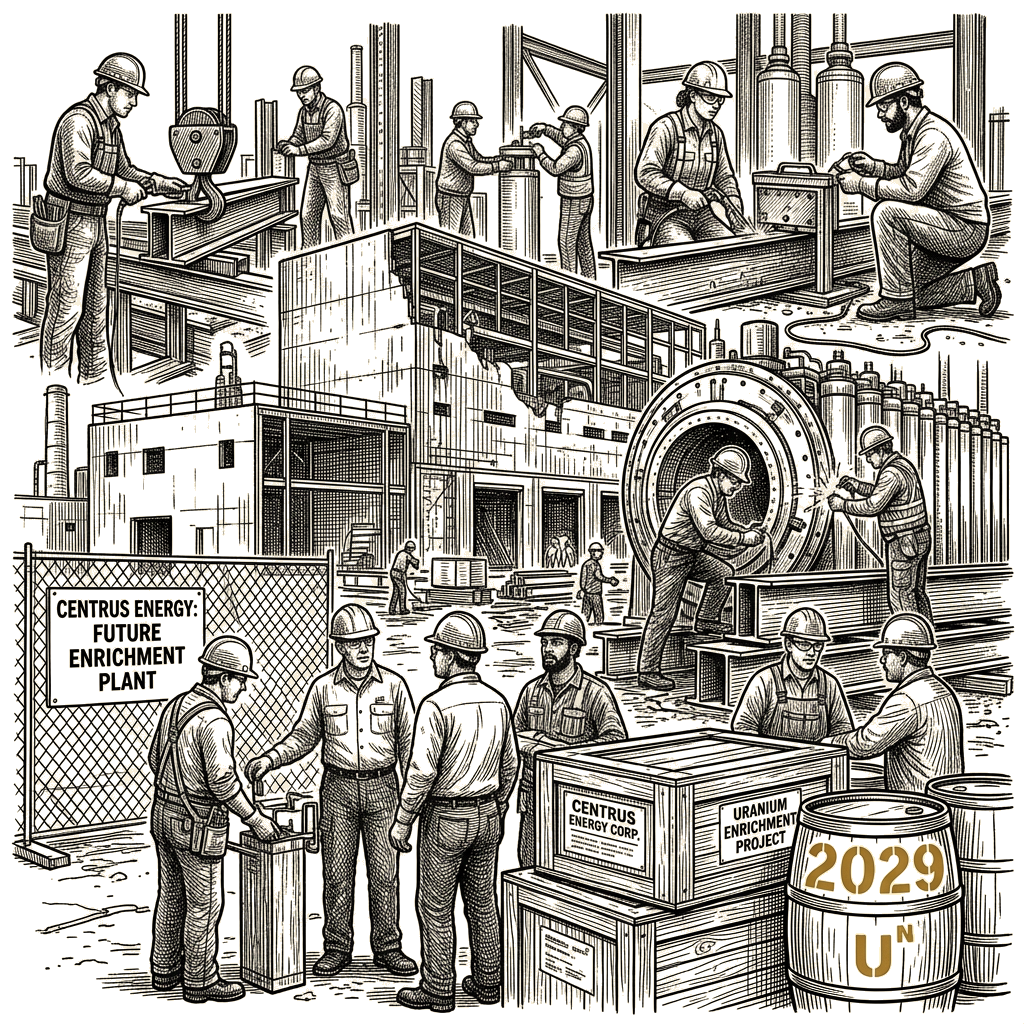
Centrus Energy is building out manufacturing capacity to re-enter the uranium enrichment market by 2029, according to The Wall Street Journal. If successful, Centrus would become the third company with enrichment capacity at scale outside Russia and China, joining Urenco — a consortium between the U.K., Netherlands and Germany — and French company Orano.
Russia is the central driver of Centrus’s push. The U.S. used to source up to a quarter of its enriched uranium from Russia but has banned those imports. Temporary waivers on that ban will expire January 1, 2028.
Centrus is an American company with roots in the U.S. government. The company stopped enriching uranium in 2013 and went bankrupt in 2014 after demand tanked following the Fukushima nuclear accident, the Journal reported. Since then, Centrus has been making money primarily as a broker-dealer for enriched uranium while building capacity to re-enter the enrichment market by 2029.
The economic backdrop has shifted in Centrus’s favor. The price of enrichment has soared from $65 per separative work unit in February 2022 — before Russia’s invasion of Ukraine — to $181 per SWU today, according to data from research firm UxC. Part of that increase reflects tight supply, as buyers look for non-Russian sources, according to UxC president Jonathan Hinze. Rising demand as utilities look to restart old nuclear reactors or extend the lives of existing ones accounts for the rest, according to Hinze.
The incumbents are not standing still. Urenco and Orano are expanding or adding enrichment capacity in the U.S., Hinze said. Utilities still want diversification, according to Hinze: “Russian [supply] is going away, China is not supplying the West. Utilities in the U.S., Europe, Japan and Korea want more options,” he said. South Korean utility Korea Hydro & Nuclear Power has signed a long-term supply agreement with Centrus.
Centrus expects the bulk of its future enrichment revenues to come from low-enriched uranium, the type that conventional nuclear reactors use. The company is also positioned to benefit if small modular reactor technology takes off. Centrus holds the only Nuclear Regulatory Commission license to produce the highly enriched uranium required by some of those designs.
A third potential customer is the U.S. government. Centrus is the only enrichment company that relies solely on domestically made components, making it the only player that can meet U.S. national security needs such as naval reactors, according to the Journal. Since Centrus’s enrichment operations stopped in 2013, the U.S. government has been drawing down Cold War-era stockpiles. The National Nuclear Security Administration has said it intends to solely source certain enrichment from Centrus, according to the company.
Other American companies are also eyeing the market, including General Matter, which is backed by Peter Thiel’s Founders Fund, and Global Laser Enrichment, which is co-owned by Canadian uranium miner Cameco. Centrus has an early-mover advantage: alongside Urenco, it is one of only two companies with an NRC license to produce low-enriched uranium, and it holds the only NRC license for the highly enriched kind.
The bigger risk for Centrus is execution. The company has demonstrated that its centrifuge technology works, but it has not yet shown it can produce at commercial scale. Its demonstration project with the Energy Department involved 16 centrifuges; commercial enrichment facilities use thousands of centrifuges, according to Hinze.
Funding is the other risk, given that Centrus’s factories will be capital intensive. The company is setting up an enrichment facility in Piketon, Ohio, and a centrifuge manufacturing facility in Oak Ridge, Tennessee. Earlier this year, Centrus received a $900 million task order from the Energy Department. The company has also raised money through equity and debt offerings, the Journal reported, and between that funding and its cash reserves it should be able to meet near-term requirements.
The company will need to raise more going forward. One source of additional funding could be prepayment from potential customers. Centrus has signed three such agreements so far, including with X-Energy. Utilities tend to be conservative, but more of them might be willing to prepay for Centrus’s future capacity as it makes progress on manufacturing, according to Lawson Winder, equity analyst at BofA Global Research.
Enrichment looks profitable. Urenco’s margins on an earnings before interest, taxes, depreciation and amortization basis have averaged 61% between 2010 and 2023, according to a report from Citi. Enrichment companies have considerable market power given the limited competition, the Citi report added.
Centrus shares rode an AI wave over the last few years, peaking late last year. The stock is down 67% from that high alongside other nuclear equities, according to the Journal. Citi equity analyst Vikram Bagri attributed part of the decline to a wider supply of nuclear stocks on the public market — including recent public debuts by additional nuclear companies and additional equity raised by existing companies such as NuScale, Oklo and Centrus. Rising interest rates also play a role by lowering the present value of capital-intensive, long-timeline nuclear projects, according to Bagri.
The shares still trade at roughly 52 times forward earnings, the Journal reported, though near-term earnings may not be a meaningful metric for a company whose enrichment capacity is not expected to come online for a couple of years. Centrus’s market capitalization is less than half that of X-Energy and Oklo, both small modular reactor companies that are not close to generating profit.
“While Centrus has been lumped together with some more-speculative nuclear stocks, its technology is proven, and future revenues don’t depend on new technologies taking off,” the Journal’s Heard on the Street column concluded. “The U.S. government and potential customers should be highly motivated to see a domestic enrichment provider succeed. Given the company’s unique position, it deserves an energy security premium.”