Tsikhanouskaya says potash money funds repression and Russian war machine
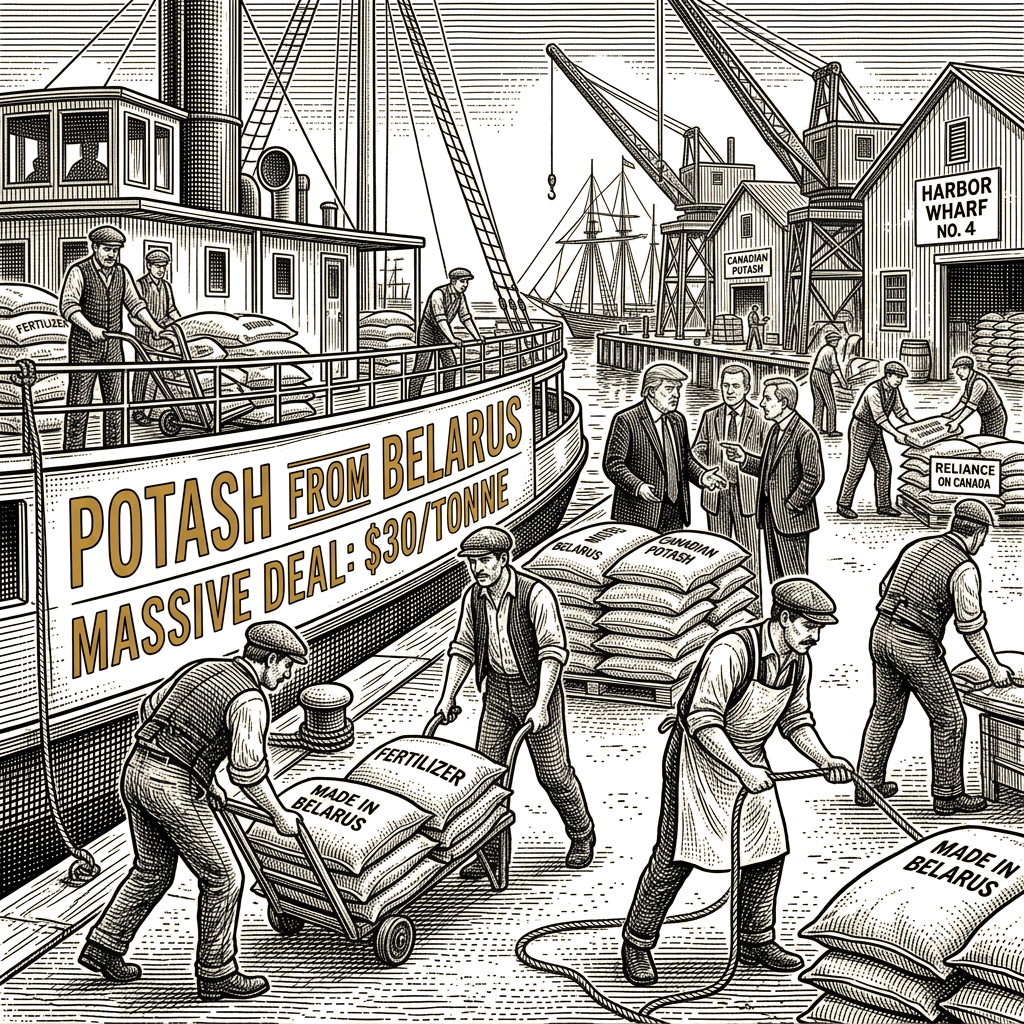
President Donald Trump said Monday that the United States is working on a “massive” deal to buy potash fertilizer from Belarus — an ally of Russia — framing the country as a cheaper alternative to Canada, the US’s main supplier of the key agricultural input.
In a post on Truth Social, Trump wrote: “The United States is working on a massive deal with respect to the purchase of Potash from Belarus. The pricing would be for substantially less than we are currently paying to Canada, very good news for our farmers and ranchers.”
The announcement comes as Trump has stepped up his trade war with Canada, a long-term US ally and the country’s biggest potash supplier. In Belarus, President Alexander Lukashenko, in power since 1994, suppressed mass protests over his reelection in 2020, which was followed by a wave of sanctions, and allowed Russian forces to use Belarusian territory to invade Ukraine in 2022.
The US imports most of its potash, a chemical salt used to manufacture fertilizer. In 2024, 79% of US potash imports came from Canada, 11% from Russia and 4% from Belarus, according to US Geological Survey figures cited by the Guardian.
Prices for the fertilizer input soared after Russia’s full-scale invasion of Ukraine in 2022, and Trump has framed the proposed Belarus deal as relief for American farmers and ranchers facing elevated input costs.
Washington has quietly moved to thaw relations with Minsk under Trump’s second administration. Last week, Belarus freed 25 political prisoners as the US lifted sanctions on two of the country’s companies.
But hundreds remain in prison after President Alexander Lukashenko, in power since 1994, suppressed mass protests over his reelection in 2020, which was followed by a wave of sanctions. Western countries again squeezed Belarus with sanctions in 2022 after Minsk allowed Moscow to invade Ukraine through Belarusian territory.
Sviatlana Tsikhanouskaya, the Belarusian opposition leader in exile, on Monday warned that any deal with Lukashenko was “very risky.” She said potash revenue goes to “repression” and to “support of the Russian war machine.”
“Our position is that it is not time to trade with the regime while all the income from potash goes to repression, goes to support of the Russian war machine,” Tsikhanouskaya told Agence France-Presse. She added, however, her belief that Americans “know who Lukashenko is.”