NHC warns of dangerous wind and storm surge risk along northern Gulf Coast
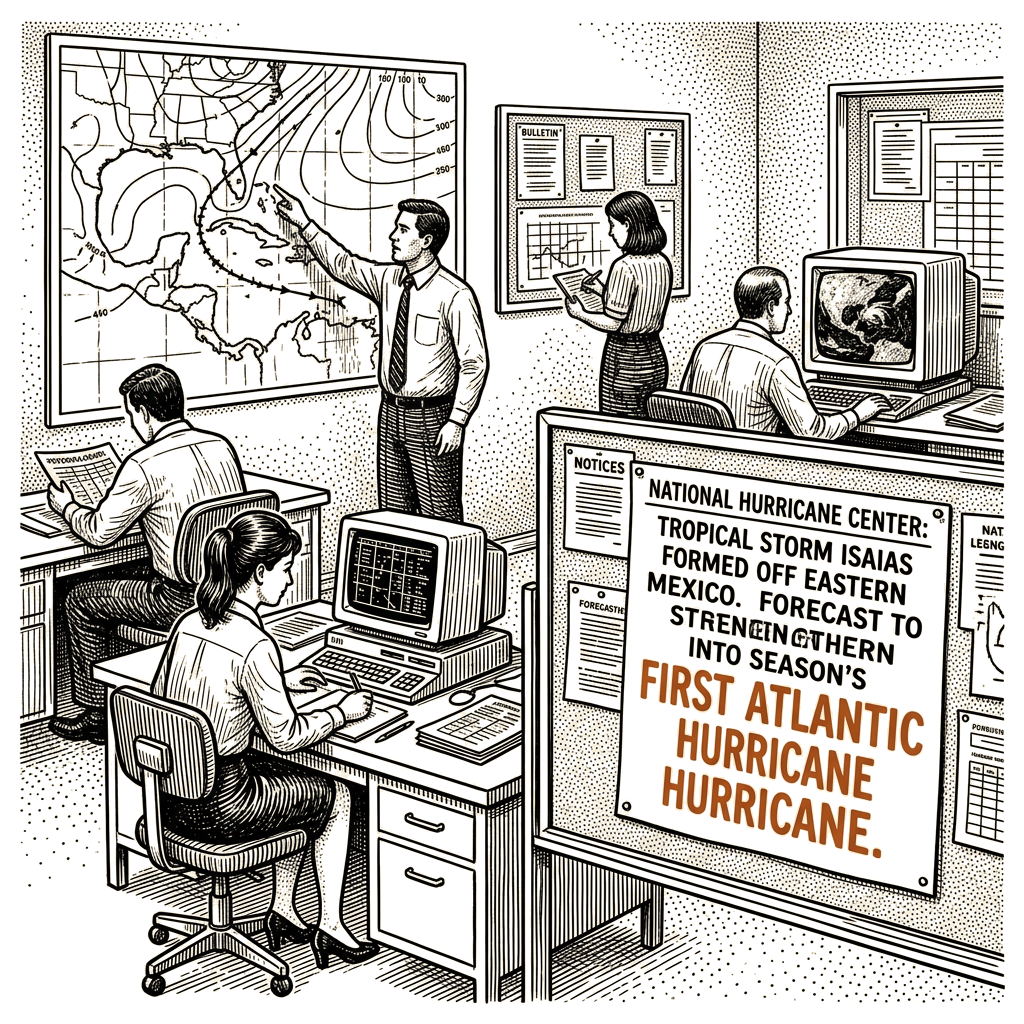
Tropical Storm Isaias formed early Wednesday in the warm waters off eastern Mexico, the National Hurricane Center said, with forecasters projecting the system to strengthen into the first Atlantic hurricane of the 2026 season before reaching the U.S. Gulf coast later in the week.
The Miami-based hurricane center located the storm about 285 miles (460 km) west of Progreso, Mexico, and about 580 miles (935 km) southwest of where the Mississippi River spills into the Gulf of Mexico in Louisiana. On Wednesday morning the storm had maximum sustained winds of 40 mph (65 kph) and was moving east to north-east at 8 mph (13 kph).
“There is an increasing risk of dangerous wind and storm surge impacts along portions of the northern Gulf Coast,” the hurricane center said in its advisory. “Residents from Louisiana to the Florida Panhandle should closely monitor the latest forecast updates and ensure they have their hurricane plan in place.”
The NHC said the storm is expected to strengthen rapidly and become a strong Category 2 hurricane before landfall. The exact landfall location remained uncertain Wednesday. The hurricane center’s initial projections placed the storm’s center coming onshore somewhere between eastern Louisiana and the western Florida Panhandle, and people in those areas were urged to prepare.
Forecasters added that there is “uncertainty in where the system makes the northeast turn and how fast it moves toward the coast.” The storm’s direction could see it make landfall where Alabama meets Florida early on Saturday, though the NHC reiterated that the exact path is uncertain.
The first hurricane of the Atlantic season has not formed this late since 8 October 1905. Isaias strengthened overnight from what had been designated Tropical Depression Nine.
The Atlantic hurricane season has been unusually quiet this year owing to a particularly strong El Niño, which disrupts storm formation over the Atlantic Ocean. Storm activity in the Pacific has been above average, reflecting the same El Niño pattern. A Guardian sidebar promoting a related article reports that this year’s huge El Niño is causing climate chaos around the world, with temperate records already broken and extreme heat reported from western Europe to California, and that Bangkok is suffering massive flooding. That same sidebar projects that the weather phenomenon will cause a further 450,000 deaths globally by February, though it does not identify the source of that projection.
The Associated Press contributed reporting.