Three House races test GOP’s white working-class coalition
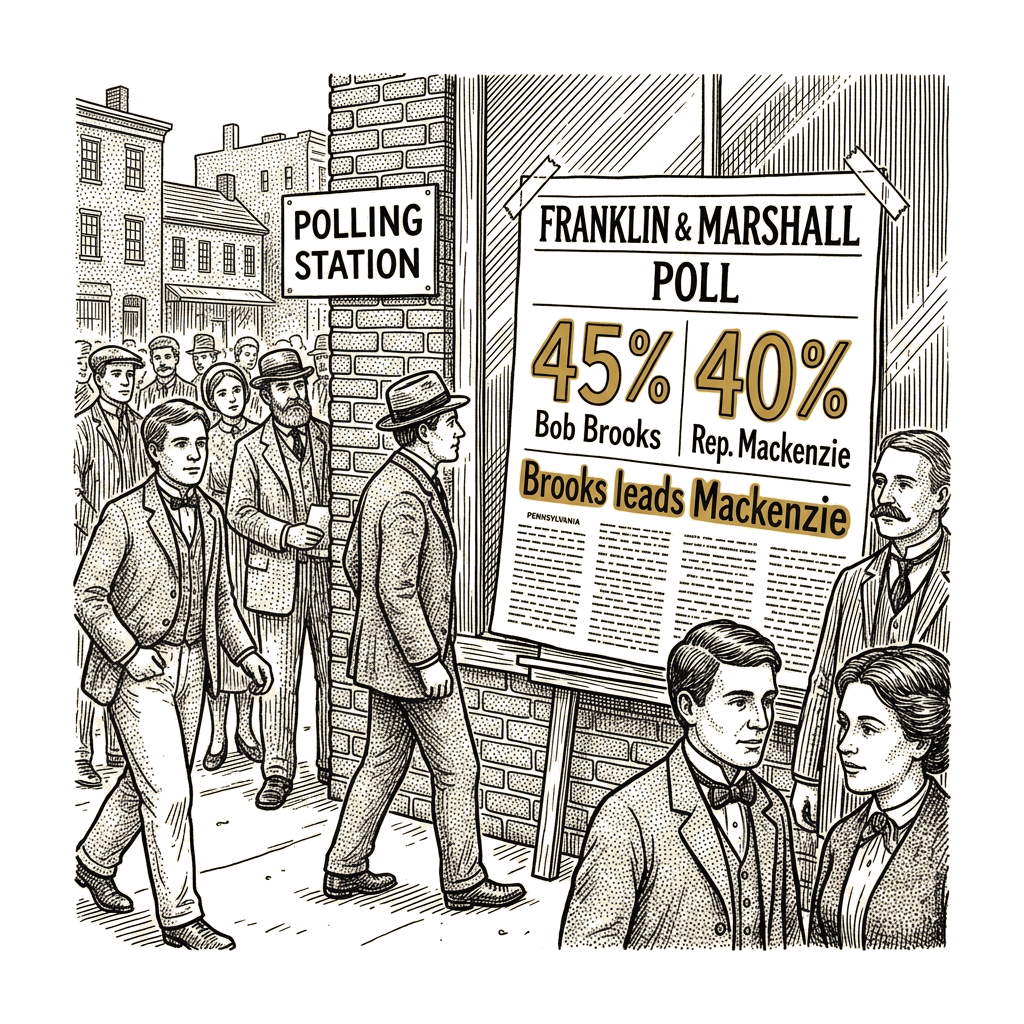
Democrat Bob Brooks leads Republican Rep. Ryan Mackenzie 45% to 40% in Pennsylvania’s 7th Congressional District among voters surveyed in a Franklin & Marshall College poll released last month, with about 15% of respondents undecided. The poll, with a 5.8-percentage-point margin of error, finds The Wall Street Journal’s election tracker rating the race as “lean Democrat.”
Two years ago, working-class voters’ anger over the high cost of living helped carry Mackenzie, 44, into Congress by a 1% margin. Now those same pocketbook issues threaten to unseat the freshman lawmaker in a swing district that spans blue-leaning cities like Allentown and Bethlehem, suburbs where tidy developments have replaced dairy farms, the right-leaning Pocono Mountains and mill towns that never recovered from lost manufacturing. Some 45% of district residents 25 and older fall into the white working-class category, defined by those without a four-year college degree — a bloc Democrats are betting higher prices will pry loose from Republicans.
“The public’s pointing the finger at the president for these higher prices and the cost of living, and these candidates are carrying that weight upon their back,” said Chris Borick, a political-science professor at Lehigh University.
About 25% of poll respondents said Trump was doing an “excellent” or “good” job. Roughly 62% said Trump administration policies had hurt rather than helped them, and the economy was their top concern.
Mackenzie hopes to persuade voters to give him another term by touting results he has delivered and attacking his Democratic opponent, while keeping close ties to President Trump, whose falling statewide approval ratings contrast with pockets of deep support in the 7th District, which Trump won in 2024.
In an interview, Mackenzie said he had brought $160 million in federal funding to the Lehigh Valley for healthcare, manufacturing and affordable-housing projects. He said he backed legislation that cut taxes on overtime, tips and Social Security while helping to lower prescription-drug costs.
“We passed historic tax reform that put more money back in people’s pockets, froze in those lower rates for individuals and small businesses,” Mackenzie said.
Rallying volunteers before a recent day of door-knocking, Mackenzie emphasized the stakes: “When you win by 1%, literally everything you do could have been that difference.”
Jim Shafer, a Republican from rural Carbon County, Pennsylvania, who works in cybersecurity, plans to vote for Mackenzie again. “I think he’s more competent and a better administrator,” Shafer said. “What I would hope for as far as economics goes is that he prioritizes our district and works for middle-class families.”
The cost-of-living message is cutting across party lines. Jim Koch, who farms 250 acres near Easton, Pennsylvania, and drove a truck after high school, voted for Trump in 2024. Now squeezed by higher costs for diesel, chemicals and fertilizer, the Democrat said he is weighing whether to back the Republican incumbent.
“It’s been a total slap in the face,” Koch said during a 15-hour day harvesting corn. Asked whether he would back Mackenzie on Nov. 3, he replied, “Oh, man, I don’t know.”
At a fire-station open house in Lower Macungie Township, Republican Rob Manns said he had installed solar panels and a high-efficiency gas furnace last fall to cope with higher electricity bills. As a 100-foot ladder reached skyward and firefighters passed out hot dogs, Manns said others are struggling and that he is considering voting for Brooks. “He tends to follow the Trump line,” Manns said of Mackenzie.
Brooks, 53, is a first-time candidate who spent two decades as a Bethlehem, Pa., firefighter, leads the state firefighters’ union and runs a lawn-care business. The goateed Brooks lacks a college degree and pitches himself as someone who can relate to the working class. To avoid paying $175 to fill his diesel truck, he said, he drives his wife’s Kia Telluride instead.
“That’s what everyone’s worried about,” Brooks said of fuel prices. “They’re blaming Ryan Mackenzie, and I agree with them.”
Mackenzie has attacked Brooks as controlled by establishment Democrats. One of his campaign ads accuses Brooks of borrowing more than $160,000 from his family and not paying it back.
“Bob Brooks is not only a far-left individual, but he is ethically compromised,” Mackenzie told volunteers at his Allentown campaign office, papered with campaign signs, before they headed out to knock on doors.
An attorney for Brooks said last month that Brooks made a payment to resolve the family dispute. “He’s manipulating these ads to try and assassinate my character and it’s not working,” Brooks said in an interview.
Brooks supports Medicare for All, raising the minimum wage and letting teachers and first responders buy a first home with no down payment. He recently rallied retirees at the United Steelworkers hall in Bethlehem alongside Jon “Bowzer” Bauman, the 79-year-old musician from the 1970s band Sha Na Na who is stumping for Democrats on preserving Social Security and other seniors’ issues. Playing a rented electric piano, Bauman closed with “DANG-a-DANG-DANG DING-DONG-DING vote for Bob Brooks!”
About $16 million has been spent on ads in the race since the May 19 primary, $10 million of it in support of Mackenzie, according to AdImpact.
At the Central Moravian Church food pantry a few blocks away, coordinator Connie Pierce said Saturday visits by people seeking assistance have risen to at least 65, from 40 a year earlier, following cuts to the Supplemental Nutrition Assistance Program, or SNAP. Pierce, a Democrat, said she sent notes to Mackenzie, including from the Grand Canyon, to try to get his support. When Brooks showed up to volunteer, he won her vote.
Tammy Lettich, a home health aide and independent voter, left the pantry with ham-and-cheese sliders, green beans and zucchini for her disabled client. A Pentecostal, Lettich said she might vote for Mackenzie because she opposes abortion and transgender rights.
Near the Poconos, yard signs for Mackenzie sit alongside ones reading “No Data Centers.” In Palmerton, Pennsylvania, where a zinc plant once employed thousands, residents said gas prices weigh especially heavily because they drive longer distances to work, the grocery store or doctor.
Chip Solt, who owns Joey B, a restaurant known for its lobster bisque and an old bullet hole in a wall, traced higher costs to Covid-19 disruptions rather than Trump policies. Solt, who joined the Marines out of high school, said he doesn’t get “why we’re picking a fight with Canada,” but he is voting Republican.
Joe Lach, a Republican and retired sales representative for a logistics company, said he credits Trump with lowering prescription-drug costs and supports the war with Iran. “Everybody wants to vote Democrat — ‘the blue wave,’ or whatever,” said Lach, who backs Mackenzie. “What are they offering that’s going to change your way of life? So far, I haven’t heard anything.”
Housing costs in the district have climbed, partly because of New Jersey and New York transplants, some commuting to New York City. Three Pennsylvania Republicans are defending closely watched U.S. House seats in heavily white, working-class districts; the Journal’s tracker rates the other two as tossups.