Salt tariffs threaten budgets as Canada trade strains business
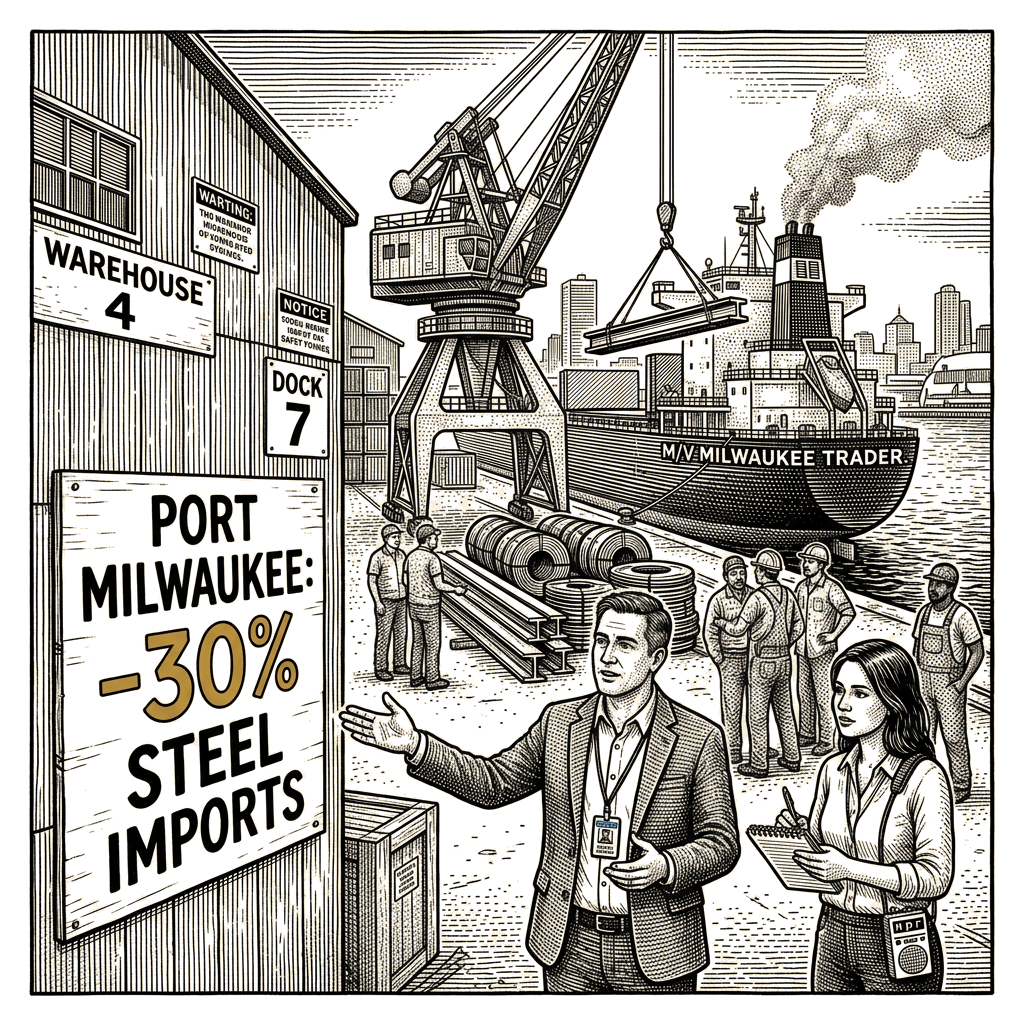
Steel arriving at Port Milwaukee was down approximately 30%, port director Benji Timm said, and he called the decline systemwide. Imported steel was more expensive, costs were rising, production was down and sales were lower overall, he said.
On the terminal, Timm showed Pfeiffer steel beams of a special gauge imported from Luxembourg for a hospital project in Minnesota. The beams were unloaded from a vessel at the port, loaded onto trucks and then trucked to Minnesota. Pfeiffer asked whether the United States could make the steel and whether tariffs were intended to move production home. Timm said that was the administration’s idea, but components had to be put in place first; Pfeiffer said moving more manufacturing to the United States would take time.
Along a shipping bay, Pfeiffer and Timm examined coils of tin plate steel that Timm said came primarily from the Netherlands and were used for canning food cans. Pfeiffer noted that foreign steel imports to the United States faced a 50% tariff. Timm said steel arriving at Port Milwaukee was not produced by U.S. steelmakers and therefore had to be imported.
Over the past year, the Trump administration added or threatened tariffs on steel, auto parts, salt, agricultural commodities and timber. Pfeiffer said the possibility that a tariff could arrive at any time affected budgets and supply chains of countless companies relying on the port. Timm said, “It’s kind of whiplash,” because announcements had not been consistent and often changed. He said officials tried not to overreact, though they sometimes wanted to “freak out.”
Timm said everyone wanted predictability to plan acquisitions, improvements and investments in their businesses, but prices changed too frequently for that planning to be easy. He said businesses and consumers should not be subject to the whims, back-and-forth, unpredictability and instability coming out of Washington.
Tarpaulin-covered salt mounds near the pier represented the biggest commodity Port Milwaukee imported, Timm said. The salt was used for road safety, animal feed and water softeners. During the previous year’s harsh winter, states including Kentucky, Minnesota and Iowa came to Milwaukee for salt. Much Milwaukee salt came from Canada; the Trump administration wanted to tariff that salt but removed it from its list after lobbying from Congress.
Timm said a salt tariff would have had a significant impact on both the city of Milwaukee’s budget and other municipalities’ budgets. Pfeiffer asked whether lower tariffs or a change in administration might eventually provide relief for Milwaukee. Timm said his biggest worry was preserving the United States’ relationship with Canada. He called Canada Wisconsin’s largest trading partner and a significant part of Milwaukee’s economy.
Pfeiffer said the tariff fight between the United States and Canada was harming port cities such as Milwaukee. She noted that four of the five Great Lakes were shared by the two countries and that a ship traveling between them could cross the international border 27 times. Timm said many of the same companies operated on both sides, trading components and equipment back and forth. Tariffs and other transportation disruptions could be harmful and slow business, he said.
Pfeiffer said the instability could have international ripple effects. She said President Trump was trying to use tariffs to reshape global trade and protect the U.S. economy. She described the consequences for Timm as having to reassure Milwaukee’s foreign trading partners, keep goods moving nationwide and worldwide, and brace for products to become scarcer or more expensive. She said he had no idea when the volatility would end.
Timm showed Pfeiffer the route into the port. The approaching vessel was coming from the east, he said, and he pointed out the breakwater and a break in it. Vessels passed between two lighthouses; those going to the inner mooring basin passed beneath the Hoan Bridge, while ships bound for terminals entered slips directly. Timm called the entrance the port’s gateway. The route served vessels from Canada or Europe, and Port Milwaukee does business with more than 300 ships a year that import goods from all over.
Imported products were all around the tour in warehouses, silos and massive domed containers, Pfeiffer said. She traveled in a van with Timm and Milwaukee mayor Cavalier Johnson for a close look at the port. Johnson called the administration’s approach a “peanut butter spread of tariffs” and said it was harmful across the board.
At the port, Pfeiffer also saw a very large ship that was not a container vessel. Timm identified it as a bulk carrier with bays within cargo holds for storing bulk materials. He said the vessel itself was from Bulgaria and was taking DDGs to Spain. Pfeiffer asked whether people would be surprised that a ship from Bulgaria could stop in Milwaukee before delivering goods to Spain; Timm said he would be.
Pfeiffer cited what early voters in Texas said and coverage of protests in France while describing the economy and affordability as surging concerns globally. She also described affordability as a local concern in Milwaukee, where she was hosting that night.
She described Milwaukee as sitting on Lake Michigan within a Great Lakes region that operates as its own economy. Cargo from around the world traveled across the Great Lakes, she said, and maritime trade contributed to a regional economy worth about $9 trillion. Pfeiffer described Wisconsin as an important bellwether state as the midterm elections approached.