Historian says Trump unlikely to change course as investigations loom
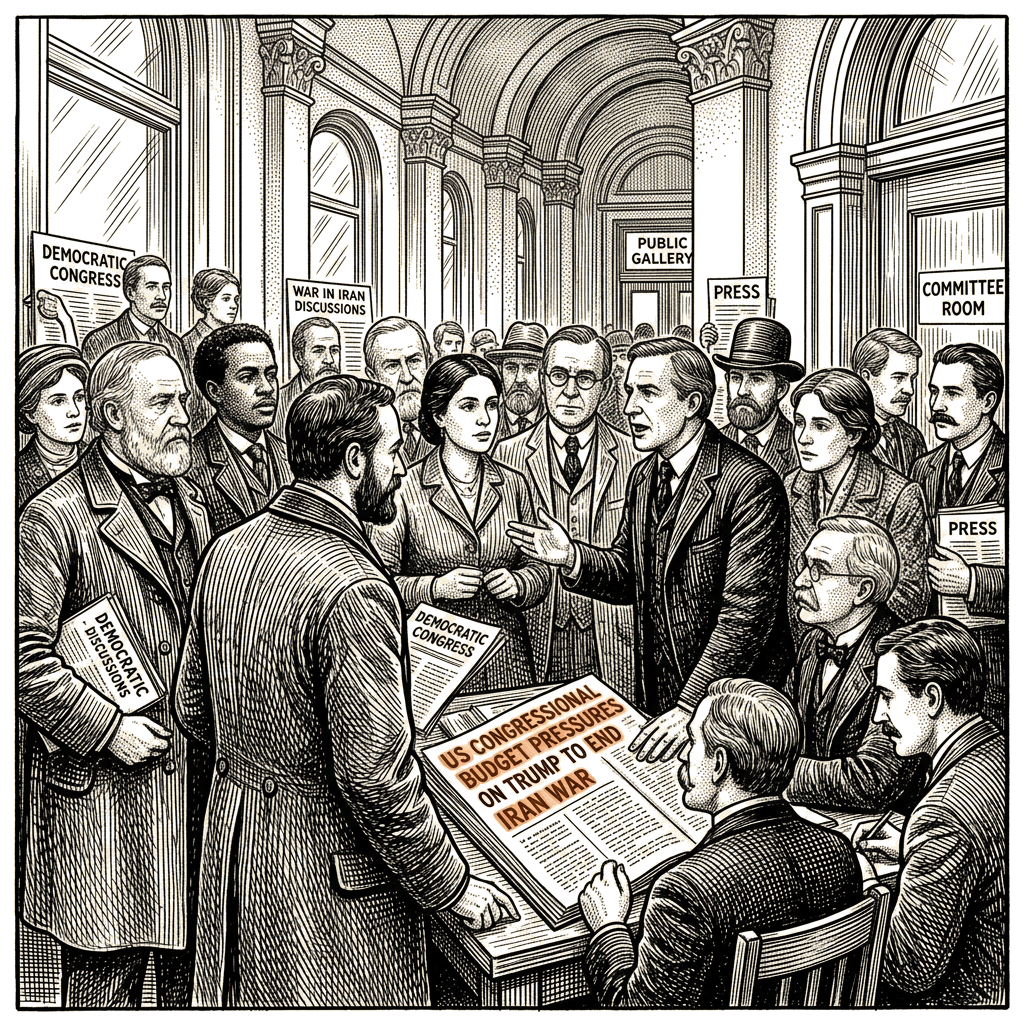
Anne Applebaum said she expects the new Democratic-controlled Congress to pressure President Trump to end the war in Iran through the power of the purse, with committee investigations and sanctions legislation likely to follow. Trump himself, she said, is unlikely to change course.
Applebaum, a historian and staff writer at The Atlantic who hosts the podcast “Autocracy of America,” made the comments in an interview with NPR’s Leila Fadel published Thursday. Fadel characterized the election as “a stunning rejection of the president and his policies” and asked how the results and a new Congress may affect U.S. foreign policy.
Applebaum said the most important shift in how the world perceives the United States came from the fact that, under Trump, the country no longer saw itself as “the leader of the democratic world,” as a partner in the big alliances in Europe and Asia, and as a country that opposed autocracy and dictatorship elsewhere. The election, she said, “will restore especially our allies’ confidence in our democratic system” and give some people hope “that eventually we’ll return to the leadership role that we once had.”
Fadel noted that Iran, a country she described as not an ally, was “really gleeful” over the result. Fadel said state-linked accounts mocked the U.S. president, saying he “wanted regime change in Iran, and he got it in the U.S.” She asked whether the administration’s approach to Iran — a war she said Americans clearly don’t approve of — would change.
“I don’t expect Trump to change,” Applebaum said, because he doesn’t think in terms of political influence. “He’s not that interested in what Americans think of his policies,” she said.
But once the new Congress is seated, Applebaum said, “you will see pressure to end the war coming from them.” She pointed to “the power of the purse” and the appropriations committees as tools to end the war or to influence policy, and said she expects that pressure to “change the trajectory of the war sooner or later.”
Asked what else Congress can do, Applebaum said “you will see investigations,” including corruption investigations. She said Trump is “the first president actually that we’ve ever had who uses the tools of American policy to enrich people around himself.” She also said she expects possible investigations into the behavior of Defense Secretary Pete Hegseth, “questions about his competence,” and “the kinds of advice that the president was receiving.”
Congress cannot force the president to make changes, Applebaum said, and the president retains the ability to veto legislation. But she said establishing “a different narrative, both about this war and more broadly about American foreign policy” is something Congress can do — if it “moves fast out of the gate,” if its leadership thinks hard about its priorities, and if it chooses the right messaging.
On Ukraine, Fadel noted that Congress has shown bipartisan support for the country, yet Ukraine is not getting what it says it needs, and Europe has been panicking that Russia’s war ambitions will expand. Applebaum said she expects the bipartisan coalition that supports Ukraine to become more active, adding that it “reflects the views of the country” because Americans also support Ukraine.
She said she would expect “legislation forcing the president to reimpose sanctions.” Applebaum said she could not say whether such a bill would be veto-proof, but added, “it’s not impossible that it could be because the support is so strong.”
Applebaum said she also expects committee investigations into why Starlink was cut off unexpectedly, and into what she called “the shenanigans that have taken place around the negotiation process” — the fact, she said, that negotiators were “simultaneously trying to do business deals while negotiating with Putin and with Zelenskyy.” She said she expects all of that to become more open, more a part of the conversation and more a part of the criticism.
Fadel raised the economy as well, saying many Americans blame the war in Iran for the pain they feel when affording gas, while tariffs have also had an impact — an area of international policy where Congress historically plays a role. Applebaum said she expects Congress to use its ability to block the president “by saying, we won’t appropriate money,” and to use that power actively.