Alleged U.S. bombing of Iranian school that reportedly killed over 100 children
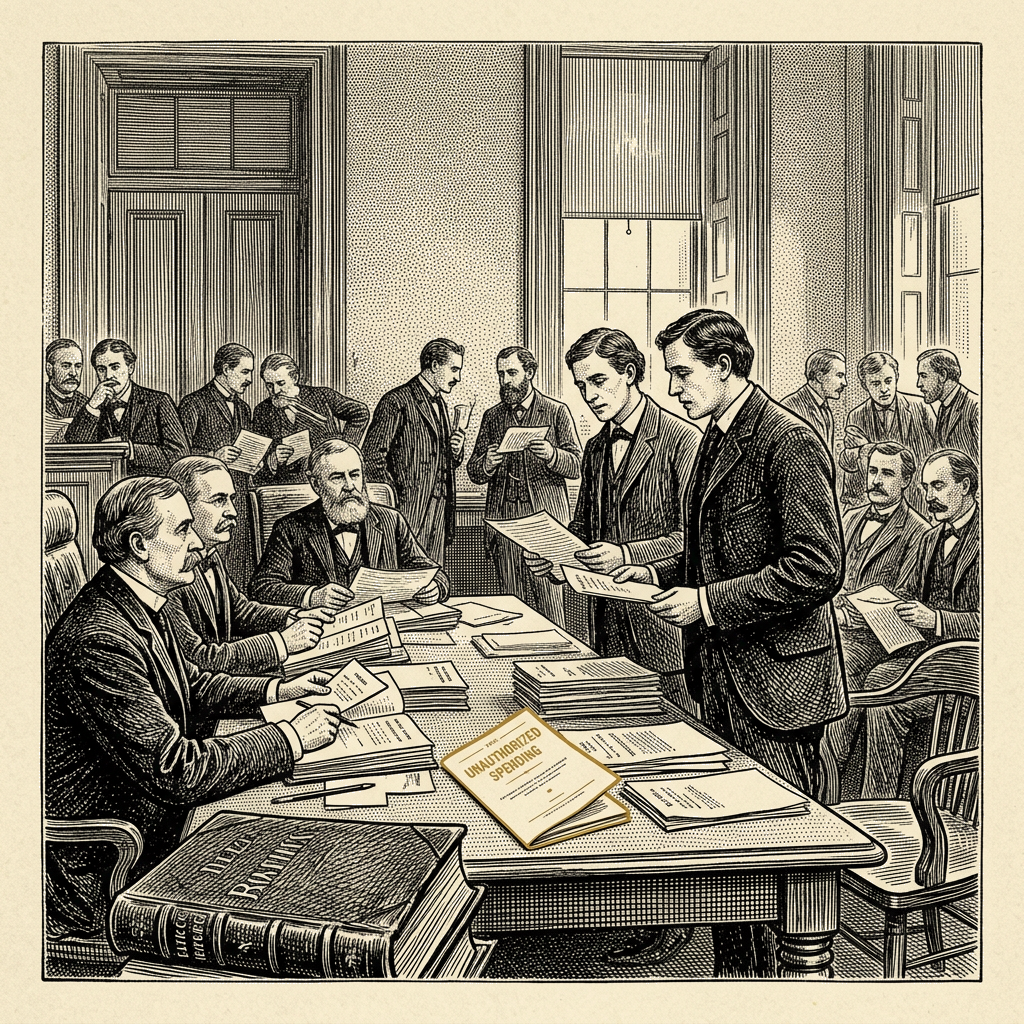
The first is money. President Trump and Office of Management and Budget Director Russ Vought have twice ignored how Congress directed federal spending, NPR’s Eric McDaniel said — either declining to spend it on the things Congress said they should or doing other things with it. That, he said, is “a very big deal.” “The power of the purse to decide how money is spent,” he said, “is the constitutional power that underpins all other congressional powers.” “So if the presidency manages to subsume that, what is Congress really there for?”
The second is force: the war in Iran and the use of the military generally. The Pentagon has been striking vessels it describes as drug boats in the Caribbean and the Pacific, McDaniel noted, and the president and his secretary of defense have never made the case to the American public about the war in Iran. Congress is supposed to authorize all military conflicts, he said, and has never done so for either campaign. “So expect to see deep looks at both of those things,” he said.
One example looms large for him: allegations that the U.S. military bombed a school in Iran in the early days of the offensive against that country, where more than a hundred children are said to have died. It is not a topic with a clear partisan lean, McDaniel said. “It’s about establishing a factual record about what happened and what might need to change about how we conduct strikes going forward,” he said.
Some targets are more predictable, McDaniel said: the president and his family have gotten much richer during the second term, and the Justice Department’s handling of documents tied to the late sex offender Jeffrey Epstein will also be a focus. But he argued that the less obvious subjects — the ignored spending directives and the never-authorized campaigns — may be even more important for the health of democracy.
The interview’s starting point was more basic: with their new majorities, sworn in this January, Democrats will have at their disposal the full investigatory powers of Congress — the ability to subpoena records and compel individuals to testify. They will be able to pass bills on their own, Chang noted in introducing the segment, but they cannot make President Trump sign those bills into law; the one thing the party can do on its own, she said, is “investigate, investigate, investigate.” It has been a few years since different parties controlled the White House and Congress, she said, and that “always does result in investigation.” With government corruption at the top of the list of voter concerns, McDaniel added, it makes sense that this would be a tool Democrats are prioritizing.
Congress has three key functions, McDaniel said: passing laws, directing tax dollars through the power of the purse, and conducting oversight of the executive branch. The oversight toolkit includes the authority to force documents to be turned over, to make people testify under oath and to hold people accountable in the courts if they refuse. Such investigations have been used “to great effect” through U.S. history, he said — the Watergate-era probes that exposed cover-up schemes by the Nixon administration, the Reagan administration’s sale of weapons to Iran to fund Nicaraguan rebels, the 9/11 Commission and the CIA black site torture report in the 2010s.
Chang pressed on the political terrain: the cost of living was the huge concern in the election, she said — a matter much more concrete than public corruption — and she asked whether the investigations risk coming off as retribution against the Trump administration, and only that, rather than actual oversight and accountability. McDaniel agreed the danger is real. “Totally. I think that’s a huge risk,” he said. But there are a lot of ways investigations can look that aren’t necessarily apparent efforts to undermine the presidency, he said. In the post-Watergate era, he noted, Jimmy Carter would say the public deserved “a government as good as its people,” and the most successful congressional investigations, in his view, have worked toward that goal of transparency.
Chang noted that investigations can feel retaliatory — arguably, she said, that is how many people characterize the two impeachments of Trump during his first term — and asked whether Democrats could go down that road again. McDaniel said he just doesn’t see it happening. “As best I can tell, there’s no momentum,” he said, adding that Democrats have taken on board the lesson that impeachment failed as a political strategy during Trump’s first term. Trump is less popular now than ever before and is on his way out of office, McDaniel said, so the political upside of impeachment — prohibiting him from serving in office again — is gone. Democrats instead face a huge agenda, he said — healthcare, housing, tariffs, education and climate. “It’s a big world out there,” he said, and they might need to do some “table setting” for 2028.