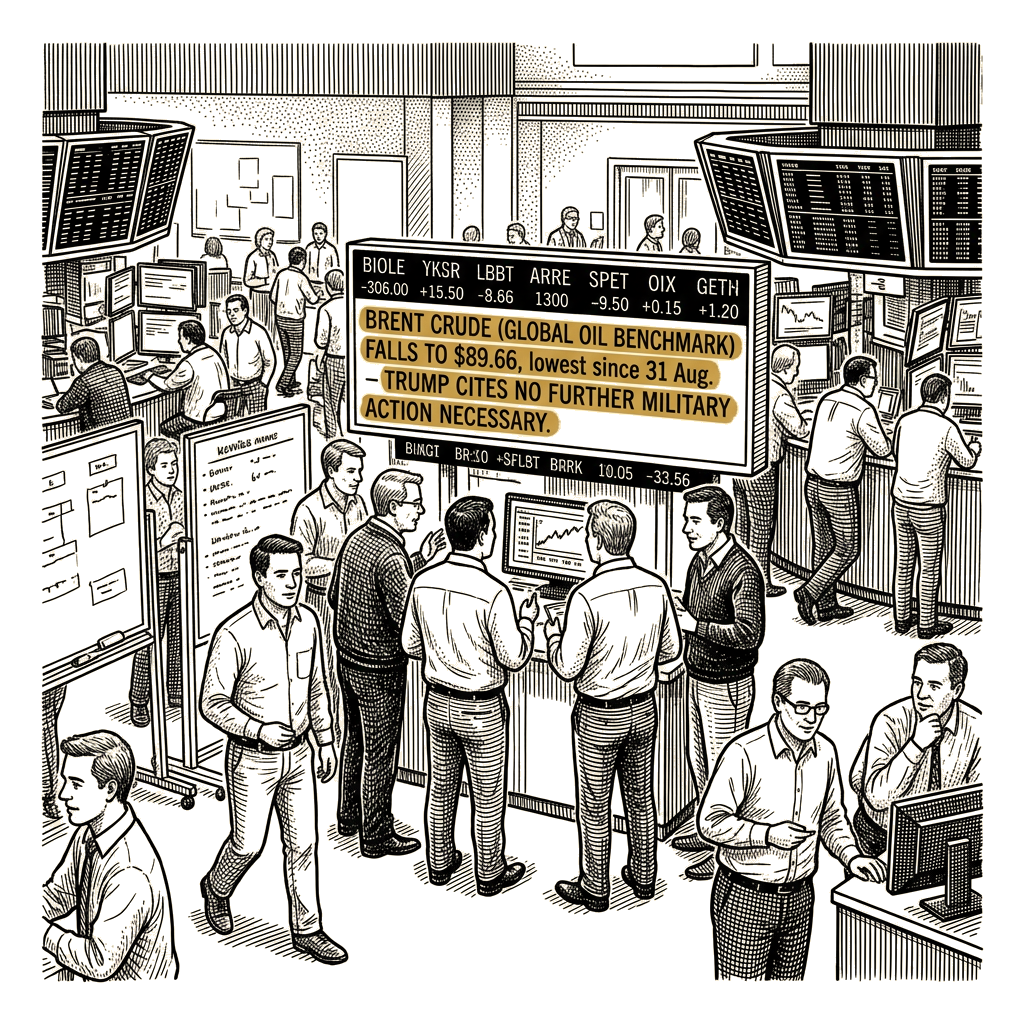
European indexes climb, with US inflation data due at 1.30pm GMT
Brent crude, the global oil benchmark, fell nearly 3% to $89.66 on Tuesday morning, its lowest level since 31 August, after President Donald Trump said further military action against Iran did not seem necessary at that point. Europe’s Stoxx 600 index gained 0.9% and the FTSE 100 rose 0.4% as markets responded to signs that the conflict might be nearing an end.
The Tuesday decline came after a near 6% drop on Monday on signs that the conflict might be nearing an end, leaving crude at its lowest level since late August.
Markets reacted with relief to Donald Trump saying that the war on Iran is “effectively over.” During a White House press conference, Trump said Israel and Gulf allies in the region were well protected from Iran and an escalation was not needed. “At this point, taking the military action doesn’t seem to be a very necessary thing – but we’re locked and loaded, ready to go for any reason,” he told reporters during a briefing at the White House.
Europe’s benchmark Stoxx 600 index gained 0.9% to 662.54, hovering near a record high it had hit in early August on hopes for a peace deal in the Middle East. In London, the FTSE 100 index climbed 45 points, or 0.4%, to 10,828. Airline stocks rose amid hopes that easing tensions could lead to lower fuel costs, with Lufthansa 1.8% ahead and Air France-KLM up 1.2%.
The oil companies BP and Shell were the biggest losers, down 1.7% and 1.5% respectively.
Daniela Hathorn, a senior market analyst at the trading platform Capital.com, said: “Global markets are extending their recovery this morning after Wall Street recorded a strong session that was relatively broad-based, supported by a sharp decline in oil prices and renewed buying in technology stocks.”
Hathorn said the US Federal Reserve would want more evidence of slowing inflation. The latest US inflation data for October were scheduled for release at 1.30pm GMT.
Hathorn added: “Ultimately, markets are benefiting from an improvement in the geopolitical outlook, but the underlying macroeconomic and corporate risks remain unresolved. Lower energy prices could help ease inflation expectations, but the Fed will need evidence of broader disinflation before reconsidering its policy stance.”
“The key question is whether today’s inflation figures support the recovery or remind investors that resilient economic growth and persistent price pressures could keep borrowing costs elevated for longer. With technology valuations still sensitive to yields, another inflation surprise could quickly bring volatility back into focus,” she said.
The AA said on Monday that the average UK petrol price had fallen 5p a litre since early October, to 169.7p a litre. It said wholesale markets indicated another 10p reduction should be on the way. Drivers will hope the fall in wholesale oil prices continues to feed through to prices at the pump.