Ueland faces questions about OMB ties and spending-law findings
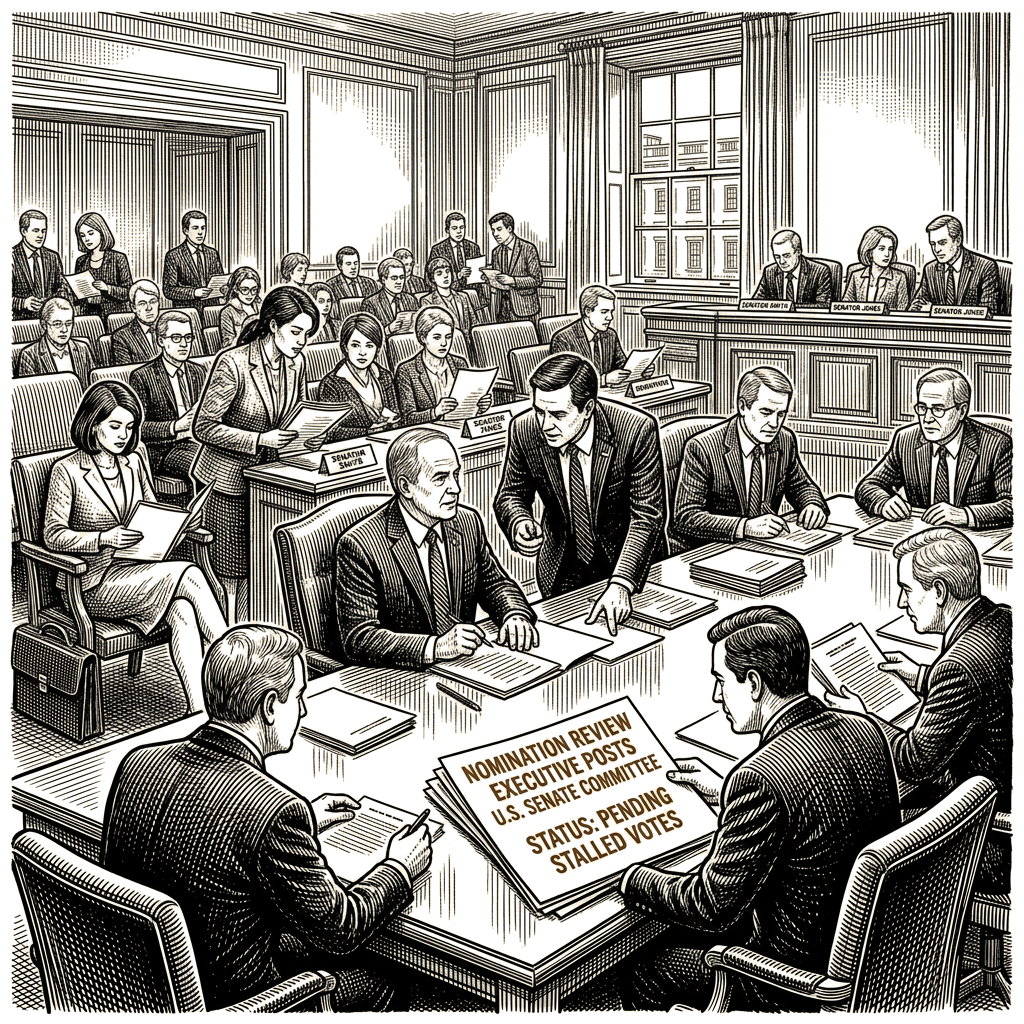
WASHINGTON — President Trump’s choices for senior executive posts are running into more resistance in the Republican-controlled Senate as the chamber’s majority winds down. The Wall Street Journal reported that Eric Ueland, Trump’s nominee to lead the Government Accountability Office, has faced objections from Republican senators, while the Senate health committee declined to vote this week on Jim O’Neill’s nomination to lead the National Science Foundation. The disputes come as Democrats prepare to take control Jan. 3, leaving Trump fewer weeks to secure a broad slate of nominations and judicial confirmations.
Republicans hold a 53-47 edge until Dec. 15, when Sen.-elect Sherrod Brown of Ohio is sworn in and the margin becomes 52-48. Democrats take over Jan. 3 and will hold a 56-44 Senate majority in the next Congress. The report said more than one-third of Republican senators are either leaving office shortly or have won six-year terms extending their tenure well beyond Trump’s, limiting his leverage to keep them in line.
Ueland is a former longtime Senate Republican aide and the deputy director of the Office of Management and Budget, which has clashed with Congress over control of spending. Any small group of Republicans can join with Democrats to block a nomination. Senators Tillis of North Carolina, Collins of Maine and Curtis of Utah have voiced concerns about Ueland, including his closeness to OMB Director Russ Vought, who has moved to stall or cut funding already appropriated by Congress.
During his Thursday confirmation hearing before the Homeland Security and Governmental Affairs Committee, Ueland said he understood the law and would follow it. “I’m not here as a plant, a stooge, a lackey for anybody,” he said. Ueland also declined to say whether he agreed with the GAO’s repeated determinations that the Trump administration violated spending laws by withholding or redirecting money.
Sen. Gary Peters of Michigan said Trump was trying to take control of an important agency that supports congressional oversight. Peters argued that the election results showed that the public wants a check on the administration. “They’re tired of rubber stamps,” he said. A Curtis spokesman said the senator had concerns that the nomination was too partisan for the GAO job.
Sen. Maggie Hassan of New Hampshire said Republicans made no attempt at the bipartisan engagement she said is required as part of the process for selecting the GAO director, also known as the comptroller general. Sen. James Lankford of Oklahoma praised Ueland but said the White House followed the letter of the law if not necessarily its spirit.
Trump has pressed for a broader confirmation push. In a social media post earlier this month, Trump said it was “very important for the U.S. Senate to confirm all of our pending 161 Nominations, including 25 Federal Judges.”
The Senate Committee on Health, Education, Labor and Pensions declined to vote this week on O’Neill’s nomination to lead the National Science Foundation. Committee chair Sen. Bill Cassidy of Louisiana said several members had concerns about O’Neill, who is serving as acting director of the Centers for Disease Control and Prevention. Cassidy said O’Neill “did not do enough to stand up for science and against irresponsible decisions and statements” from Health Secretary Robert F. Kennedy Jr. Cassidy had been a key vote to confirm Kennedy in 2025 but has since become increasingly critical of his vaccine policies.
The Food and Drug Administration nomination also ran into opposition. According to people familiar with the matter, the administration withdrew Dr. Heidi Overton’s nomination after input from top health officials and backlash from Make America Healthy Again activists. Overton helps run the Domestic Policy Council inside the White House.
Newly installed White House chief of staff Stephen Miller made the decision to withdraw Overton’s bid amid questions about whether she had enough Republican support to clear the Senate health committee. After the nomination was abandoned, Cassidy said he had become willing to back Overton and believed she had the votes for confirmation.
Judicial nominations have encountered resistance as well. Sen. John Cornyn of Texas is blocking a federal judge nominee in his home state. Cornyn said he favors a different candidate as party leaders work to confirm judges before Republicans lose control of the chamber.
Pete Hegseth’s choices for Army and Navy leadership are also in limbo after he ousted the Army secretary, the Army chief of staff and the Navy secretary earlier this year. Hegseth has continued pressing his choices despite objections from Republican senators.
For the Army’s civilian post, Hegseth recommended Chief Pentagon Spokesman Sean Parnell, according to U.S. officials. Republican senators oppose Parnell over his treatment of the press and allegations of spousal abuse. Parnell, a combat veteran from western Pennsylvania, has denied the allegations and has not yet been formally nominated. Sen. Dave McCormick of Pennsylvania is among the Republicans supporting a Parnell nomination.
Trump nominated Hung Cao, the acting Navy secretary, in September to hold the position permanently. The former Navy captain, who retired in 2021, is unlikely to obtain the 60 votes needed for a waiver from a federal law requiring former military officers to wait at least seven years before taking a top civilian Pentagon role, according to current and former officials involved in the process. At his confirmation hearing this week, Republican and Democratic senators questioned Cao’s handling of the Iran war, strains on military resources and attempted suicides among sailors.
Trump also nominated Gen. Christopher LaNeve this week to become the Army’s top military officer. LaNeve has served as acting Army chief of staff since Hegseth fired his predecessor in April, and he previously served as Hegseth’s top military aide. The Wall Street Journal reported that LaNeve is unlikely to obtain enough Republican support for confirmation. A Pentagon official said the Defense Department looks forward to working with Congress to confirm the president’s picks.