House is out next week; government funding runs out December 11
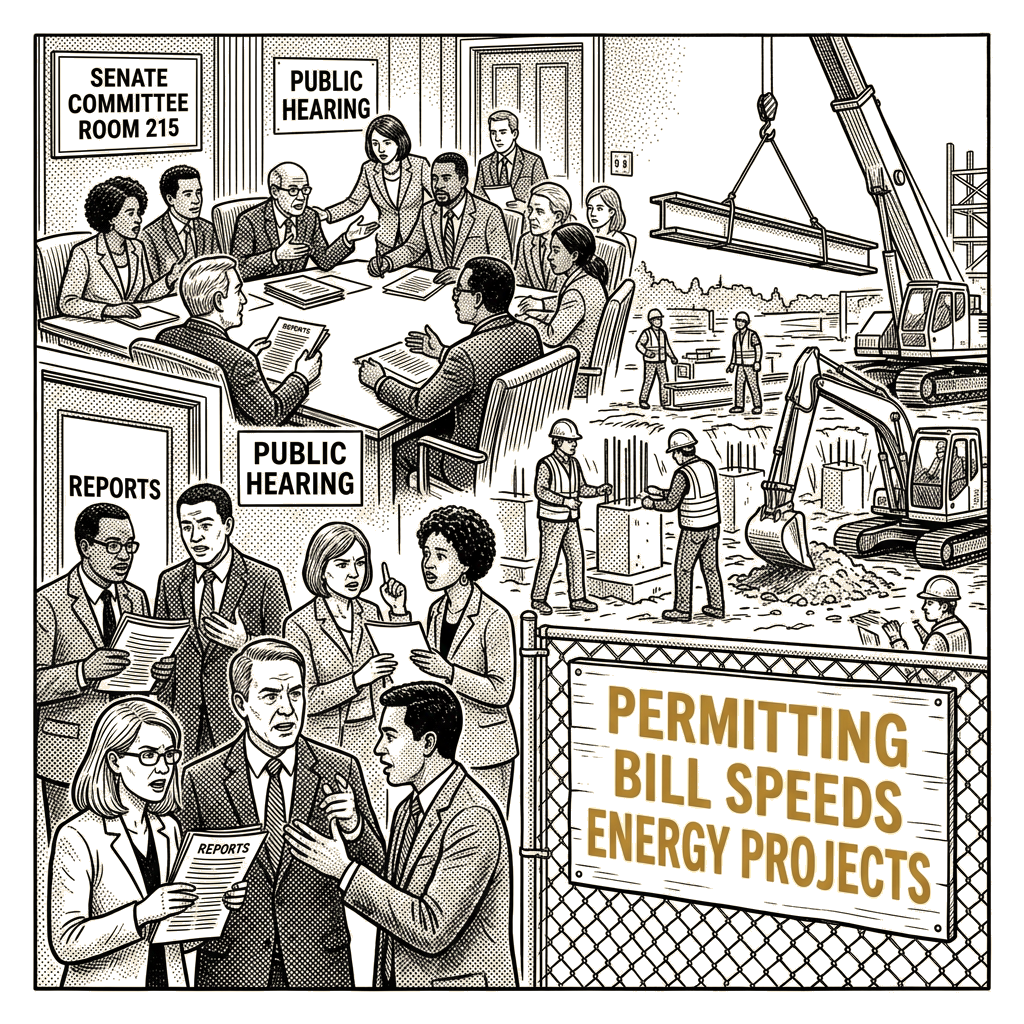
The Senate passed a bipartisan bill this week meant to speed construction of new energy infrastructure projects, a measure that would shorten or waive many of the environmental reviews such projects now undergo. It comes after midterm elections in which affordability and rising energy costs were top of mind for many voters, and it divides Democrats and some of their key allies.
Lawmakers say they heard loud and clear that cost-of-living concerns are a top priority for Americans, NPR political reporter Matthew Brown said. The bill was co-sponsored by two Democrats and two Republicans and seeks to address those concerns by cutting or streamlining many of the regulations that projects must go through before they can be built.
Those projects are complicated and can take years — sometimes more than a decade — before they are finished. The idea behind the bill is that if Congress cuts the red tape, more projects will be built, more energy will be produced, and prices will hopefully go down for Americans, Brown said.
Shelley Moore Capito, a West Virginia Republican and one of the bill’s authors, talked up the measure on the Senate floor ahead of its final passage. “American people have used their voices, and they’ve made them clear. And we must listen,” she said. “They deserve bipartisan solutions that make life more affordable. That’s what this bill does.”
The legislation would rewrite some of the nation’s most important environmental laws — the National Environmental Policy Act, the Clean Water Act and the Endangered Species Act. Brown emphasized that these are bedrock protections that have been on the books for decades, designed to make sure that animal species, local ecosystems and archaeological sites are not damaged by development.
Specifically, the bill shortens the timeline for getting most permits and exempts some projects entirely from environmental review, which should, in theory, speed up how quickly some of those projects can be built. It would also require that data centers pay for their energy usage and not drive up costs for neighboring communities.
Republicans got behind the bill because they see it as a way to speed the development of oil-and-gas projects. Democrats who support it think it will help get more clean energy onto the grid — things like solar farms and hydropower plants. Most clean-energy industry groups, labor unions and oil-and-gas companies are backing the measure.
Many environmental advocacy groups have opposed it, including major groups like the Sierra Club and the Natural Resource Defense Council. The Sierra Club’s executive director, Loren Blackford, called the bill deeply flawed; she said it would threaten endangered species and would also weaken tribal sovereignty.
That tension comes down to the proposed changes the bill would make to the National Historic Preservation Act, a law on the books since 1966 that is designed to help protect historic landmarks and archaeological sites around the country. As the bill came together, nearly a dozen tribal organizations warned that the changes would limit the input Indigenous communities are able to provide when it comes to construction at sites with important cultural significance.
The bill now goes to the House, and it is still unclear whether it will make it to President Trump’s desk for a signature. The House is out of session next week for Thanksgiving, and when members come back, one of their top priorities will be to extend government funding before it runs out on December 11.
With a narrowly divided chamber, Republicans may need some Democratic votes to get the permitting bill across the finish line. But House Democrats may not be interested in supporting a bill that divides their supporters when they could take their own swing at the issue once they control both chambers of Congress starting in January.
The Senate passed the measure this week, and MSI reported that the chamber sent the permitting overhaul to the House. That coverage also detailed the data-center provision, which would require data centers to pay for the power they use. The House has not voted, and its calendar now governs what happens next.