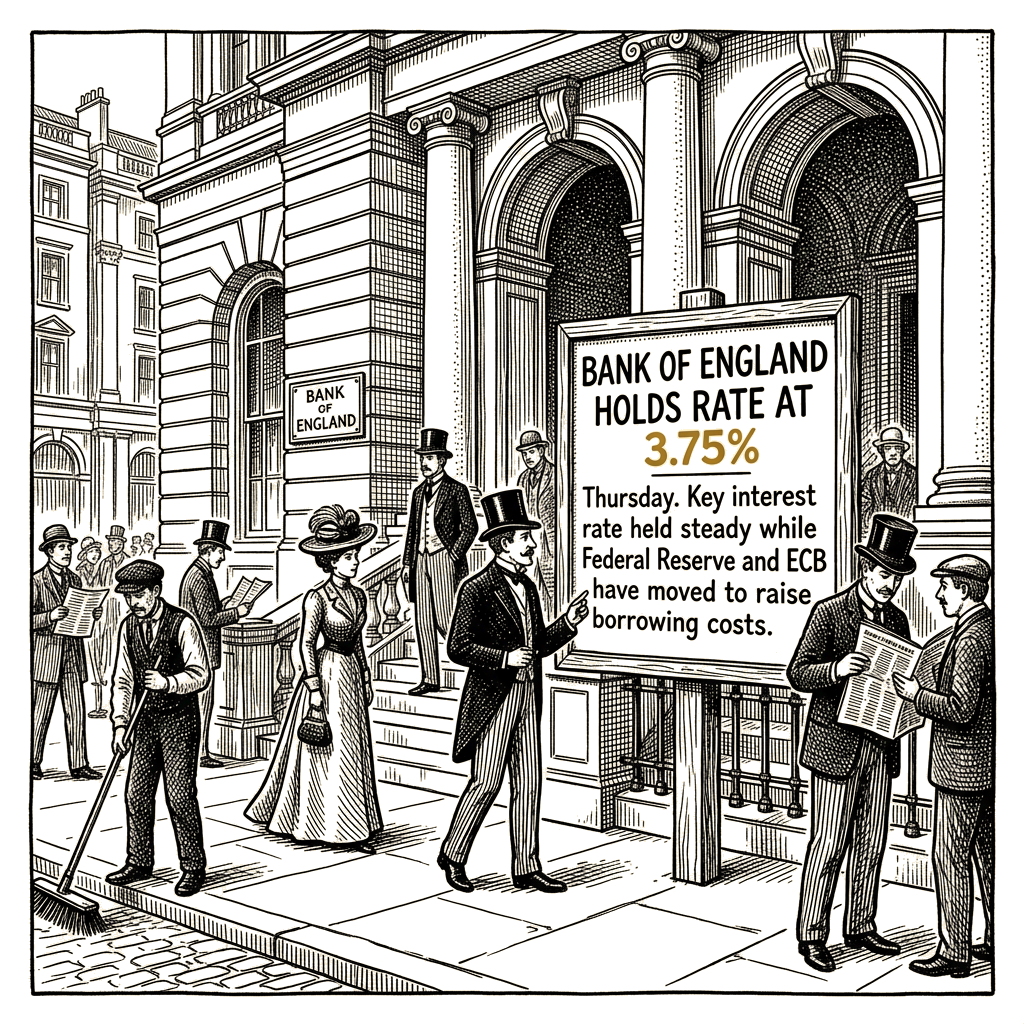
Three of nine MPC members voted to raise rate to 4%
The Bank of England kept its policy rate at 3.75% on Thursday, holding steady at a moment when the Federal Reserve and the European Central Bank have moved to tighten. The decision split the Monetary Policy Committee, with three of nine rate-setters voting for an immediate hike to 4%.
UK inflation rose to 3.1% in August, above the BOE’s 2% target, driven mostly by rising prices at the pump and household energy costs. In July, the BOE said it expected inflation to average 3.2% in the final quarter of the year. Even so, most policymakers saw few signs so far that higher energy costs are spilling over into everyday prices or wages, and the recent pickup in bond yields is further restraining economic activity.
Governor Andrew Bailey left open the possibility of future rises. “So far higher global energy costs have had a limited effect on price and wage setting in the U.K. But the longer this volatility persists, the bigger the impact it will have on inflation, and the more likely it is we will need to raise bank rate,” Bailey said.
The three dissenters voted to raise the key rate to 4%. Pill, one of them, struck a more hawkish tone. “The magnitude and persistence of the inflationary impulse stemming from events in the Middle East have proved stronger than expected in July,” Pill said. Bailey said geopolitics had made upside risks more prominent, amid a “seeming loss of urgency” to find solutions to the Middle East conflict.
Crude oil rose above $110 a barrel this week, and European natural-gas prices were around their highest level since 2023, amid renewed supply concerns tied to the conflict in the Middle East.
The Federal Reserve raised interest rates for the first time in three years on Wednesday, with Chairman Kevin Warsh noting that U.S. inflation had been too high for too long. The ECB last week raised its key rate for the second time in 2026.
UK labor market data showed limited second-round effects so far: average weekly earnings slowed in the three months to July, and payrolls fell, according to official figures.
Yael Selfin, chief economist at KPMG, said the BOE struck a cautious tone but emphasized that risks to the inflation outlook have increased. “The bank struck a cautious tone but emphasised the risks to the inflation outlook have increased, with energy prices now expected to remain higher for longer, raising the possibility of a rate rise in November,” Selfin said.
Alongside the rate decision, the BOE announced changes to how it unwinds its holdings of UK government bonds, known as gilts. The bank said it would reduce its remaining stock of bonds at an annual average pace of £46 billion — equivalent to about $61.5 billion — by the end of 2034, through a combination of letting bonds mature and £20 billion in annual sales.
The BOE also said it would pause auctions of those bonds until April while it reviews a model of selling them to the government. The bank holds £368 billion in total as part of its asset purchase facility portfolio as of September, and said it would not sell £222 billion of gilts with redemption dates earlier than 2035, holding them to maturity.
The decision comes as the benchmark 10-year gilt yield reached its highest level since 2008 this week, with investors weighing bulging debt loads and inflation. Critics of the BOE’s approach say the use of active sales adds to higher borrowing costs at a time when the government is hard-pressed to contain its debts. Neither the Fed nor the ECB has used sales to shrink their bondholdings.
Much of what shapes the next decision sits outside policymakers’ control. Should energy prices continue to climb, rate-setters on the fence may be persuaded to act.