Letter follows Heritage commentary on congressional seating power
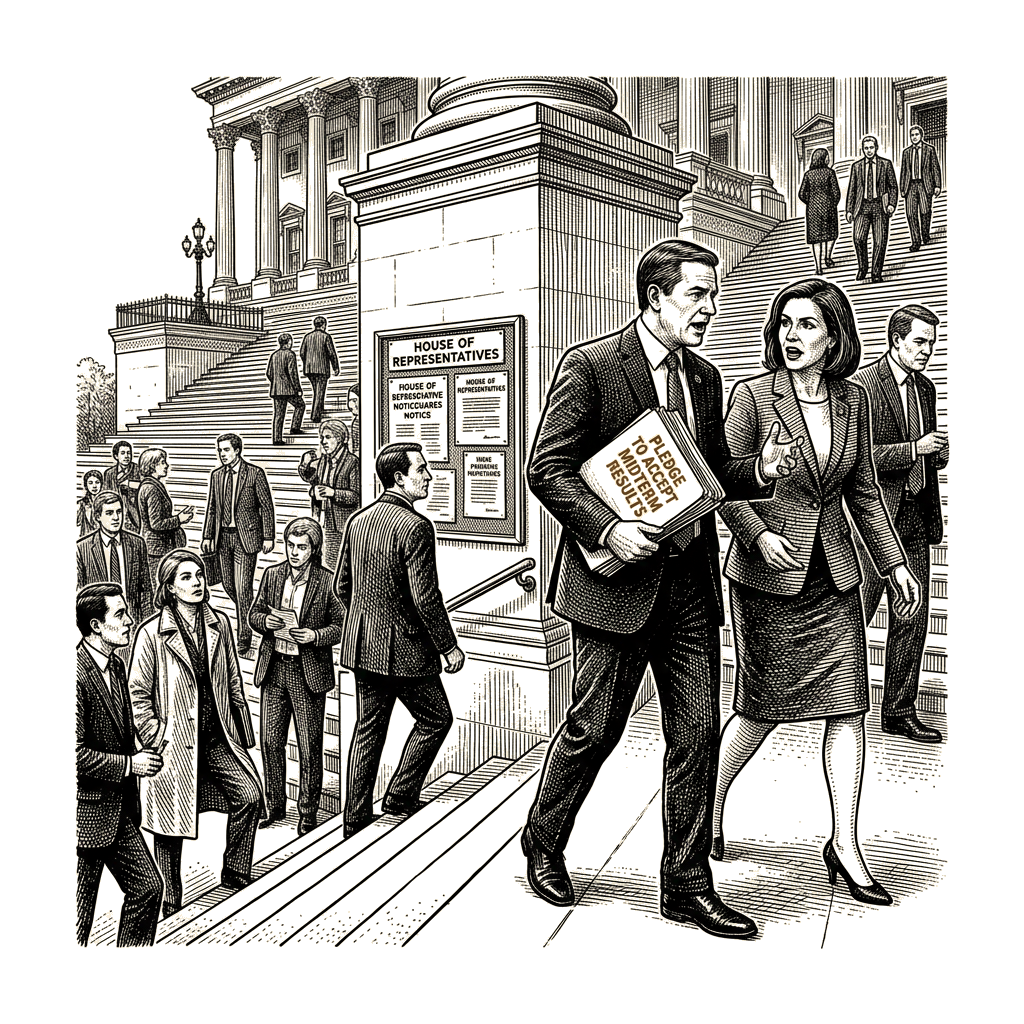
A bipartisan pair of House lawmakers is collecting signatures on a public pledge aimed at heading off any attempt by the current Congress to block the seating of members-elect after the November midterms, The Wall Street Journal reported.
Reps. Don Bacon (R-Neb.) and Josh Gottheimer (D-N.J.) are asking colleagues to sign a letter “opposing efforts to undermine free and fair elections or override the will of the voters, including any attempt to refuse or delay the seating of any Member-elect who presents a validly issued election certificate.” The letter is addressed to House Speaker Mike Johnson (R-La.) and Minority Leader Hakeem Jeffries (D-N.Y.).
In addition to the opposition language, signatories commit to “recognizing the election winners certified by each state pursuant to that state’s law” and to “supporting the right of each state’s certified winners to be added to the House Clerk’s roll on the first day of the 120th Congress in January 2027, as required by federal law.”
The goal, Bacon and Gottheimer said, is to get enough signatories to head off any prospect that the current House would even contemplate parliamentary maneuvers to block their successors from taking over. The effort comes as Democrats and anti-Trump Republicans have grown increasingly anxious that the current GOP-controlled Congress could thwart the seating of Democrats in January.
Gottheimer invoked the experience of January 6, 2021. “I was in the House chamber on January 6, when the doors were barricaded and members were forced to evacuate,” he said, according to the Journal. “Given our experiences of late, I think it’s worth taking this extra measure.”
Bacon pointed to an earlier episode. He said a near-issue arose several years ago when some Democrats considered objections to an Iowa Republican after the state said she won her seat by six votes. “We’ve seen before how this norm can come under strain,” Bacon said, according to the Journal. “That is why it’s important to put down a clear, bipartisan marker that we follow state certifications, seat certified winners and preserve trust in the institution.”
Republican Reps. Mike Lawler of New York and Brian Fitzpatrick of Pennsylvania have also signed the letter, their offices confirmed. The four signatures put the effort within reach of a majority if all House Democrats throw their support behind it. Both Lawler and Fitzpatrick are in close re-election contests, the Journal reported.
The letter lands against a backdrop of repeated claims by President Trump that some states’ voting practices are vulnerable to fraud, and an administration push to expand federal control over elections that has set up repeated clashes with states, which hold primary authority to run their own elections. Earlier this year, a prominent conservative think tank published commentary arguing that Republican congressional leaders aren’t obligated to immediately accept states’ results if they believe they aren’t accurate or fair, citing a constitutional provision that gives each chamber the power to be the “judge of the elections, returns and qualifications of its own members.”
“Congress could deny representation to states without voter identification laws or those that wink at foreign nationals voting in their elections. Or Congress could require new elections when voting rolls are not properly purged,” Scott Yenor, a senior research fellow at the Heritage Foundation, wrote, according to the Journal. The Heritage Foundation did not comment or make Yenor available for an interview.
In a brief exchange with reporters, Jeffries framed the stakes plainly. “We’re doing everything necessary to ensure that the results of the November 3rd election are brought to life when the new Congress is sworn in on January 3rd,” he said, according to the Journal. Johnson’s office did not respond to requests for comment.
The legal mechanics that would make a refusal-to-seat effort possible are real but narrow, according to Notre Dame law professor Derek Muller, who studies election law. Muller said scenarios in which Republicans could deploy procedural maneuvers to deny Democrats the ability to become the House majority were unlikely, particularly if the results are not close. “These are extraordinary, bordering on outlandish, hypotheticals and regular order will almost certainly prevail in the House,” Muller said.
The House has at times refused to seat elected representatives certified by their states, with skirmishes in the 19th and early 20th centuries involving Southern Democrats and Utah Mormons. A late-1960s fight over scandal-plagued New York Democrat Adam Clayton Powell Jr. resulted in the Supreme Court placing restrictions on the circumstances in which election winners could be excluded, the Journal noted.