Core inflation reaches 2.8% as services inflation also rises
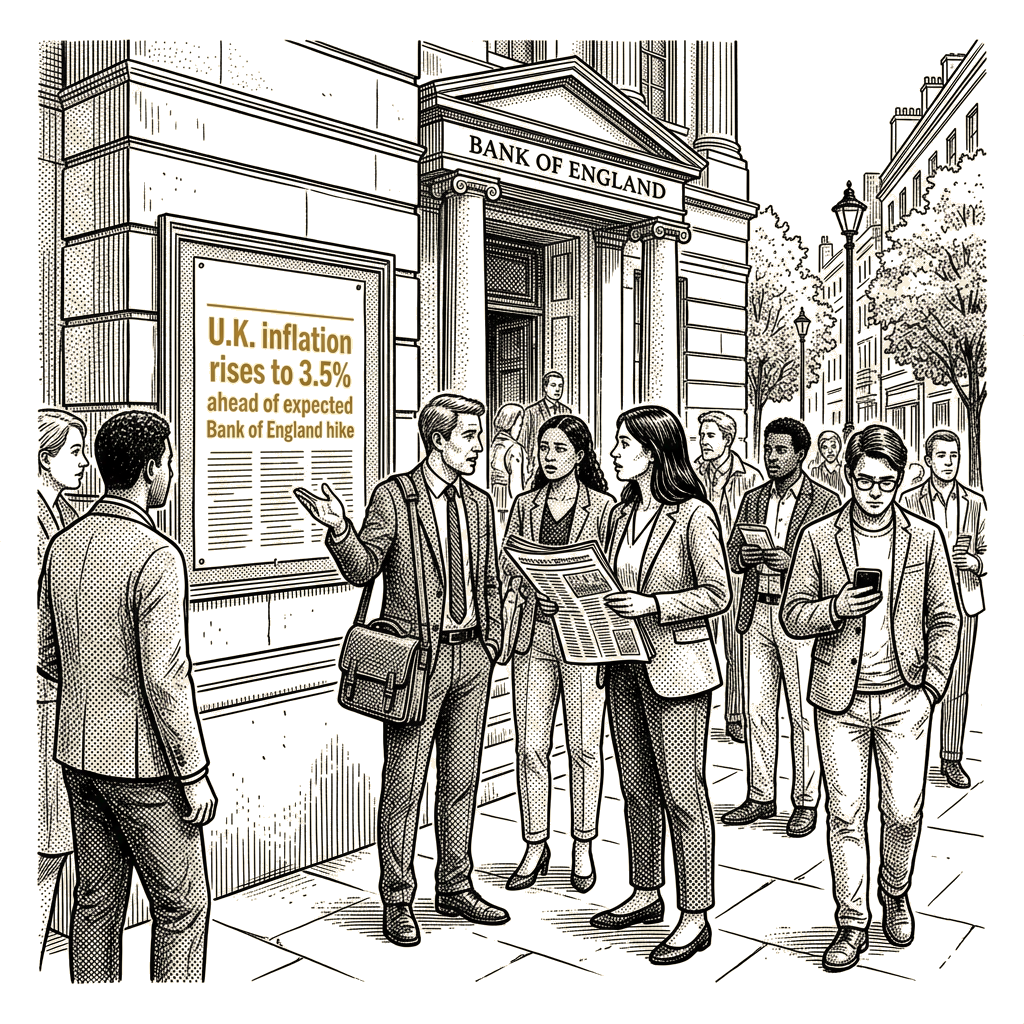
The Bank of England enters its Nov. 5 meeting with inflation above target and a rate increase widely expected. The bank held its key rate at 3.75% in September, and investors increasingly anticipated an increase at the next meeting as the inflation outlook deteriorated. A move would be the bank’s first interest-rate increase since the war between the U.S. and Iran began.
Beneath the headline measure, inflation indicators tracked closely by policymakers also moved higher. Core inflation, which excludes volatile food and energy prices, rose more than expected to 2.8% in September from 2.6% in August. Services inflation increased to 3.7% from 3.4%. Policymakers use both measures to assess whether higher energy costs are producing second-round price effects.
The Office for National Statistics said consumer prices rose 3.5% in September from a year earlier, compared with 3.1% in August. A consensus of economists polled by The Wall Street Journal had expected a slightly cooler 3.4% reading. The increase came as global energy costs continued to rise because of the war in Iran, leaving inflation further above the Bank of England’s 2% target.
The bank’s latest projections, published in September, pointed to inflation rising to around 3.75% in the fourth quarter of 2026 and slightly above 4% in the first quarter of 2027. Those forecasts were based on the energy prices prevailing at the time.
David Rees, an economist at Schroders, said, “Britain is facing a perfect storm of imported inflation pressures.” He said, “Today’s rise in headline inflation was always going to be energy-led, but food and manufactured-goods prices look set to climb in the months ahead, pushing CPI towards 4%.”
Second-round effects were a separate concern for the Bank of England. The bank has been particularly focused on businesses passing higher costs to consumers and workers seeking higher wages to compensate for lost purchasing power. Data released Tuesday showed weekly earnings growth, excluding bonuses, rising in the three months through August.
Rees said the monetary-policy response also carries a growth risk. “Our base case remains that tighter financial conditions will weigh on growth, dampen domestic inflation pressures and ultimately avoid the need for a prolonged tightening cycle. But the U.K.’s relatively low potential growth rate means that even a modest pickup in demand could quickly reignite domestic price pressures,” he said.
The U.K. government faces a separate fiscal test when it outlines its budget on Oct. 28. “[It is] a perilous high-wire act for the Chancellor, increasing pressure for cost-of-living support while pushing up government borrowing costs, which is shrinking fiscal headroom and narrowing his policy options,” said Suren Thiru, an economist at The Institute of Chartered Accountants in England and Wales.
Thiru said a November rate rise looked all but certain and that Bank of England policymakers would watch the budget closely for policies that could add further pressure to inflation. The September data did not resolve the bank’s central question: how much of the increase reflects the direct effect of energy prices, and whether it will spread into other parts of the economy.
Earlier MSI coverage warned that sustained oil prices could force Bank of England rate hikes, while a later report showed gas costs driving July’s inflation increase. September’s 3.5% reading and the expected Nov. 5 rate increase advance that sequence.