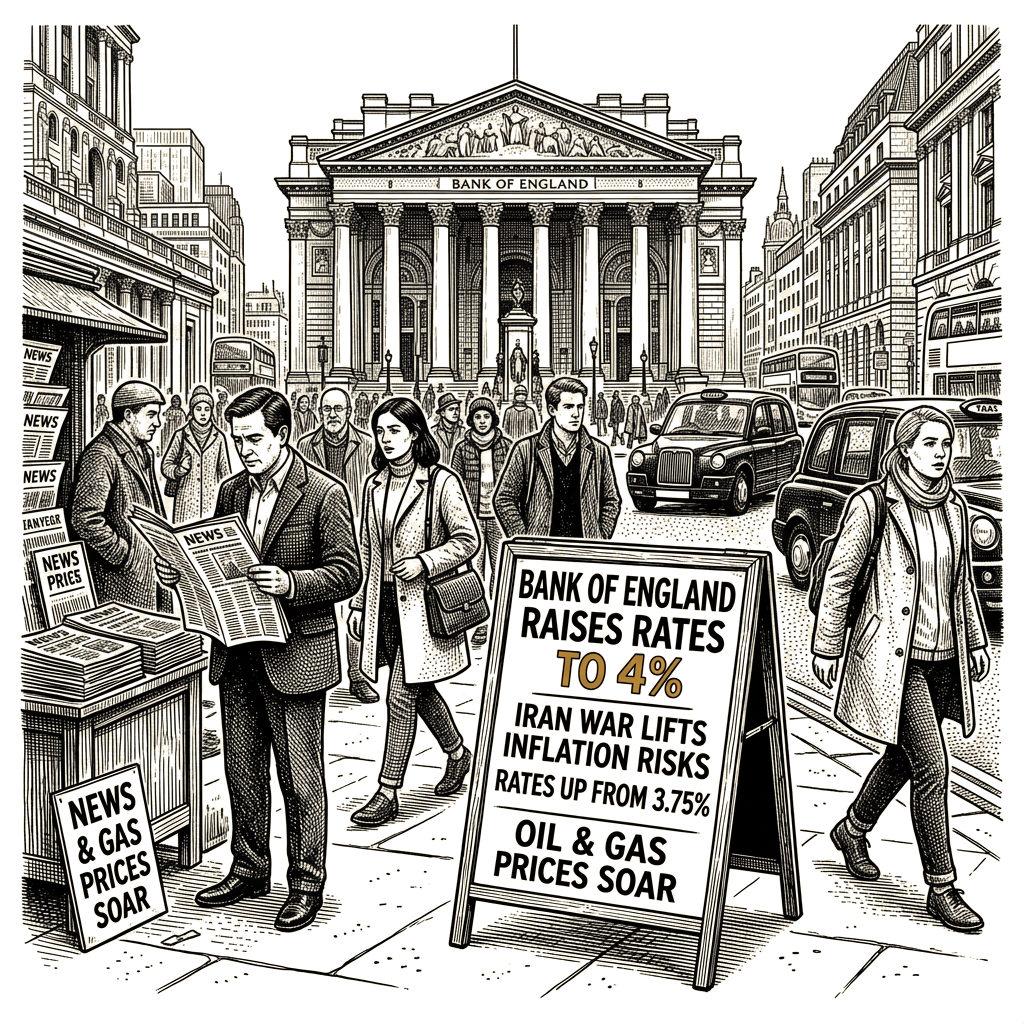
Officials expect one more increase to 4.25%, below investors’ 5% expectation
The Bank of England raised its key interest rate to 4% from 3.75% on Thursday, the first increase since the Iran war drove oil and natural-gas prices higher in late February. The Monetary Policy Committee signaled that it was unlikely to tighten as aggressively as many investors expected, even as officials identified a risk that higher home-heating bills could produce larger wage demands in early 2027.
Oil and natural-gas prices have remained high since the war began, although they have fallen since Tuesday’s midterm elections gave Democrats control of Congress and raised hopes for a settlement to the Middle East conflict. Despite that easing in energy markets, officials remained concerned about inflation spreading into wages as home energy prices rise.
No member of the Monetary Policy Committee opposed the increase. The rate had been 3.75% since December before Thursday’s decision, and officials indicated that one more increase to 4.25% was likely, while investors had anticipated a 5% rate by the end of next year.
“Today’s increase shouldn’t be seen as the first in an inevitable long sequence of hikes,” said Gov. Andrew Bailey. “But, unless the Middle East conflict is resolved, neither does it seem likely to be the last increase.”
A number of committee members expressed caution about future moves. “Further tightening depends on continued energy price pressures as well as unfolding evidence of propagation into domestic wages,” said Alan Taylor, a professor of economics at Columbia University who sits on the MPC.
The Federal Reserve, the European Central Bank and the Bank of Japan have each raised their key interest rates at least once since the war began. The Bank of England had previously held its rate on the sidelines, with a majority of officials noting that its key rate was higher than those of their European counterparts when the war started.
Even before the policy change, borrowing costs for households and businesses had risen as government-bond prices fell over recent months. According to Bank of England figures, mortgage rates had increased by a full percentage point since the war began.
The bank said higher borrowing costs should help cool activity and inflation. But the prospect of energy prices keeping inflation elevated into 2027 persuaded officials to act, in part to send a signal to workers and employers as a busy period for pay negotiations approached.
Forecasts based on an oil price of $108 a barrel showed the Monetary Policy Committee expecting annual inflation to peak at 4.9% in the second quarter of 2027 and return to its 2% target only in the third quarter of 2028. A sharp fall in energy prices following a peace deal would accelerate the return to target.
The U.K. economy has proved more resilient than expected as the war has dragged on, partly driven by AI-related activities. The Bank of England raised its growth forecast to 1.6% for this year and 1.3% for next year from 1.1% in each year, but lowered its 2028 forecast because energy prices were expected to weigh on growth for longer while borrowing costs were higher.
Oil prices have fallen sharply over recent days as traders anticipated that voters’ rejection of the war would increase the likelihood of a resolution to the conflict. The bank said much would depend on the outcome of U.S. elections. A resolution before the end of the year would lower energy prices and bring U.K. inflation down more quickly than previously expected.
Few signs so far point to a pickup in wages or the second-round effects officials want to contain. Colder winter months could nevertheless intensify the impact of higher energy prices on household budgets and prompt workers to demand significantly larger raises. Home energy prices are already set to rise sharply from January, and a sustained decline in energy prices would take time to reach U.K. households.
Even if inflation rises as the bank expects, policymakers may not feel the need to raise borrowing costs much more. The decision was unanimous, but the path beyond it remained tied to energy prices, wage negotiations and whether the Middle East conflict is resolved.