Keisha Lance Bottoms becomes nation’s first Black female governor
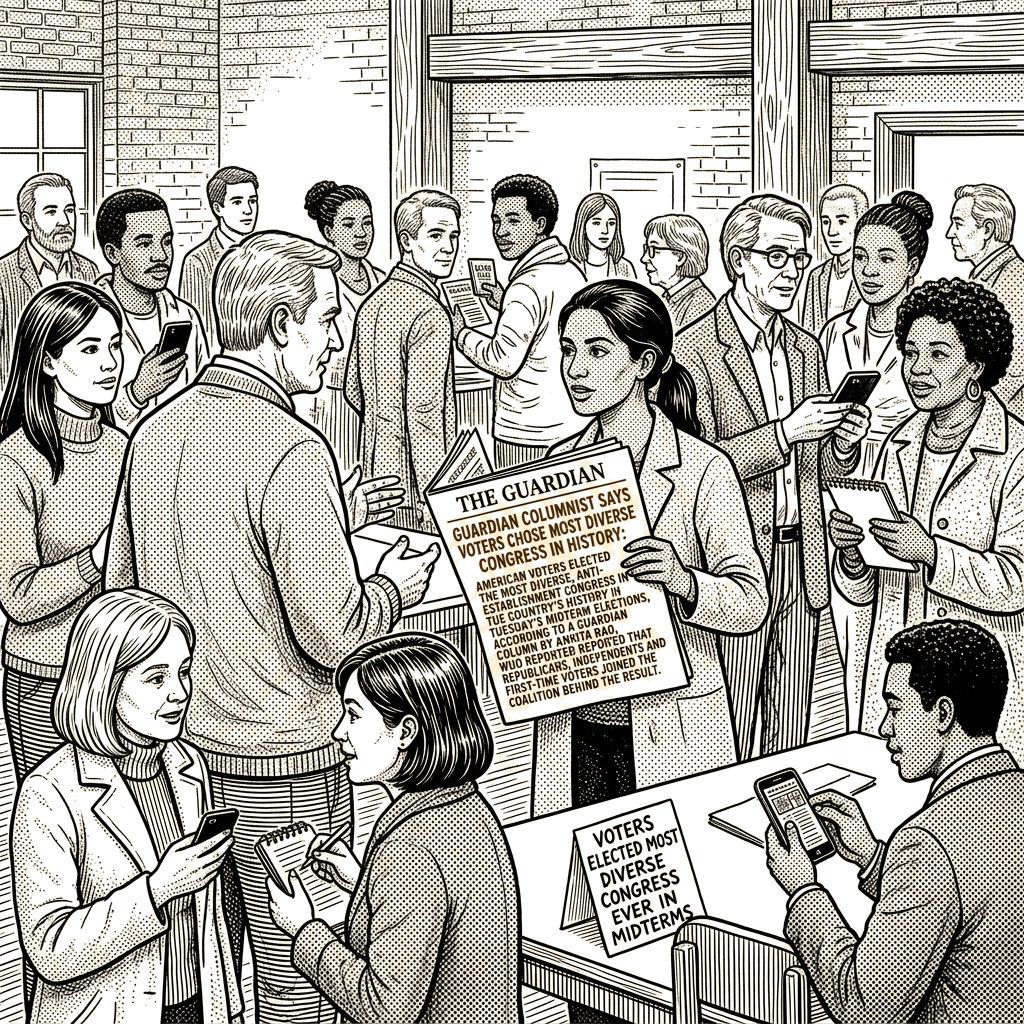
American voters elected the most diverse, anti-establishment Congress in the country’s history in Tuesday’s midterm elections, according to Ankita Rao, who wrote about the results for The Guardian’s Stakes 2026 newsletter. Rao reported that a broad coalition of Americans — including Republicans, independents and people who had never voted before — decided the outcome.
While Rao wrote that the result could be reduced to Democrats being happy about historically defeating the Republican party and Trumpism, she argued there was something much deeper to be seen and felt in Tuesday’s election results. Keisha Lance Bottoms won election as Georgia’s governor, becoming the first Black female governor in the entire country. In Texas, Democrats James Talarico and Gina Hinojosa won election to the Senate and the governor’s office, and Rao cited a photograph of the two toasting with supporters at a Whataburger in Austin among the images that moved people this year.
Rao wrote that friends and colleagues told her many times this year that speeches, campaigns and underdog success stories moved them in unexpected ways. Her examples included a campaign ad of Michigan senator-elect Abdul El-Sayed “doing bedtime,” the Whataburger photograph and Bottoms’s victory. “When people told me in recent months that something made them cry they seemed almost embarrassed,” she wrote.
She read the tears as a very good sign. After years in which “outrage or numbness – fight or flight” were the main options for dealing with political news and the impacts of those in power, she wrote, this kind of catharsis and joy feels like “permission to be human and to be optimistic.”
Rao attributed the breadth of the result to voters seeing themselves reflected in the candidates, some of whom were first rejected by party leaders. In Maine, Troy Jackson entered the race at the last minute after the “spectacular collapse” of Graham Platner’s campaign, and the column noted his “bona fide blue collar credentials.”
She described El-Sayed as a son of Michigan reflecting “communities that have long resided in the state but never been represented in the Senate.” In South Carolina, Annie Andrews emerged from a grassroots effort to elect pro-science candidates “at a time when children are dying from measles,” Rao wrote.
The column also read the results as a repudiation of some of the racist, xenophobic, transphobic and other rhetoric that Rao said has escalated in recent years. Bo French, a Texas politician who had posted a racist diatribe about South Asian students at a football game, lost his election, according to the column. Vivek Ramaswamy lost along with what Rao called his “abhorrent” attack ad, Ken Paxton lost with his “transphobic AI ads,” and Mike Collins lost alongside what she described as his “multiple associations with neo-Nazis.”
Those defeats carried added weight, Rao wrote, at a time when, in her view, the Trump administration itself peddles racist tropes on its X account and at rallies. She described “tears of relief and cautious hope of an era of decency.”
In a video to the young voters Rao credited with helping power the massive political shift, Representative Alexandria Ocasio-Cortez said: “If you want to understand millennial cringe … this earnestness, imagine all the seats we flipped last night plus on top of it electing the first Black president ever, and on top of that you did it the first time you voted.” Rao wrote that some are comparing the feeling to Barack Obama’s first election.
Rao paired the optimism with caveats. Voters, she wrote, hold no illusions that the newly elected officeholders will immediately resolve political gridlock and restore normalcy to the country. Trump “is unlikely to go quietly into the night his final two years in office,” she added, and Democrats “have a track record of bungling opportunities to make big, bold progress.”
Even so, she concluded, seeing engagement and investment in the future take the place of “the nihilism that has characterized the Trump era” has been refreshing. Rao closed the column in her own words: in an election that turned Texas blue, dumped Trump’s handpicked candidates and openly rejected bigotry, “the tears and the cringe are just history being made.”