U.K. inflation rose to 3.6% as energy costs fed into household bills
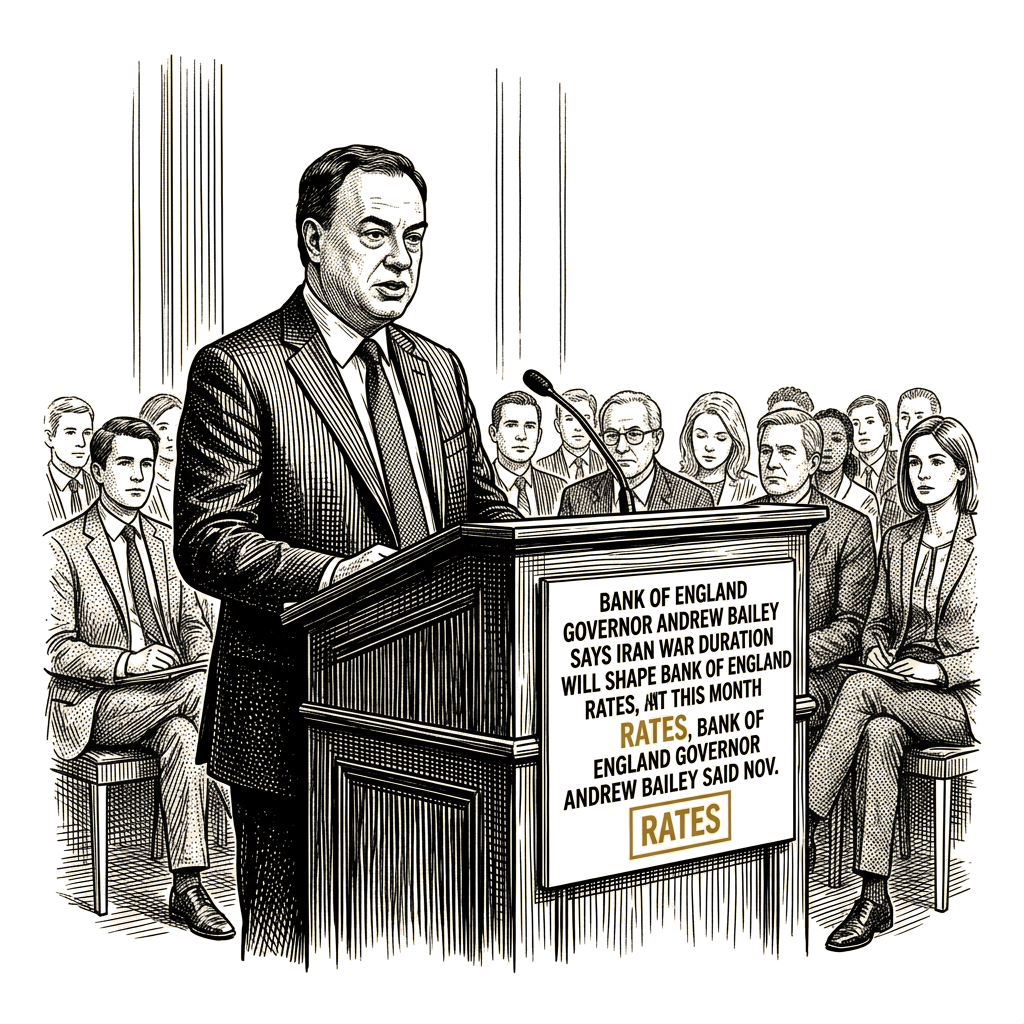
Bank of England Governor Andrew Bailey said Nov. 18, 2026, that the duration of the U.S.-Iran war and the period of elevated energy prices it has triggered will be decisive in determining how high the central bank raises its key interest rate. The Bank of England raised its key rate to 4% earlier in November, the first increase since the war began, and has signaled that more increases are likely.
By tightening for the first time since the conflict, the Bank of England became the last of its peer central banks to respond to higher energy prices with a rate increase. The central bank pushed back against investor expectations that the key rate would end next year at 5%, compared with 4% now, while still signaling that additional increases were likely.
In a speech, Bailey said the course of the war would be the key influence on the interest-rate path. “Let me emphasize a key point here,” Bailey said. “The longer the conflict in the Middle East persists and elevates energy prices, the more likely persistent inflationary effects will take hold and the higher the level of interest rates will need to be.”
Bailey’s comments imply fewer rate increases if the conflict is resolved soon than if it lasts well into 2027 or beyond. Energy prices have eased since the U.S. midterm elections, in which voters voiced opposition to the war and particularly its effect on prices, but they remain well above prewar levels.
The U.K.’s annual inflation rose to 3.6% in October from 3.5% in September, according to figures released earlier Wednesday. The increase was almost entirely attributable to higher energy prices. Core inflation held at 2.8%, while the pace of food-price increases slowed sharply.
Bailey said the central bank had limited evidence of knock-on effects even as direct energy costs continued to reach business and household bills. “While the direct effects of higher energy prices are clear, and will continue to feed into firms and household energy bills, there is limited evidence of knock-on effects on other prices and wages,” Bailey said.
Investors reduced their bets on future rate increases after Wednesday’s inflation figures but continued to expect further moves. Bailey said the key rate was “not on a preset path,” citing the “volatility and hence uncertainty around the current situation.”
Bailey said: “We will as always look carefully at the evidence that will accumulate by the time we next meet.” The Monetary Policy Committee’s next rate decision is scheduled for Dec. 17, followed by another on Feb. 4.