Polish Starlink station fire described as sabotage hours before assessment
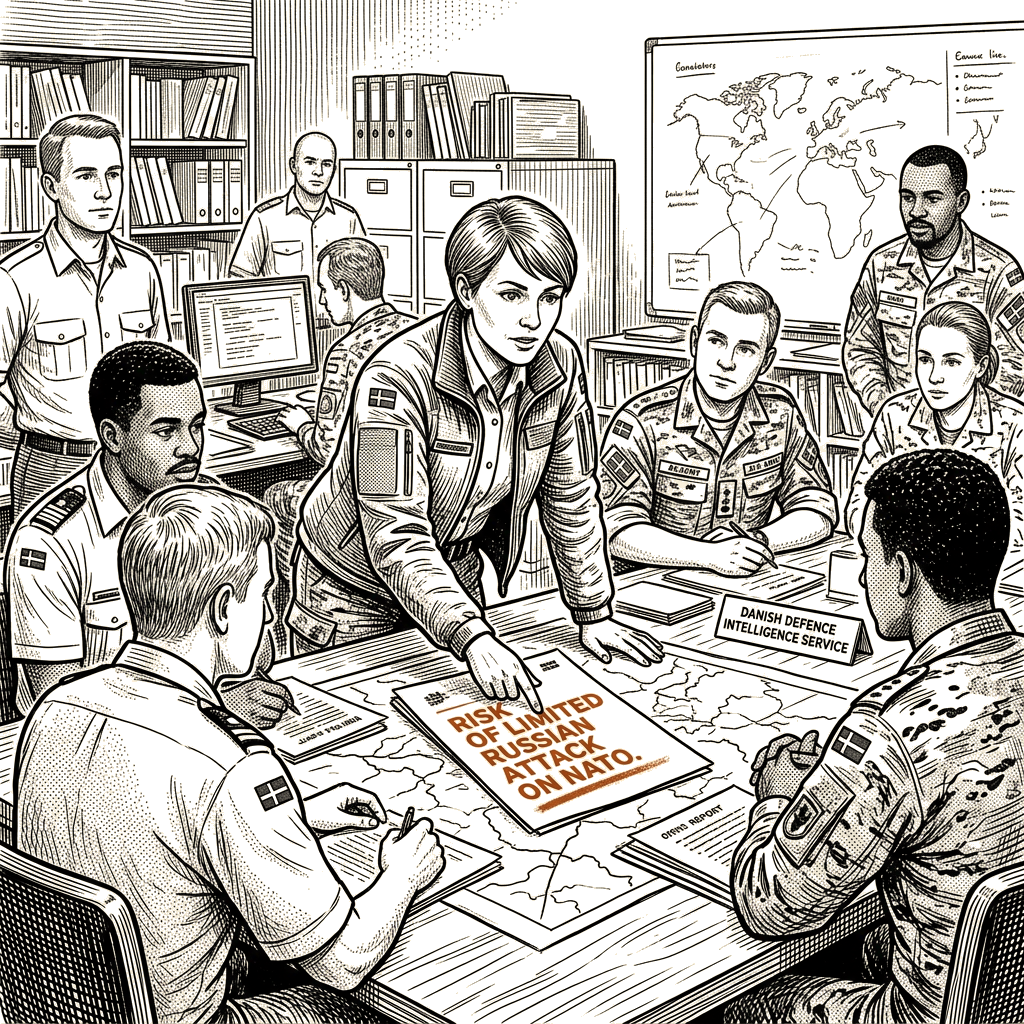
The Danish Defence Intelligence Service on Thursday issued what The Guardian described as one of the starkest warnings yet by a Western security service, with the agency saying Russia could launch a limited military attack against a NATO country within months.
In a report published Thursday, the agency described a “low but growing risk” that Russia would carry out long-range strikes against NATO infrastructure supporting Ukraine or mount a limited incursion into a neighboring country with a small number of troops, potentially operating without insignia. The Danish service said Russia was expected to intensify hybrid attacks against European countries with “greater consequences” for those targeted in the coming months, including “destructive cyber-attacks that cripple societal functions as well as sabotage attacks that carry a high risk of casualties.”
The assessment landed hours after Polish authorities described a fire at a Starlink satellite station in central Poland as an “act of sabotage.” Krzysztof Gawkowski, Poland’s deputy prime minister, said the blaze broke out overnight in the Masovian voivodeship and had been “deliberately designed to disable the station,” disrupting internet access for a number of institutions, including the Ukrainian military. Gawkowski said no perpetrator had been identified but that “many signs suggest this aligns with Russia’s new doctrine of attack.”
“While everything is operational today, we must recognise, as prime minister [Donald] Tusk recently noted, that this is an element of hybrid warfare,” Gawkowski said.
Starlink has become a key part of Ukraine’s military communications, and the Polish incident comes amid a spate of suspected Russian sabotage operations across European infrastructure supporting Ukraine. Earlier this month, Germany publicly blamed Russia for an attempted drone attack on Leipzig/Halle airport, while fires at drone factories and incidents targeting rail infrastructure have also been investigated for possible Moscow links. Russia has denied involvement in such attacks.
The Danish service said it remained “highly unlikely” that Russia would launch an outright invasion of a NATO country but noted the possibility “cannot be ruled out.” It identified a risk that Moscow could seek to test NATO’s Article 5, the alliance’s collective-defense commitment, particularly if Russia concluded that the United States under President Donald Trump was unable or unwilling to support European allies in a conflict with Russia.
A source familiar with Moscow’s thinking, speaking on condition of anonymity, said Russian military leaders believed some NATO countries were directly involved in the war against Russia. “Russian military top command is convinced some Nato countries are directly involved in the war against Russia – not just by supplying Ukraine with weapons and intelligence, but by helping to guide missiles and drones,” the source said. “They therefore believe Nato is already waging a hybrid war against Russia, and that Russia has the right to respond in kind,” the source added.
According to the Danish report, Russia’s strategic objectives would be to divert European resources away from supporting Ukraine and to deepen divisions within NATO if the alliance failed to agree on a collective response.
Questions have persisted among NATO members over whether the United States would come to Europe’s defense under Trump in the event of a Russian attack. Last week, Slovakia’s Prime Minister Robert Fico, who has maintained close ties with the Kremlin, cast doubt on his country’s commitment to NATO’s collective-defense principle, saying he did not want Slovakia drawn into a military conflict “because of some article 5.”
Speaking at the UN General Assembly on Wednesday, Ukrainian President Volodymyr Zelenskyy warned that Russia continued to threaten countries beyond Ukraine, including Moldova, Poland and the Baltic states, while showing “no respect” for the sovereignty of countries in the south Caucasus and central Asia. “The more freedom Putin has to act, the more dangerous the world becomes for everyone else,” Zelenskyy said.
The Danish assessment follows warnings from several European intelligence chiefs in recent weeks that Russia may be preparing more assertive actions to test NATO countries’ commitment to supporting Ukraine, though officials differ over the imminence of such a move.