Experts project razor-thin margins for both congressional chambers
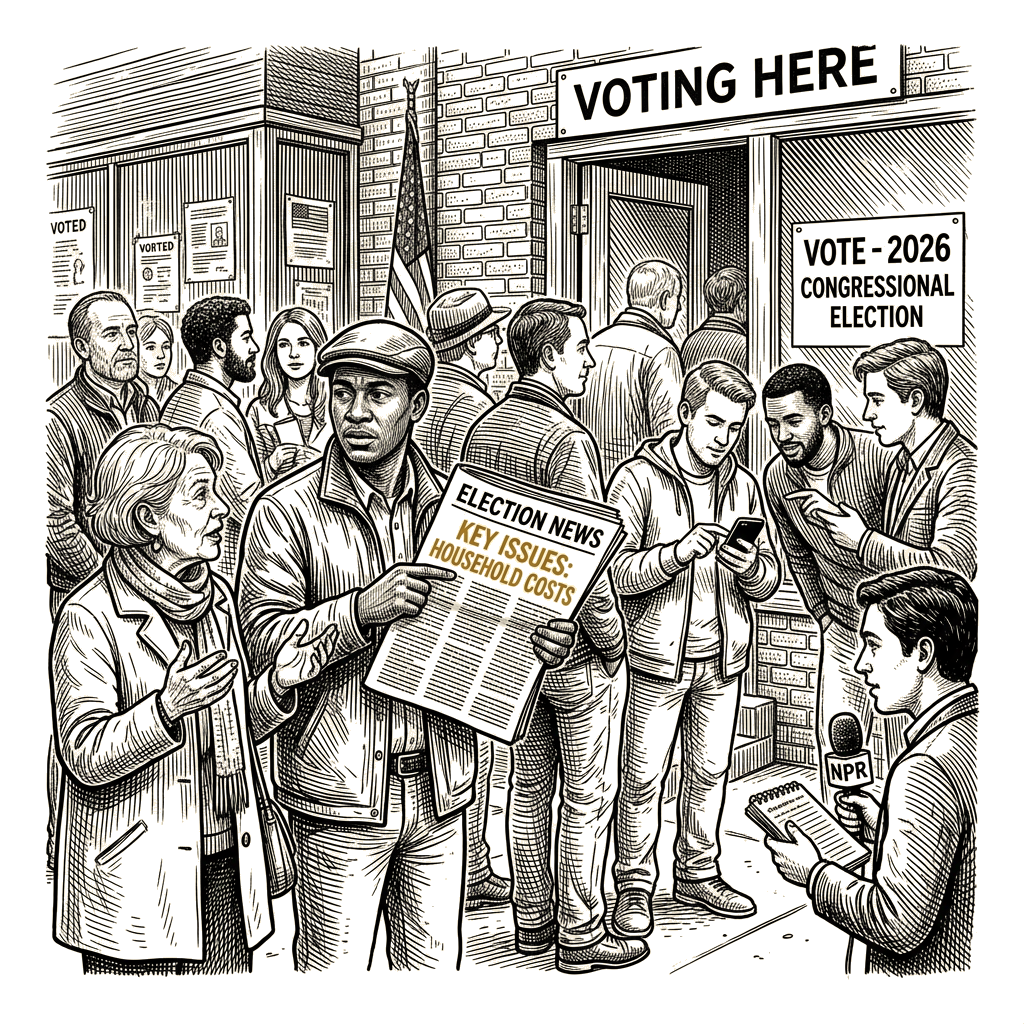
As Election Day arrived on November 3, 2026, months of campaign ads and rallies came to an abrupt halt. President Trump and former President Barack Obama had spent weeks on the road advocating for candidates in tight races. Campaigns across the U.S. were making a final push for every vote, and experts projected that the Senate and House would be won with razor-thin margins.
NPR’s Morning Edition spent October traveling to six pivotal states that could decide which party controls Congress: Leila Fadel reported from Maine, A. Martínez from Texas, Steve Inskeep from North Carolina and Georgia, and Michel Martin from Ohio and Michigan. The hosts sought a variety of people across political lines and spoke with them about the issues informing their votes.
Economic pressure was a shared theme across several of the states. In Texas, rising beef prices were affecting quality of life and could influence votes; Martínez spoke with residents, business owners and farmers about what was driving the increases and how they might sway the vote. In North Carolina, Ryan Dunlap, a member of Trump’s coalition, was concerned about rising prices at his hardware store in rural Stokes County. Inskeep said, “He generally votes conservative and can’t see how you can run a business without being conservative. However, this posed a conflict for him as he needed to focus on the candidates and make a decision.” In Michigan, Martin asked voters about the effects of tariffs on their businesses and everyday lives.
The reporting also showed party loyalty under strain. Martínez met Marlene Escucha while her daughter played the flute at a game in San Antonio. Escucha, a Republican who had always voted with the party, told him she was unhappy with the GOP. “Her conflict is really between her Republican values and the actual performance of the party,” Martínez said. Escucha planned to try to discuss her options with her husband to make a decision, but work schedules meant they barely saw each other.
In Maine and Georgia, voters and Trump-coalition members spoke about change, persistence and delayed gratification. In Maine, Fadel went fly fishing with men who varied in age and political affiliation. All of them said they loved to fish and wanted change, and their discussion touched what Fadel described as the Democratic Party’s perceived “man problem.” NPR said Trump won the 2024 election largely because most men across the country voted for him.
In Georgia, Inskeep did door-knocking in and around Marietta, Ga., north of Atlanta. The railroad tracks that split the city also split residents across political lines, he said, and he spoke with voters on both sides. Inskeep said he would see which side turned out in greater numbers. One Marietta voter in the Trump coalition who was sticking with the Republican Party said, “Americans have a problem with delayed gratification.” She felt long-term things would get better, but said that sentiment acknowledged things were not going well for many Americans right now.
Immigration added a different dimension to the Maine account. Fadel met a mother and daughter who were Angolan asylum seekers and ran a daycare in Lewiston, a former mill town. They had kept their curtains drawn for months to avoid drawing attention because of Immigration and Customs Enforcement’s presence in their neighborhood. Fadel said: “People in the state want change in the Senate and some find themselves moreso against the Republican incumbent rather than for the Democratic nominee.”
Michigan reporting brought race, campaign tone and political exhaustion into focus. Martin said many people were excited about flipping the Senate, though not everyone was happy with how campaigns had been conducted. Many Black voters in the state felt dissatisfied with how the Democratic Party treated them. Some Jewish voters expressed skepticism about the Senate nominee, while others said the campaign’s tone was “leaning into bigoted tropes.” Trump made increasingly personal attacks against Democratic Senate candidate Abdul El-Sayed, even calling him a “jihadist.” Other Michigan voters told Martin they were burned out and frustrated with the political system.
In Springfield, Ohio, Martin said, “In Springfield, Ohio, the president made wild false accusations about Haitians that were almost immediately debunked,” and added that Trump “doubled down on this same argument.” Martin said this made him wonder whether the argument might backfire, as many residents expressed heightened motivation to vote as a message to the administration. His observation remained a question raised by the field reporting, not a measured result.
Taken together, the accounts showed party loyalty being tested rather than disappearing. Escucha, a Republican unhappy with the GOP’s performance, described a conflict between Republican values and the party’s actual performance. Dunlap needed to focus on the candidates and make a decision, while a Marietta voter remained with the Republican Party while questioning broader conditions. Elsewhere, Maine men wanted change, many Black voters in Michigan described dissatisfaction and some Jewish voters expressed skepticism. NPR presented the field reports as an in-depth view of how the battle for Senate and House majorities might shake out, while the razor-thin margin assessment remained an experts’ projection.