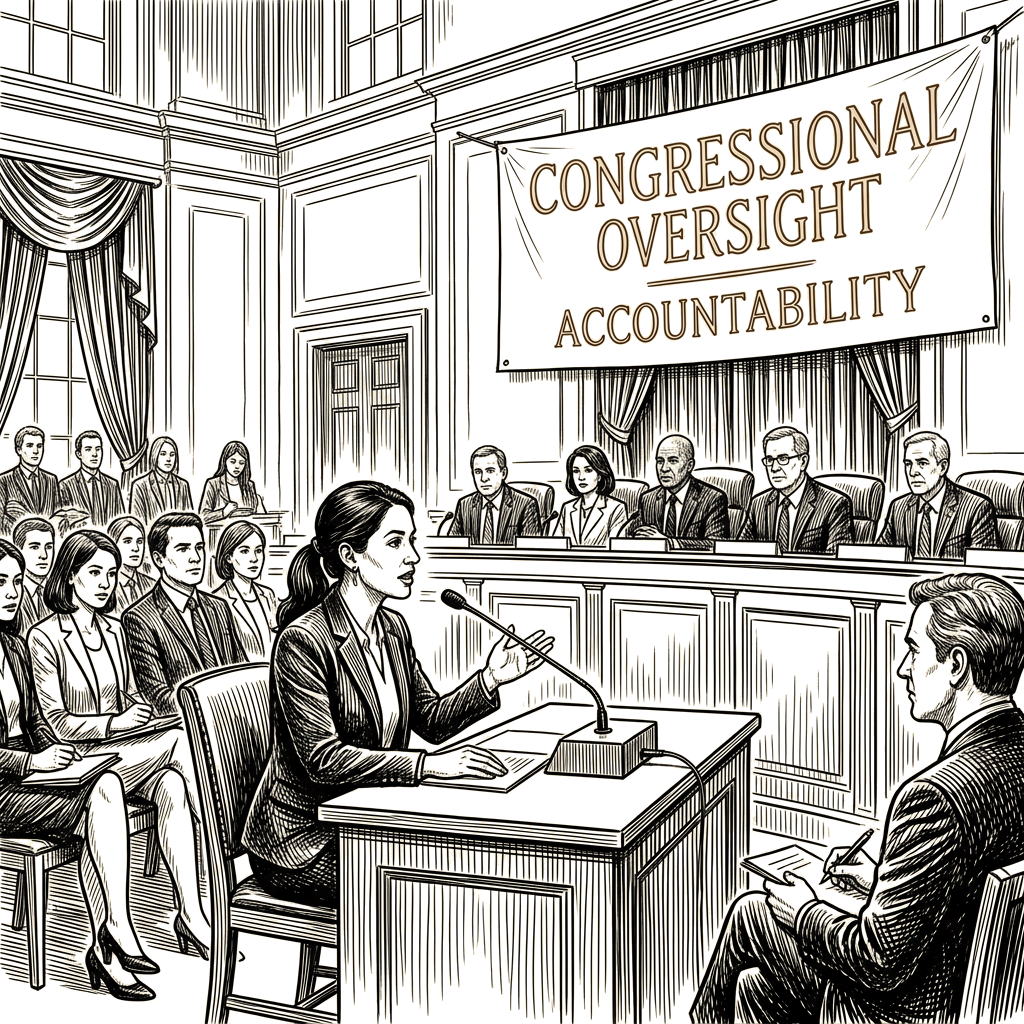
Finkelstein says impeachment could protect congressional subpoenas
Claire Finkelstein urged leaders of the 120th Congress to use sustained oversight and possible impeachment investigations to hold the Trump administration accountable. Writing in The Guardian on Nov. 4, the law professor said Democrats had won the United States House of Representatives and the United States Senate and must not squander the opportunity to make real headway on repairing the damage to US democracy inflicted by six years of Trump. Her case was procedural: Congress’s power to obtain testimony and enforce subpoenas had weakened during Trump’s two impeachments, and investigations of administration officials could protect subpoenas from separation-of-powers objections.
Her account of the election began with what she called an “unmistakable message” from voters that Republicans’ “love affair with Trumpism is coming to an end.” Finkelstein said polls showing growing disenchantment with Donald Trump foreshadowed the Democratic victories in both chambers. She cited a September poll in which 53% of respondents believed the president was corrupt and another poll showing growing disappointment among Republican voters over the economy. She said voters held Trump responsible for rising prices, particularly for pain at the pump, and warned that leaders of the 120th Congress must not squander the opportunity to repair the damage to US democracy inflicted by six years of Trump.
She described the obstacles to Democratic-led legislation as nearly insuperable despite Democratic control of both chambers. Finkelstein identified managing divisions among Democrats and avoiding derailment from a Republican filibuster in the Senate as obstacles. Negotiations with Donald Trump, she said, would be needed to head off what she called the inevitable veto on most, if not all, Democratic-led reforms. She said these and other hurdles would leave congressional leaders spinning their wheels while real change remained elusive.
Finkelstein said Democrats were more likely to achieve lasting gains through sustained oversight investigations directed toward two goals: providing accountability in the executive branch and strengthening the institution of Congress itself. She said the goals were interrelated. Effective investigations would require Congress to force members of Trump’s inner circle to participate in public testimony on highly incriminating subjects, with the patience to issue subpoenas and methodically seek their enforcement. She wrote that an impeachment investigation “would enhance transparency and allow Congress to reassert its authority.”
The two failed bids to impeach Trump showed, in Finkelstein’s account, what could happen when Congress yielded to presidential resistance. In the first, launched over the alleged withholding of US aid to Ukraine to strongarm Ukrainian officials into announcing an investigation into Hunter Biden, House Democrats tried to call key administration witnesses who likely had firsthand knowledge of what Finkelstein described as an illegal scheme. Trump blocked their appearances by asserting executive privilege and testimonial immunity, and some two dozen witnesses ultimately testified.
Finkelstein said House impeachment managers largely gave up on forcing the most critical witnesses to appear, such as Vice-President Mike Pence, Secretary of State Mike Pompeo, National Security Adviser John Bolton, Trump’s personal lawyer Rudy Giuliani and Director of the Office of Management and Budget Mick Mulvaney. The only subpoena House impeachment leaders decided to pursue was against White House lawyer Don McGahn, but the ensuing two-year court battle meant the resulting negotiated testimony was too little and came too late, she said.
Referring to her opinion piece in 2020, Finkelstein said the first impeachment displayed what she called a “lamentable circularity”: Congress’s effort to investigate the second article of impeachment, obstruction of Congress, was itself obstructed. Speaker of the House Nancy Pelosi and other Democratic congressional leaders believed the political cost of a protracted fight over witnesses was not worth the candle, she said. The dispute also left Congress’s power to issue and enforce subpoenas weakened.
Finkelstein wrote that the error was repeated during the second Trump impeachment in 2021, when the Senate reversed itself on a vote to call witnesses and called no witnesses. She said testimony from people closest to Trump about January 6, 2021, could have provided “critical fodder” for special counsel Jack Smith’s criminal indictment of Trump during the Biden administration and, more critically, could have strengthened Congress’s oversight authority. From the standpoint of democratic repair, she said, the two impeachments reinforced congressional ineffectiveness and were largely counterproductive because presidents had controlled the process used to judge their own conduct.
She said a serious and systematic attempt to restore congressional authority would not be easy. The legal obstacle she highlighted was the US Supreme Court’s 2020 ruling in United States v Mazars, which she said reminded Congress that separation-of-powers objections might outweigh congressional oversight authority without a “clear legislative aim.” She argued that the first impeachment had ended too quickly for House subpoenas for Trump’s tax returns and other financial records to be issued incident to an impeachment inquiry, and said the Mazars case would have come out differently otherwise.
For the new Congress, Finkelstein proposed a different sequence: begin impeachment investigations against several members of the current administration, which she said would protect congressional subpoenas from Mazars-type objections and the inevitable assertions of presidential privilege Trump would make. She cited Republican congressman Thomas Massie of Kentucky, who has filed articles of impeachment against Defense Secretary Pete Hegseth. Calling that a “smart strategy,” she said beginning with a Cabinet member rather than Trump himself could force cooperation and drew an analogy to prosecutors’ experience prosecuting organized crime. She said it also would help minimize presidential interference in the push for transparency.
Democratic leaders have refused to support efforts to impeach Trump for a third time, Finkelstein said, but House Minority Leader Hakeem Jeffries made clear that impeachment would be “on the menu” if the House changed hands. She said leaders of the 120th Congress would have to weigh the costs and benefits of a third impeachment highly unlikely to result in removal. She placed on the positive side the oversight benefits of a long, slow investigation, which she said would enhance transparency and enable Congress to reassert its authority.
Simultaneously with this effort, Finkelstein urged Congress to pass internal ethics measures designed to eliminate conflicts of interest and enhance internal integrity. She acknowledged that newly strengthened congressional oversight powers could be “weaponized against a law-abiding occupant of the Oval Office,” but said an overly powerful Congress presented a distant and unlikely threat at that point.
Her closing argument was that allowing presidents to control the very processes by which their own conduct is judged posed an even graver danger to democracy than straightforward presidential law-breaking. She said there was no time to lose, that repair of democratic institutions would be a lengthy process and that a critical interim goal would be strengthening the oversight powers of the 120th Congress and every Congress thereafter. The new Congress should be singularly focused on reversing the breakdown in the democratic process and restoring the role of Congress as a true check on presidential authority, she said.
Finkelstein is a contributing opinion writer for The Guardian, the Algernon Biddle professor of law and professor of philosophy at the University of Pennsylvania, the founder and faculty director of Penn’s Center for Ethics and the Rule of Law and a fellow in residence at Harvard University’s Edmond & Lily Safra Center for Ethics during the 2026-27 academic year.