Daniel sees the midterms as a cost-of-living warning for Australia’s Labor
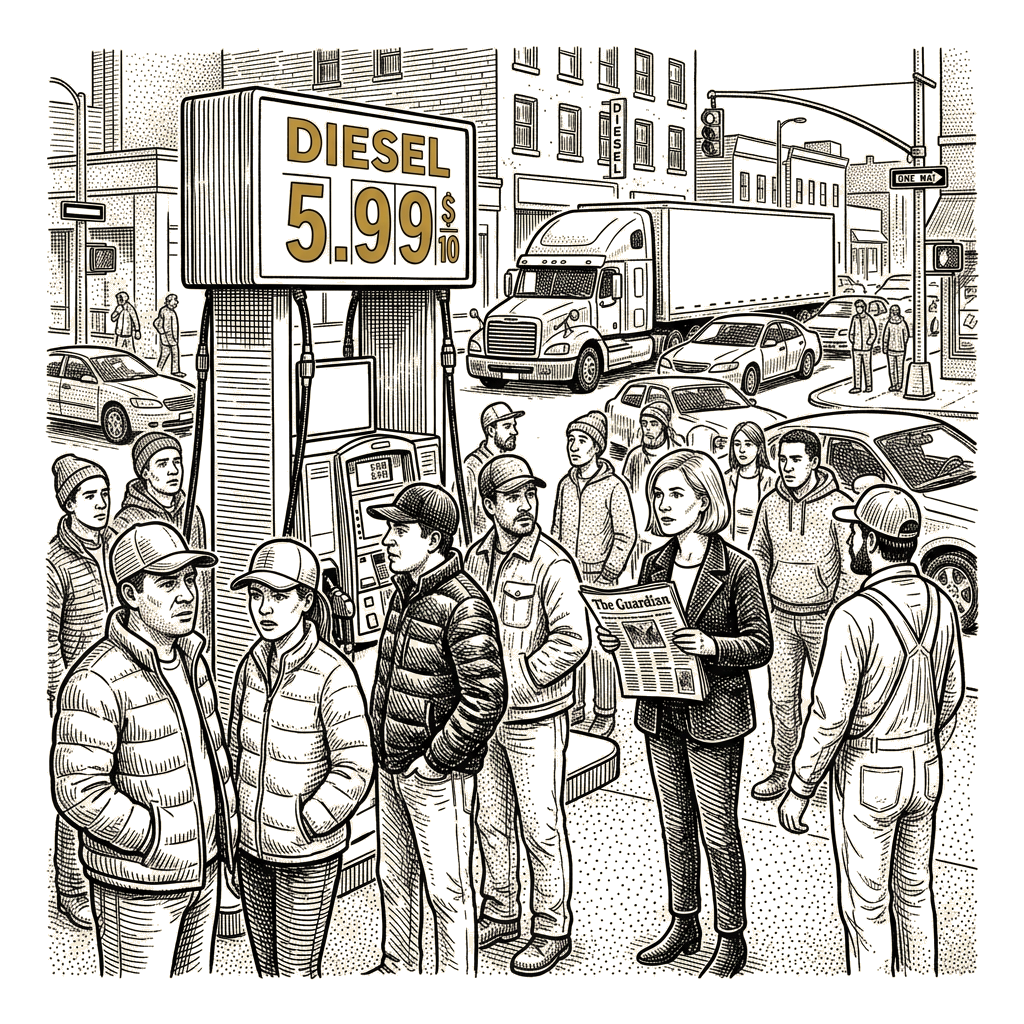
For all that Donald Trump has “got away with” in his second term, Zoe Daniel argued in The Guardian on Nov. 4, 2026, it is arguably the cost of fuel that finally led to “an absolute rout” in the US midterms — a crushing defeat over cost-of-living pressures that she called a warning for politicians closer to home in Australia. Daniel, a three-time ABC foreign correspondent and former independent member for Goldstein, put numbers to the case: the cost of petrol is generally much lower in the United States than in Australia, she noted, but gasoline was up 40% on the previous year, and diesel had jumped 71% to record highs in almost all states since the start of the war in Iran and the disruption of shipping through the Strait of Hormuz.
“So many Americans held their noses at so many other things,” she wrote, but in the end Trump’s own decision-making on Iran “will haunt the rest of his presidency.” The result, in her account, reflects not so much the broken promise on ending the forever wars as a rebirth of “it’s the economy, stupid” — a lesson, she said, that Australia’s own government will note. “In the end, it transcends just about everything else.”
The price rises had, in her word, “whacked” families, farmers and industry in key battleground states, affecting primary producers and manufacturers — some of whom were already hurting because of the variable impact of Trump’s tariffs on Chinese trade and fertiliser prices. These, she wrote, were the very people she spoke to while covering Trump’s first administration: everyday Americans prepared to overlook their misgivings about his character in favour of what they thought he could deliver in the form of American exceptionalism.
The result was also, she wrote, “a slap” for Elon Musk — the biggest individual donor in the midterm cycle, who spent US$446m trying to influence the results, mostly in Texas. The diversity of those elected, in ethnicity, sexuality and gender, was for Daniel “another rejection.”
From North to South Carolina, to what she called the bellwether state of Ohio and on to Kansas, voters punished Republicans and delivered both the House and the Senate to the Democrats, Daniel wrote.
In Texas, Daniel described an “extraordinary” Senate result — a seat last won by a Democrat 38 years ago, in a state with a big Latino community — and judged it likely also tied to a backlash against Trump’s hardline immigration policies and, in her words, the “weaponisation” of ICE. Reflecting that, she wrote, Gina Hinojosa has become the first Latina governor of Texas in a “history-making moment.” As Texas senator-elect James Talarico said in accepting victory: “It’s not left versus right, it’s top versus bottom.” Daniel’s response: “Hard agree.”
It appears, in Daniel’s telling, that Trump’s own actions on immigration and the economy have sent those who swung to him in 2024 back where they came from “in droves.” The cost of living, she argued, has fed increasing anger in the US over both real and perceived government corruption and the widening wealth gap, the power of big tech and the rollout of datacentres — issues she described as very similar to those dominating the political agenda in Australia.
Daniel noted that Democrats were quick to claim that Americans “chose decency and kindness” in the way they voted at these midterms. Trump, immediately after the result, told the New York Times: “We’ll work with the Democrats, and we’ll, you know, look forward to working with them. We’ll probably work something out.” “Let’s see how that goes,” Daniel wrote, adding: “Truth Social tells a different story.”
US midterm elections commonly go against whoever holds the White House, Daniel observed, but while Trump was already pointing fingers, he was the one who told voters to behave as if he was on the ballot — and “by any measure this is a repudiation of his presidency.” It will drastically influence the rest of his presidency, she wrote, in ways that are difficult to predict given his lack of respect for boundaries. Addicted, as she put it, to the “main character energy” that has come with his two terms as president, the “reality TV show” could yet have some way to run. “I doubt it’s the end of Trumpism as we know it,” she concluded.
So far during Trump’s second term, with the trifecta of the White House and majorities in the House of Representatives and the Senate, the president has been “off the leash,” Daniel wrote. The next two years will be very different.
Even without Congress, she wrote — a point, she noted, that she had made in The Guardian a couple of weeks earlier — Trump remains commander in chief of the US armed forces, with all the power that comes with that, and he holds veto power over Congress that can be overridden only by a two-thirds majority in both houses. Without the House or the Senate, the White House is headed for legislative gridlock, with Democrat-led legal action against the Trump administration to be expected — and, in her words, “all the two-way rancour that will come with it.”
A separate FRED series measures the housing side of household costs: the median sales price of houses sold stood at $393,300 as of Nov. 4, 2026 (series MSPUS, raw value). That measure neither confirms nor contradicts the fuel-price figures Daniel cited.
Daniel turned to what the result means for Australia, writing that the Australian political class should now be considering both the trendline that could apply to Australian elections and how to deal with a weakened Trump administration. “Should we reassert our values now with Trump, or just wait it out?” she asked. “After all, he’ll be gone for good soon, won’t he? At least that’s the theory.”
Beyond that, she argued, “unfairness” — emblematic in rising interest rates — will hurt Labor unless the government finds some other nimble policy levers to reduce inflation before it is also “on the receiving end of a slap from the electorate.” The examples she gave included capped-price childcare, cheaper tertiary education and slowing down datacentre development. Spending and saving, she wrote, should go where everyday Australians expect it — not where vested interests and opportunists demand it, and not to reward or punish individual electorates.