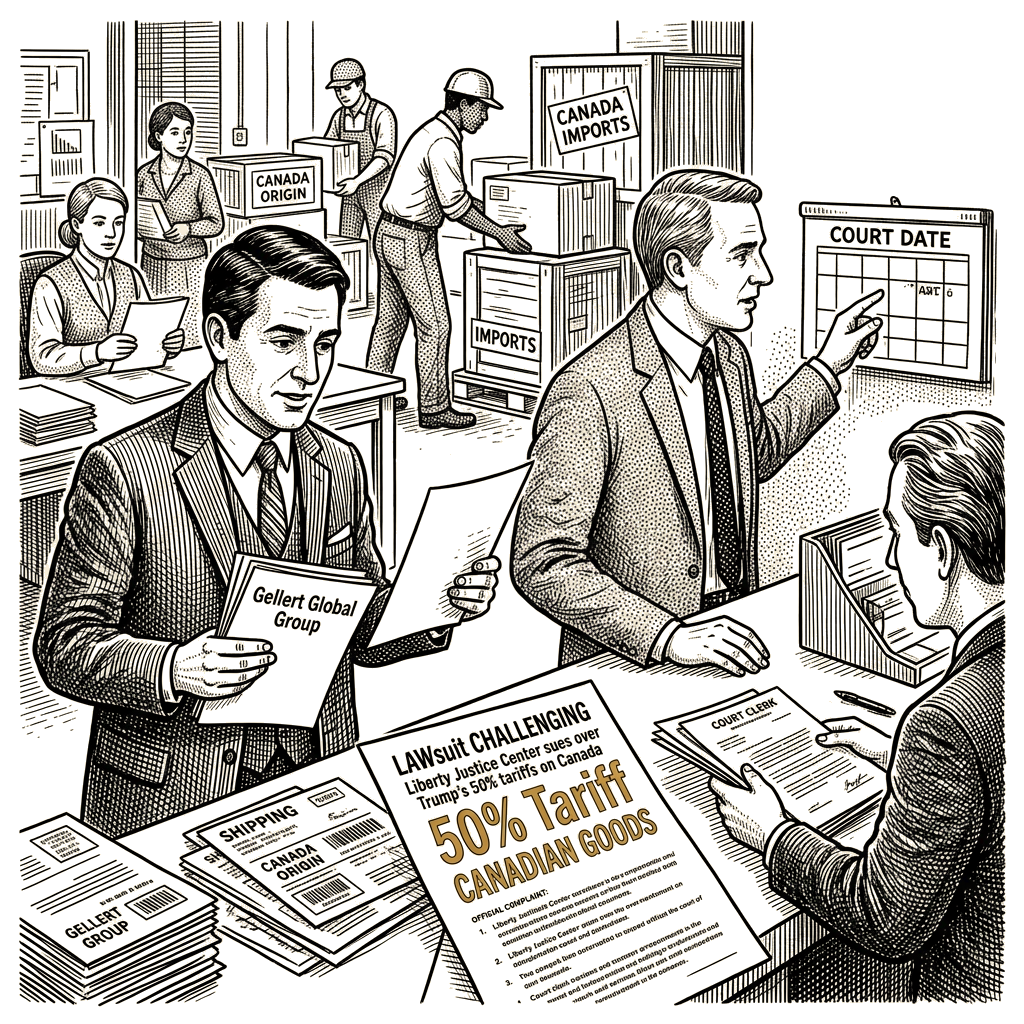
Case targets Section 338 of the 1930 Tariff Act
The Liberty Justice Center alleges a violation of Section 338 of the 1930 Tariff Act, which requires a 30-day waiting period before levies can be imposed. The lawsuit says the tariff on products including cheese was added to the list just one week before collection began, and the group has asked the US Court of International Trade for a preliminary injunction blocking collection.
The White House imposed the 50% levy on some $20bn of Canadian goods after US-Canada trade talks broke down in August. Gellert Global Group, a New Jersey-based, third-generation family food business, is paying 50% tariffs on cheese exported from Canada and faces Canadian retaliatory tariffs on American-made cheese it sells in Canada. The Liberty Justice Center filed the case for Gellert Global Group and asks the court to find the levies unlawful and order refunds with interest for affected importers. The lawsuit says the White House exceeded its authority and caused “immediate harm to American businesses.”
Co-chief executive Thomas Gellert said the company had spent generations building relationships with suppliers and customers in the food industry. “These tariffs disrupt those relationships overnight and create costs and uncertainty that ripple through the entire supply chain,” he said on Tuesday.
The lawsuit challenges the administration’s use of Section 338 to impose duties on Canadian goods including wine, dairy products and hockey sticks. The provision in the nearly 100-year-old Tariff Act was aimed at protecting US business against foreign discrimination. The Liberty Justice Center argues that Section 338 does not allow the executive branch “to impose sweeping tariffs or import restrictions whenever a trade dispute arises.”
The lawsuit also contests the White House’s reliance on Canada’s retaliatory tariffs to justify its own duties under Section 338. It argues that Section 338 of the 1930 Tariff Act was superseded by Section 301 of the Trade Act of 1974 and that, even if Section 338 still applies, the White House has not established a legal basis for the sweeping tariffs against Canada. The Liberty Justice Center said, “The case is not an objection to tariffs as such. It asks who has the power to impose them and whether the executive branch followed the law Congress wrote.”
Sara Albrecht, chief executive of the Liberty Justice Center, said the case was not about Trump himself but about the presidency. “No president should have the power to pull a dormant statute off the shelf and use it to impose sweeping tariffs or import bans without the limits Congress required,” she said. Albrecht said the group brought all of its cases for the same reason: “the Constitution gives tariff power to Congress. The executive branch cannot keep moving the same policy from one statute to another and pretend the limits disappear.”
A BBC video description said Trump was sharing an AI goose meme while BBC journalist Jessica Murphy examined how much Canada could fight back. A separate BBC item, titled “Half my business will be gone,” described firms in Canada and the US fearing what the BBC called a “trade war.”
Canada has imposed a series of countermeasures against numerous US tariffs. Last month, Canadian Prime Minister Mark Carney matched the US tariffs imposed under Section 338 “dollar for dollar” after Trump imposed them for what he called “unequal treatment” of US cars, dairy and alcohol.
The new suit is the fourth case the Liberty Justice Center has brought against Trump’s tariffs, a total that includes its successful challenge to sweeping tariffs imposed under the International Emergency Economic Powers Act. Those “liberation day” levies were struck down in February.
The White House has been contacted for comment.