Carney calls bans ‘relatively modest’ as economists warn of uncertainty
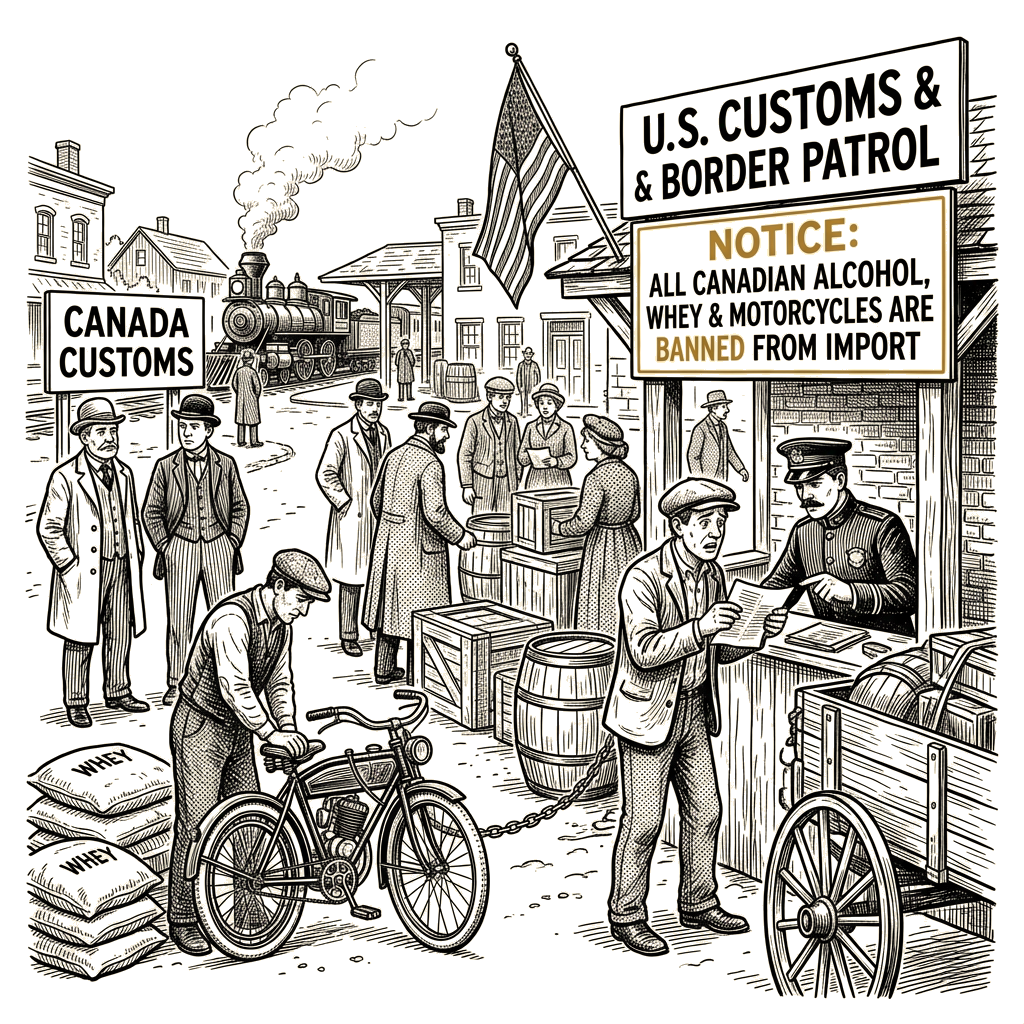
A US import ban on Canadian alcohol, whey products and motorcycles took effect Tuesday as the trade dispute between the two countries continued. The measure, announced in executive orders signed by President Donald Trump on 8 September, responds to Canada’s earlier implementation of retaliatory tariffs on US goods following a breakdown in trade talks.
Tuesday’s ban applies to nearly C$1bn ($710m; £530m) worth of Canadian liquor exported to the US, along with whey products used in protein powder. About 93% of all Canadian liquor exports in 2025 were sold to the US, and Spirits Canada, a group representing Canadian liquor producers, has said the consequences to the industry “could be significant.”
The motorcycle component is smaller in volume. Canada exported roughly 5,000 motorcycles to the US in 2025, worth approximately C$120m, according to Statistics Canada data cited by the BBC.
Economists and businesses have also warned that the bans will add uncertainty to the future of Canada’s trade relationship with the US, its largest trade partner.
Trump first announced the import bans on 8 September, citing what he described as Canada’s “continued discrimination” against US dairy, automotive and alcohol industries. Speaking to reporters on Monday, Trump accused Canada of “treating the United States very unfairly” and said the country has “been one of the worst countries in the entire world.”
Prime Minister Mark Carney said earlier this month that the bans “are relatively modest measures” when compared to other trade actions the US has imposed on Canada. He acknowledged, however, that the bans will hurt certain businesses and sectors directly targeted. According to BBC reporting, Canada is not expected to retaliate further.
Derek Holt, an economist with Scotiabank, wrote in an analysis that “these actions are face-saving by the US administration, not substantive in nature and that’s a positive.”
Trade negotiations remain frozen. US Trade Representative Jamieson Greer told CNBC in a recent interview that Trump is “comfortable” with his current relationship with Canada. “They call us now and then and we have good conversations about potential deals. But there’s no urgency on our side,” Greer said of relations with Canada.
The new import ban is part of a broader tariff exchange between the two countries. The US has imposed 50% tariffs on a range of Canadian goods, including dairy, alcohol, steel and aluminium, as well as 25% tariffs on Canadian-built cars. Canada has responded with retaliatory tariffs ranging from 15% to 50% on more than 700 US products, and a 25% levy on certain steel and aluminium products. Most Canadian provinces have stopped selling US liquor.
Tariffs are central to Trump’s economic agenda, with the president arguing that the duties raise revenue and encourage consumers to buy American-made goods. Economists have argued that the tariffs have raised prices of everyday goods for consumers and disrupted the global economy.