Thomas and Alito chose to stay when Republicans could still replace them
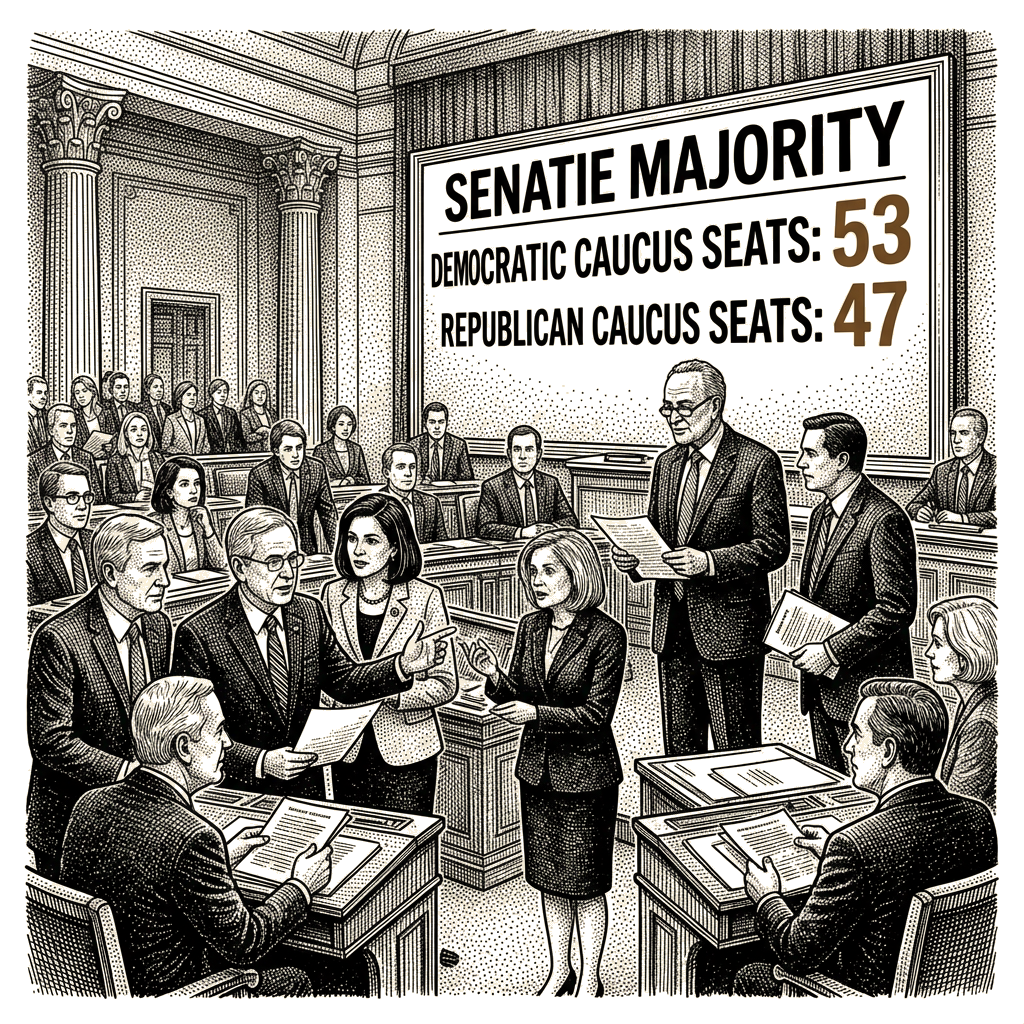
The Democratic Party’s midterm results gave it a Senate majority with a several-seat cushion, and with that majority the party is positioned to block President Trump’s judicial nominations for the remainder of his term. Trump placed three justices on the Supreme Court during his first term, and the result all but guaranteed he will not get a fourth. Any vacancy that arises in 2027 or 2028 now falls to a Senate in which Democrats hold the votes to block a Trump nominee.
The new composition also casts uncertainty over the long-term sustainability of the court’s 6-3 conservative majority and over the legacies of its two oldest and most conservative members, Clarence Thomas, 78, and Samuel Alito, 76. Both men chose not to retire earlier this year, when Trump and the Republican-controlled Senate could have replaced them with young, like-minded conservatives. Now, it could be many years before Republicans regain simultaneous control of the White House and the Senate.
Michael Fragoso, a former chief counsel to Sen. Mitch McConnell (R., Ky.), said Alito would have been more likely than Thomas to weigh the political risks of remaining on the court. “Whether he regrets it or should regret it, he made a choice. And now he’s going to be there for the next 10 years,” Fragoso said.
Some legal observers have floated a last-ditch scenario in which Thomas or Alito could announce their retirement in the coming days and give Trump and the outgoing Republican Senate a chance to install a successor before the newly elected Congress is seated on Jan. 3. That scenario is exceedingly unlikely. A person close to Alito said the justice’s statements earlier this year about his plans to remain on the court still stand after Tuesday’s results. Alito said over the summer that, at his age, he regularly thinks about retirement but that he intended to stay on the court for at least another year, and he told Bloomberg last month that he would remain even if Democrats won the Senate in the midterms.
Thomas is widely believed to want to stay on the court at least until May 2028, when he would set the record for the longest-serving justice in American history.
Even a retirement would not guarantee a successor. It isn’t clear that a Supreme Court nominee could get through the lame-duck Congress, and some moderate Republican senators are on their way out of office and blame Trump for losing their seats.
Neither Thomas nor Alito has any known serious health issue, and both are at the peak of their influence as senior members of a staunch conservative majority that has struck down affirmative action, expanded the right to own guns and allowed states to ban abortion. Trump cemented that majority with his trio of first-term appointees: Justices Neil Gorsuch, Brett Kavanaugh and Amy Coney Barrett. The Gorsuch appointment was possible because Senate Republicans, who held a majority, kept open a Supreme Court vacancy in the final year of President Obama’s second term. Republicans then rushed to confirm Barrett after Justice Ruth Bader Ginsburg’s death shortly before the 2020 election.
“Democrats are going to be in a payback mode after what happened to Obama,” said Russell Wheeler, a senior fellow at the Brookings Institution who studies judicial nominations.
Republicans face their own arithmetic problem. They likely face a number of tough Senate races in 2028, so even if they manage to retain the White House, it will be difficult for them to recapture enough seats to undo the Democrats’ rout in the upper chamber. For the next two years, a Democratic blockade of Trump judicial nominees likely won’t be limited to the Supreme Court. Democrats are also expected to refuse to confirm nominees for most lower-court vacancies that arise during the remainder of his term, just as Republicans did in the final two years of Obama’s presidency.
Sen. Sheldon Whitehouse (D., R.I.), who is widely expected to take over as the new chair of the Senate Judiciary Committee, signaled that he plans to adopt a hard line on court nominees. “There needs to be accountability for years of Republican bad behavior, and a hard reset on the nominations process next Congress,” Whitehouse said.
Trump has already expressed willingness to work with the new Democratic majority. Robert Luther III, a law professor at George Mason University who worked in the White House Counsel’s Office and oversaw judicial nominations during Trump’s first term, said it may be possible for the president to strike deals that allow him to confirm a few federal district judges. But the chances of any deals on nominees for the federal courts of appeals, let alone the Supreme Court, are remote, he said. “They have the veto power,” Luther said. “That’s the reality of the politics.”
What the results leave unsettled is narrower: whether either justice announces a retirement before Congress is seated on Jan. 3, and how the incoming Judiciary Committee chair uses the confirmation authority the majority now provides. The longer question is the 2028 map, where Republicans likely face a number of tough Senate races and would have to recapture seats while holding the White House to reopen the appointment path.