Susan Collins says exemptions would support Maine agricultural producers
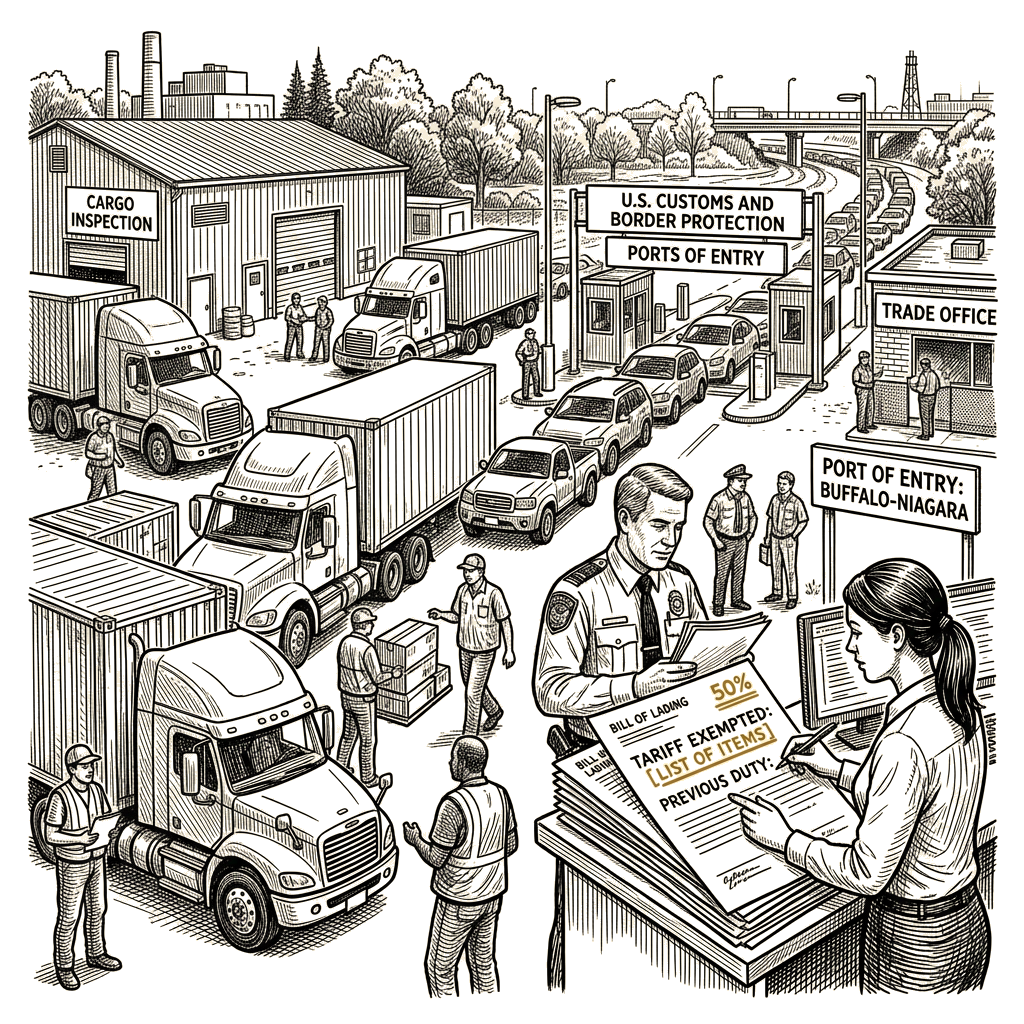
The White House said Friday that the United States would remove a group of Canadian goods from its 50% tariff list beginning Oct. 30. The products include plywood sheets, some paper products, certain machinery and refrigeration equipment, and certain packing crates and boxes. The announcement came after trade talks collapsed this summer, starting an escalating tariff war that affected both countries.
The White House said the reductions would be offset by levies on other Canadian goods, including certain valves, carpets and waste products. In its statement, the White House said it was working to “protect the economic prosperity and national security of the American people.” The statement also described the move as part of President Donald Trump’s “continued efforts to defend American workers and ensure fair trade” and linked the action to “offsetting the burden and disadvantage on U.S. commerce from Canada’s discriminatory treatment.”
Republican Sen. Susan Collins of Maine first announced the exemptions, saying they would help the state’s agriculture industry. Collins, who is trying to win a sixth term and is in a tight race to keep her seat, said in a statement that she had secured additional relief for products used by Maine’s blueberry, potato, apple and seaweed producers.
Collins wrote on X that “Many of our farmers and growers rely on specialized equipment, packaging materials, and other products from Canada that are either unavailable from American suppliers or cannot be replaced without incurring significant expense.” She said she had asked U.S. officials and senior administration officials to seek additional relief and encourage a broader trade agreement with Canada.
President Donald Trump said Friday that Canada was “working very hard” on a trade deal with the United States. Canadian Prime Minister Mark Carney said Canada was open to a mutually beneficial agreement but was willing to wait for a proper deal.
According to CBC, Carney said: “We could sign it this afternoon if the US were there. If it has to be months from now or longer than that, or another administration, before a proper deal comes into place, we will do that.”
Canada’s internal trade minister Dominic LeBlanc confirmed Thursday that a delegation met with members of the Canada-United States Economic Relations Advisory Committee. The meeting was the ninth since April 2026, and members discussed the ongoing impact of U.S. tariffs in Canada.
Canada had not commented on the White House announcement by Friday. LeBlanc’s office did not immediately respond to a BBC request for comment.
The BBC said it had contacted the White House, the US commerce department and the trade representative for further comment.
The tariff change comes ahead of the Nov. 3 U.S. midterms, when many voters list affordability and economic pressures as top issues. The Wall Street Journal had reported that the exemptions, largely focused on Canadian agriculture and forestry, were made in a bid to help Collins and other Republicans in the election.
The economies of Maine and other border states are deeply linked to Canada, and those states have felt the effects of the month-long trade war. Michigan lawmaker Mike Rogers, also a Republican, called on Trump to end the standoff after spending months supporting the policy in recent advertisements airing in his trade-reliant state.