Any repeal faces a 60-vote Senate hurdle and a veto threat
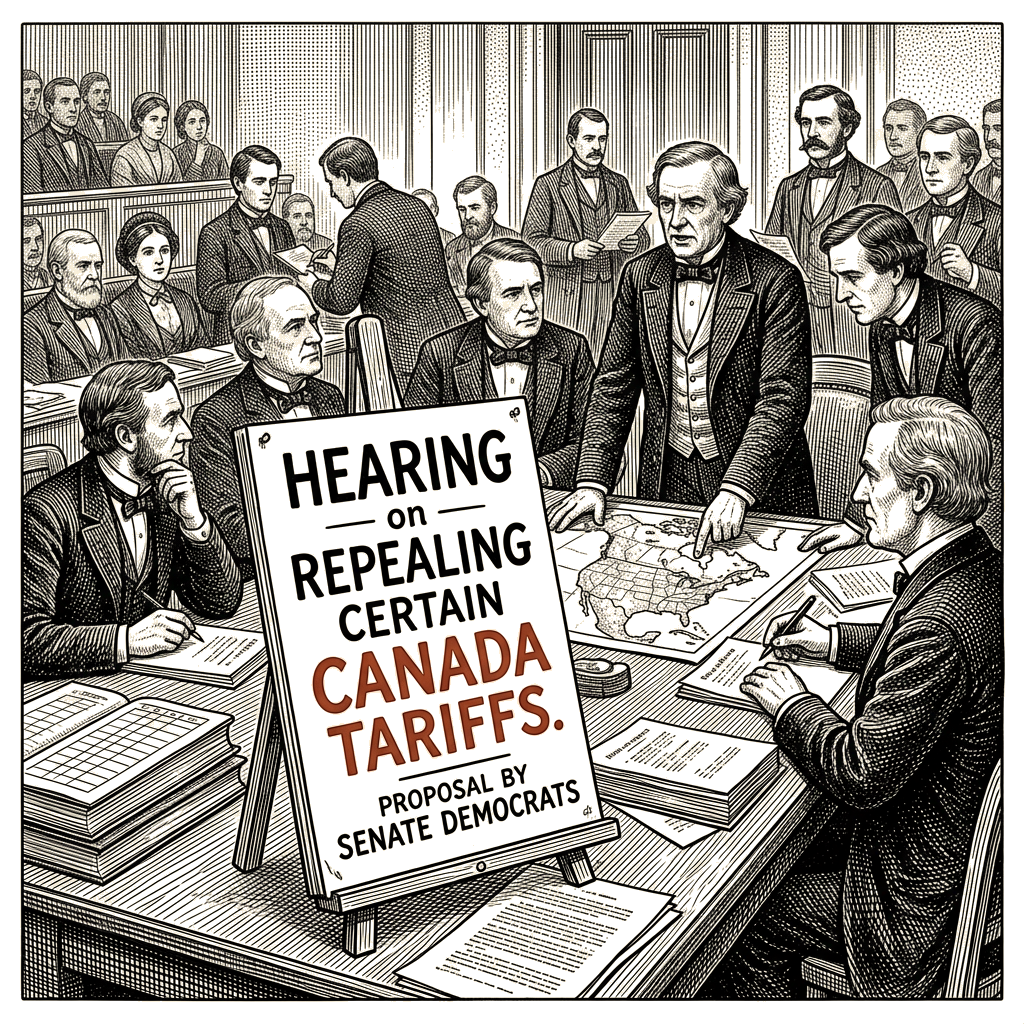
Senate Democrats plan to make President Trump’s tariffs on Canadian goods the first target in a campaign to roll back his administration’s broader tariff agenda, according to Sen. Ron Wyden of Oregon, the party’s senior trade lawmaker in the Senate. Wyden, the ranking Democrat on the Senate Finance Committee, said he is already talking with colleagues about legislation to push against the second-term levies after Democrats take control of the committee in January.
“There is overwhelming support for repealing the tariffs on products from Canada,” Wyden said. “Ultimately, Congress must take away the president’s ability to unilaterally and arbitrarily impose tariffs.”
Wyden’s push follows an election season in which many victorious Democratic candidates called for an end to Trump’s trade conflict with Canada. In border states such as Michigan, Maine and Alaska, the tariffs were central campaign issues, and even Republican candidates pivoted to oppose the levies in the face of voter opposition.
The math remains demanding. Any repeal measure would likely need 60 votes to overcome a Senate filibuster, and it isn’t clear Democrats could muster the additional support needed to override a presidential veto. Overriding a veto requires a two-thirds majority — 290 votes in the House and 67 in the Senate with all members voting. As of Thursday evening, Democrats had captured 253 House seats and 54 Senate seats.
Wyden and those close to him say the Canada tariffs are the best opportunity to flip Republicans against Trump and potentially build enough support to avert a veto — or potentially overrule it. Democrats believe they can encourage Republican defections by forcing votes on unpopular trade items, building momentum toward larger changes in the run-up to the 2028 election and beyond.
In the House, Michigan Rep. Debbie Dingell said she has been speaking for months with Rep. Gregory Meeks, the ranking member on the House Foreign Affairs Committee, about potential legislation to push back on the Canada tariffs. Massachusetts Rep. Richard Neal, the ranking member on the Ways and Means Committee, which oversees trade, said Democrats would be ready to address Trump’s “price-hiking tariffs,” though he offered no specifics.
The Canada bill would be the first in a series of actions Democrats are planning to pressure Trump’s trade agenda, according to people on Capitol Hill. Further measures could target the novel legal authorities Trump has used to justify his tariffs — including Section 338 of the Tariff Act of 1930, which underpins the Canada levies but had never before been used by a president — and Section 122 of the Trade Act of 1974, which Trump invoked for the first time earlier this year to impose temporary tariffs.
Whether the effort forces any change in Trump’s tariffs or other trade policies remains uncertain. The power to impose tariffs still rests largely with the president, and those close to Trump say there is little indication that the electoral rebuke will slow his trade agenda down. “The president has been moving forward on his trade agenda irrespective of the makeup of Congress,” said Kelly Ann Shaw, who served on the National Economic Council in Trump’s first term. “I think the president is just going to keep going.”
Lawmakers over decades have surrendered Congress’s constitutional authority over trade to the executive branch, giving presidents broad power to levy tariffs if they judge national security threatened or other nations are discriminating against U.S. companies.
People familiar with the lawmakers’ thinking said Democrats are unlikely to muster enough Republican votes to override Trump vetoes beyond the Canada question, and simmering disagreements remain within the Democratic Party over the use of tariffs. Most Democrats object to Trump’s more extreme uses of tariffs, like those on Canada, said former Rep. Dan Kildee, a Democrat who represented Flint, Mich., for 10 years before stepping down in 2023. But “where we do see some disagreement is on specific, targeted tariffs and trade actions,” he said, pointing to levies on steel, aluminum or other national security-related sectors.
That means fundamental rewrites of major U.S. trade laws are unlikely in the next two years, particularly for statutes previous presidents used: Section 232 of the Trade Expansion Act of 1962, which underpins Trump’s tariffs on steel, aluminum, automobiles and other industries, and Section 301 of the Trade Act of 1974, the foundation of tariffs on 60 nations based on forced-labor allegations and of coming levies tied to industrial subsidies in foreign countries. “Basically every Democrat is on record against the Canada tariffs,” said Peter Harrell, former head of international economic policy on the Biden administration’s National Security Council. “Where it gets more complicated is proposals to meaningfully constrain Section 301 and Section 232,” he added.
Trump, meanwhile, is set to expand his use of those authorities. The U.S. Trade Representative’s office is likely to unveil in the coming months Section 301 tariffs based on alleged industrial overcapacity in China and 15 other economies, likely bringing tariffs back up to levels similar to where they stood before the Supreme Court struck down many of Trump’s earlier tariffs in February. The Commerce Department also could unveil new Section 232 national-security tariffs on industrial robots, medical devices and potentially other sectors.
The trade conflict with Canada could intensify before the new Democratic-majority Congress is seated. Trump has imposed tariffs on $20 billion worth of Canadian goods and blocked some Canadian products from U.S. shelves, and he has threatened to double tariffs on Canadian vehicles if the two sides cannot reach an agreement before January. Lawmakers said such a step would add momentum to their repeal efforts.
Harrell and Kildee said Democratic lawmakers and aligned think tanks also will be devising ways to use the same trade authorities to deliver on progressive trade goals should a Democrat win the White House in 2028, such as raising labor and environmental standards abroad. Enthusiasm for repurposing those powers could also blunt efforts to tinker with them. “Both parties like the idea of having those authorities for their president to do what they want to do,” said Blake Harden, a former trade counsel for Republicans on the House Ways and Means Committee. “You don’t have consensus on trade in either party right now, so both sides have to contend with that, and it limits opportunity.”